


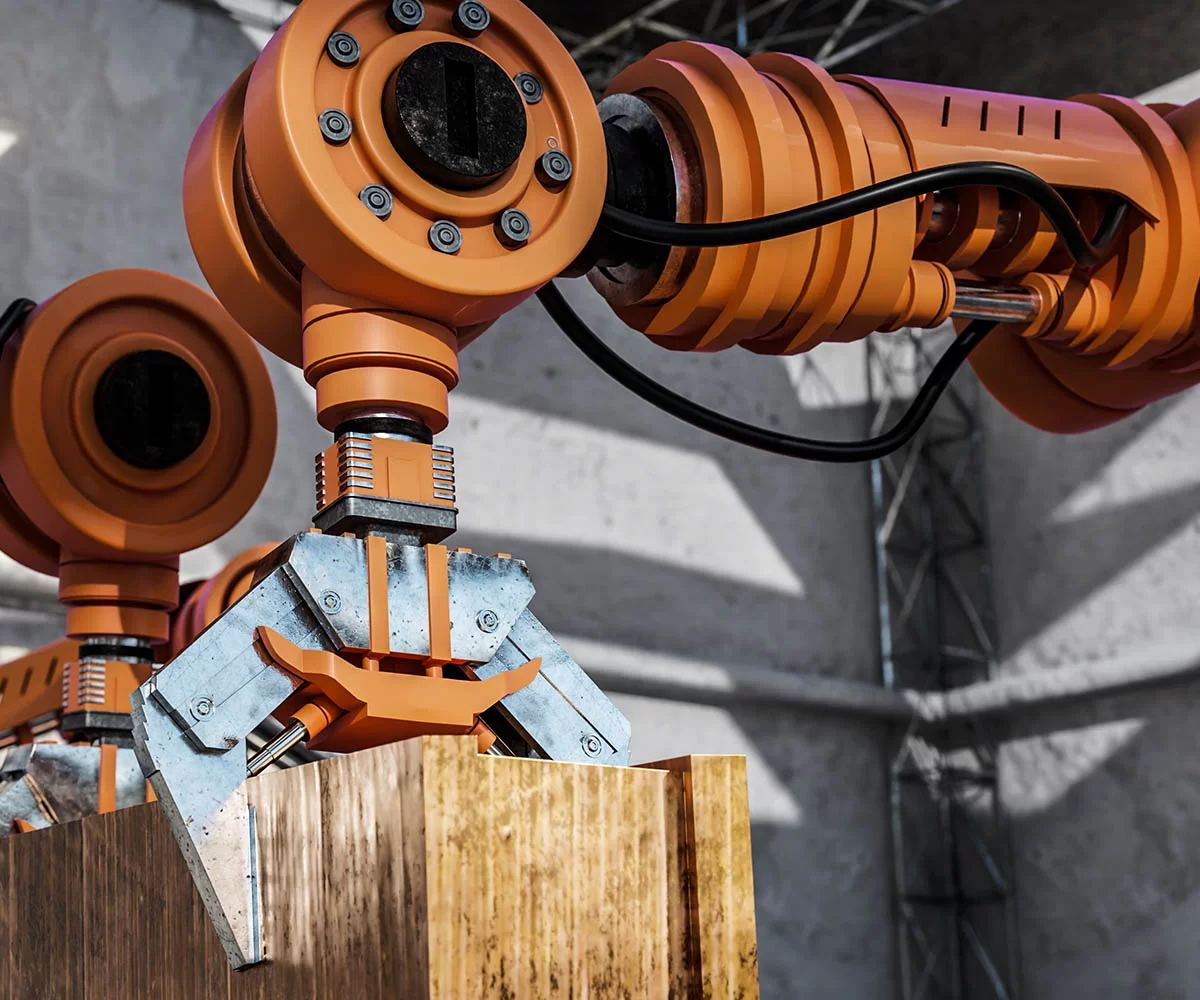
Hydraulics and hydraulic seals. Although it may not be immediately obvious, we encounter machines and equipment using the principles of hydraulics every day. Construction and mining machines, hydraulic presses, handling, agricultural or forestry equipment. These are just a few examples from the many industries where hydraulic equipment has found application.
Basic knowledge of hydrodynamics has been known and used by mankind since ancient times, when, for example, in ancient Greece, these principles were used for the construction of aqueducts and water distribution systems. The law of hydraulics was then defined in the 17th century by the mathematician and physicist Blaise Pascal. Since then, Pascal’s law has become the basic physical principle for the construction of hydraulic equipment.
The basic building block of hydraulic systems is the hydraulic cylinder. In it, as well as in other hydraulic devices, a hydraulic seal is used as an indispensable component.
In a series of articles, we would like to introduce you to the specifics and requirements for these important components, on whose correct selection, high-quality and precise execution the functionality and service life of the entire hydraulic system depends.
Hydraulic cylinder and seals – basic principle
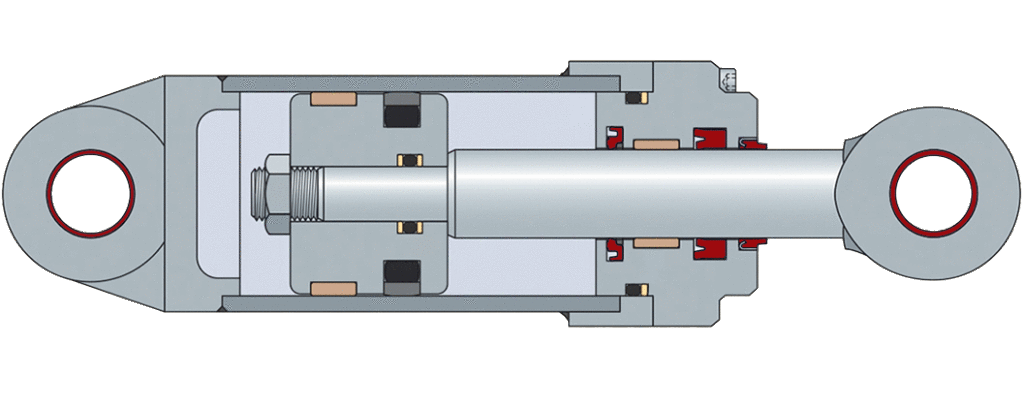
The internal space of the hydraulic cylinder is divided into two separate chambers by a piston. By increasing the pressure of the liquid inside one of the chambers, the piston moves and extends. According to the type of movement, we basically distinguish cylinders into single-acting (the piston is pushed/pulled by pressure in only one direction, it returns with the help of a spring) and double-acting (the pressure can be regulated in both chambers and the piston can thus perform movement in both directions).
To ensure proper function, it is therefore necessary to prevent any leakage of liquid, which results in loss of pressure and functionality. Both chambers of the cylinder must therefore be perfectly separated from each other, and of course also during the sliding movement that the piston performs.
For this purpose, a whole range of types of seals and sealing elements are used. Their purpose is to separate the individual pressure chambers in the cylinder and thus ensure proper function while maintaining the working pressure. Different applications and uses place different demands on the seals. When selecting suitable sealing elements, it is therefore necessary to take into account a whole range of parameters and operating conditions.
We will learn about the basic influences and parameters that affect the selection of seals in the following article.