

Electrical insulators
Cardboard, textite, glass-reinforced plastic, and other electrical insulators offer strength, thermal and electrical resistance. They are used in motors, transformers, switchboards, and other industrial applications.
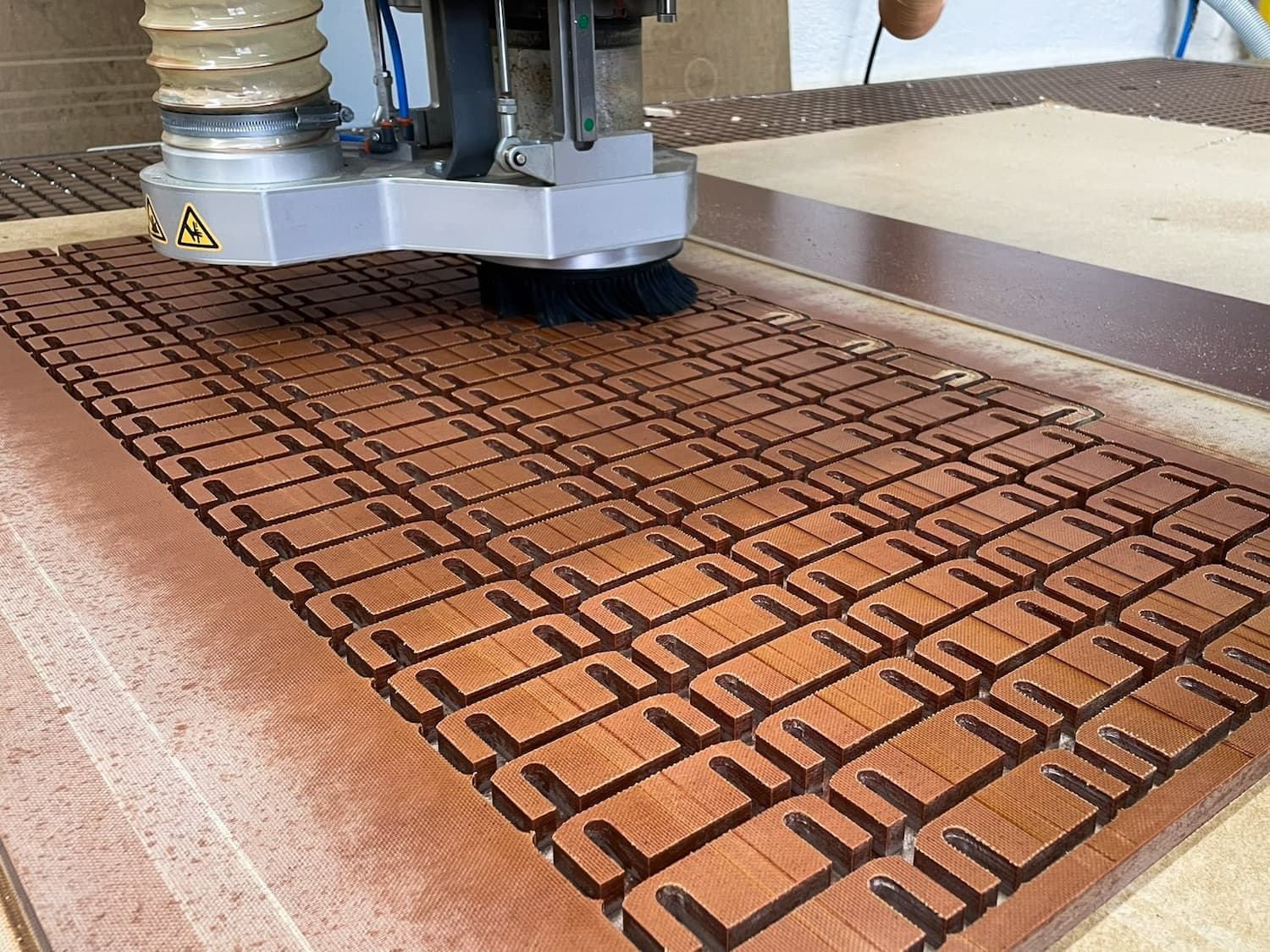
Usage Description
Electrical insulation materials, such as cardboard, textite, glass-reinforced plastic, and other laminates, are among the basic structural elements in electrical engineering and mechanical engineering. Their main function is to insulate electrical current and protect equipment from electrical breakdown, heat, and mechanical stress.
Characteristics
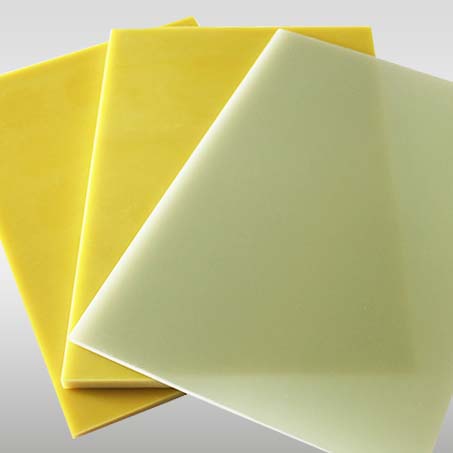
These materials are manufactured by pressing paper, textile, or glass fabric impregnated with synthetic resins (phenolic, epoxy, polyester). The result is solid boards or rods with excellent electrical insulation, mechanical, and thermal properties.
They are characterized by:
- high electrical strength,
- resistance to heat, oils, and chemicals,
- dimensional stability,
- good machinability on standard CNC machines.
Applications
Electrical insulators find use in a wide range of applications:
- structural and insulating parts in electrical equipment, motors, transformers, and switchboards,
- support and separation boards, pads, flanges, covers, and wire holders,
- mechanically stressed components (gears, bearings, sliding elements),
- components for electronics and precision mechanics (e.g., printed circuit boards for glass-reinforced plastic).
Manufacturing Materials

In all areas of our operations, we place great emphasis on maximum quality of products and services, responsible approach to the environment, and work safety. We believe that these values are the foundation for long-term development and for building stable relationships with our customers. The confirmation of the quality of our work is the fact that we hold the ČSN EN ISO 9001:2016, ISO 14001:2016, and ISO 45001:2018 certifications.