

The production of flat gaskets on CNC plotters allows for high precision, repeatability, and fast delivery for custom production as well as larger series. Thanks to digital control, a wide range of materials can be machined, from fiber composites and rubbers to microporous materials, with tolerances typically within ±0.1 mm. At the same time, CNC technology minimizes material loss and eliminates the need for expensive molds.
Principle of cutting on a CNC plotter
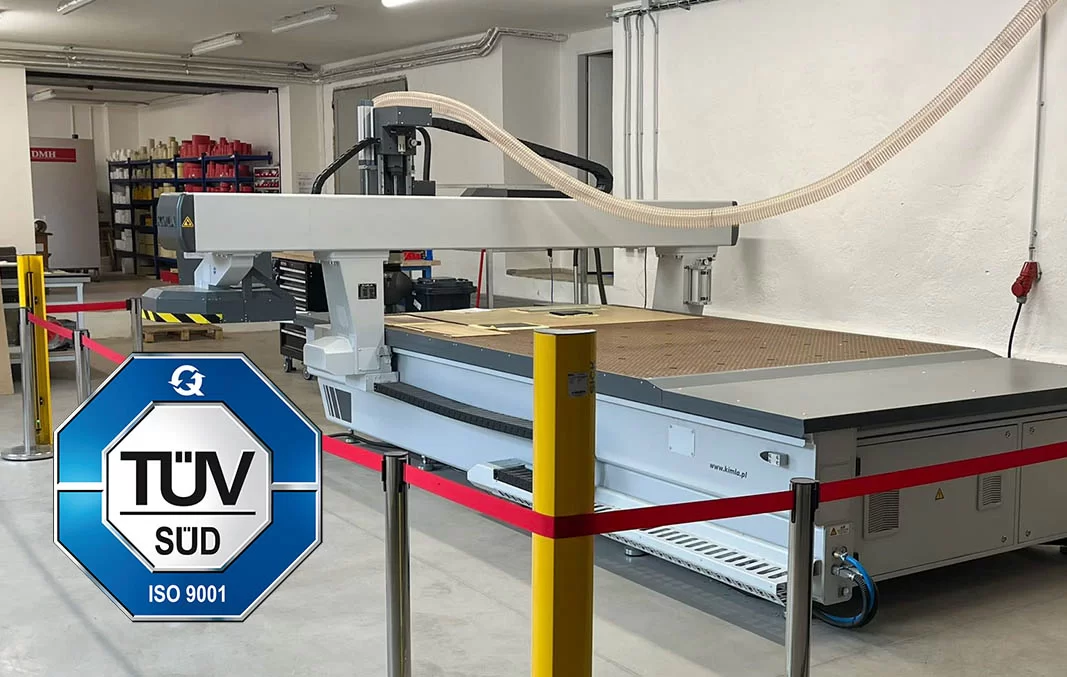
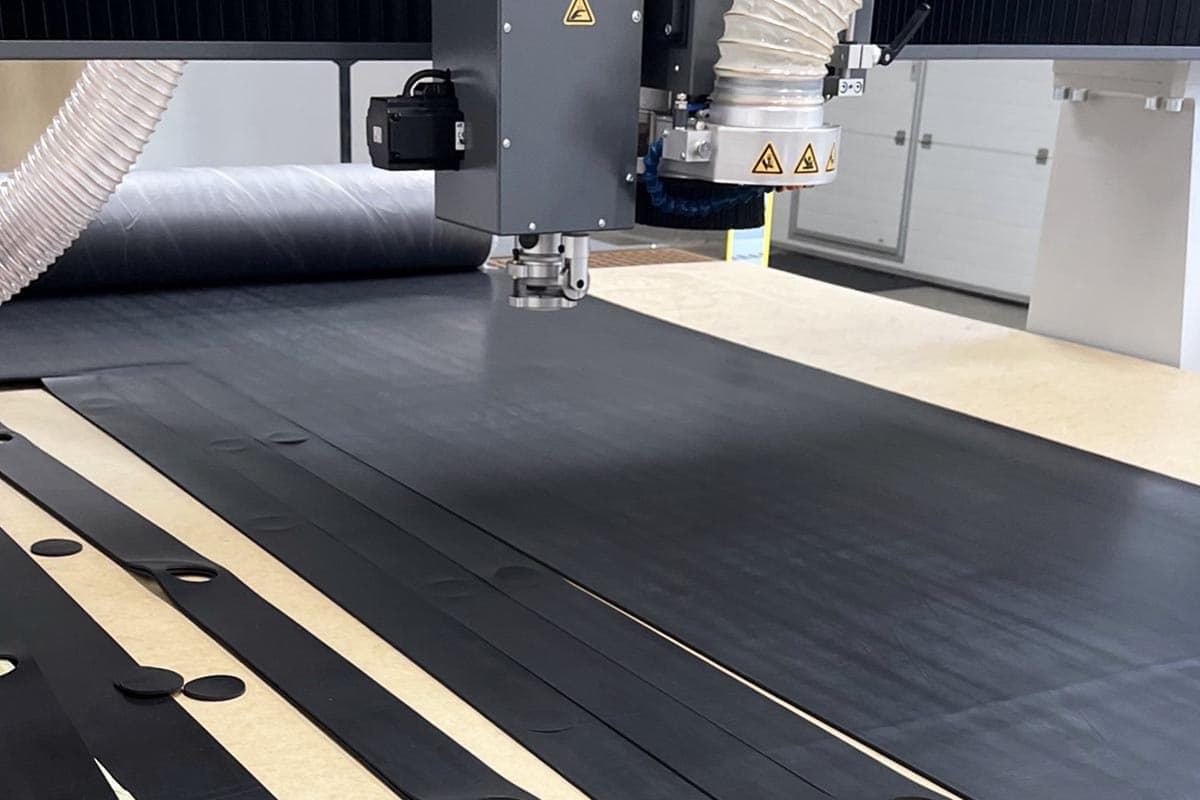
A CNC plotter works on the principle of controlled tool movement (oscillating knife, tangential knife, drag knife) based on digital data (DXF, DWG). The material is fixed on a vacuum table, which minimizes deformation during cutting.
Unlike the die-cutting method (using a stamping press with a die):
- there is no need to manufacture a die (cost savings for small series),
- changing dimensions only requires data adjustment,
- complex shapes can be produced (grooves, holes, multi-level profiles).
Unlike milling:
- no chips are formed,
- no thermal stress is applied to the material,
- the material retains its original mechanical properties.
The CNC plotter is optimized for flat gaskets, especially from soft materials where a clean edge and shape precision without burrs are key.
Materials suitable for CNC plotters
CNC plotter technology is primarily intended for soft and flexible materials. However, materials of higher hardness can also be cut to a limited extent.
Asbestos-free materials
Asbestos-free sealing materials represent a modern and ecological alternative to the previously used asbestos sheets. They are made from aramid fibers, graphite, or organic components combined with rubber. They excel in resistance to pressure, temperature, and chemicals, and are used for the production of flat gaskets in a wide range of industrial applications.
Graphite materials
Graphite materials are valued for their exceptional thermal and chemical resistance, making them frequently used in the production of flat gaskets for demanding applications. They offer high flexibility, dimensional stability, and long service life, functioning reliably at extreme temperatures and pressures.
Technical materials based on PTFE and mica
Materials based on PTFE and mica are designed for sealing in extremely demanding conditions. PTFE ensures excellent chemical resistance and minimal friction, while mica resists very high temperatures. These combinations find application in the production of flat gaskets for the energy, chemical, and petrochemical industries.
Elastomers, technical rubber
Rubber compact materials. Different types vary in chemical and temperature resistance as well as mechanical properties. Due to their universal properties, these materials are used for a wide range of applications across the entire industry.
Microporous materials
Microporous materials intended for the production of flat gaskets are characterized by low weight, high compressibility, and an excellent ability to compensate for irregularities in seating surfaces. Thanks to their structure, they ensure reliable sealing even at lower tightening torques and are used, for example, in the automotive and engineering industries.


From practice: product examples
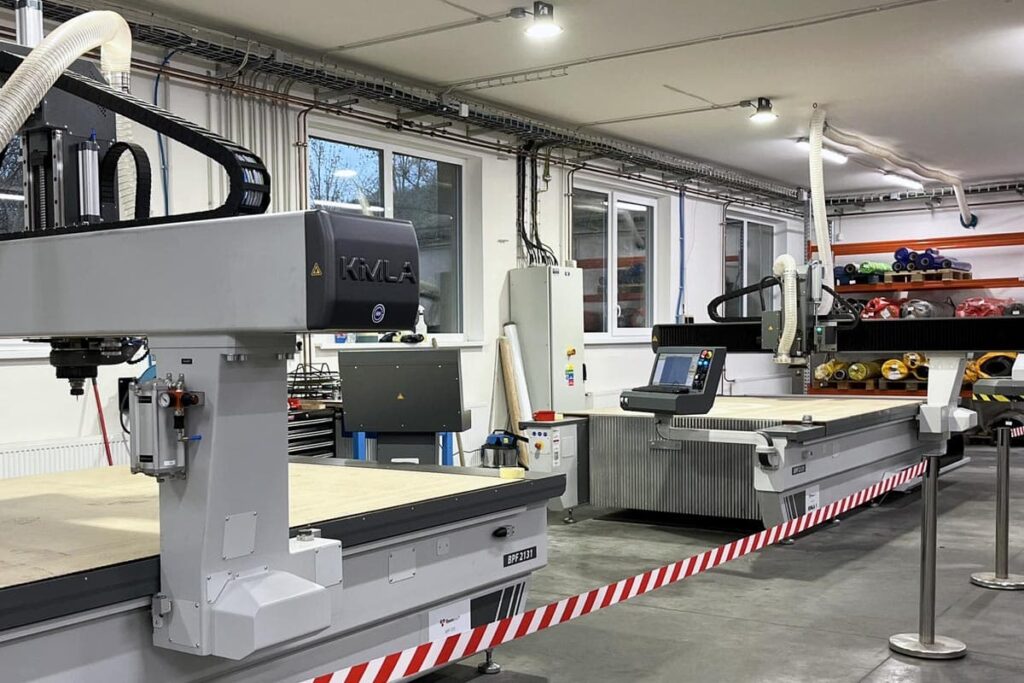
V naší výrobě používáme 2 CNC frézky, které ale díky osazení řezací hlavou, fungují také jako plnohodnotné plotry. Každý ze strojů má pracovní plochu 3100 x 2100 mm a dokážeme tak vyrobit i ploché těsnění velkých rozměrů. Základní materiály si udržujeme skladem, abychom dokázali flexibilně reagovat na urgentní požadavky.
1. Production of gaskets for external use, bridge elements
- Assignment:
The customer was looking for a material suitable for sealing joints in a bridge structure. The material is exposed to weather conditions year-round, and given the difficulty of potential replacement, maximum durability is required. - Material:
EPDM 65 Sh.A premium - Result
We selected premium quality EPDM, which has extraordinary resistance to weathering, aging, and UV radiation. We produced the sealing elements using the oscillating knife method exactly according to the drawing, and their installation on-site proceeded without any issues.
2. Production of flange gaskets with FDA certification
- Assignment:
For sealing a flange joint, the customer was looking for a material with sufficient operating parameters, low hardness, and above all, FDA certification, as the piping is used for transporting substances in the pharmaceutical industry. - Material:
Expanded PTFE - Result
Softened PTFE exactly meets the customer’s requirements. The material has FDA certification and is primarily intended for use in the food or pharmaceutical industries. Due to its nature, the material is very well processed with an oscillating knife. The result was a precise gasket with a clean edge.
2. Production of graphite gaskets – automotive industry
- Assignment:
For use in sealing exhaust systems, where there is high operating temperature and high demands on the gasket material, the customer was looking for a supplier of various custom-shaped parts. - Material:
Grafilit - Result
The graphite material Grafilit meets the operational requirements (it can be used for long-term temperatures up to 550°C). The material contains a stainless steel insert; however, we were able to handle this as well, and the parts are shape-accurate without burrs, meeting the customer’s needs.


Main benefits of gasket production on a CNC plotter
A CNC plotter brings the following advantages in particular:
- zero costs for die-cutting tools – economic and time savings
- fast geometry changes based on digital data – ideal for prototypes or small series
- short delivery times: 1–3 working days
- high production repeatability according to stored CNC data
- minimization of material waste – combination of shapes, maximum utilization of remnants
Tool types, production precision
When working on a CNC plotter, we use a wide range of cutting tools that differ in geometry, allowing us to choose the most suitable tool for the specific material being processed. The tools can be divided into two basic types.
Oscillating knife
In addition to forward movement, the oscillating knife also moves vertically at a defined frequency and stroke height (functioning similarly to a sewing machine needle). This ensures a clean cut and minimizes the risk of tearing or damaging the material. This method is very suitable for materials of higher hardness and for more complex shapes.
Drag knife
When cutting with a drag knife, the tool only performs forward movement; it does not oscillate or move vertically. In principle, it is similar to manual cutting with a utility knife. This allows for the maximum feed speed of the machine to be utilized. However, its use is only possible for simpler shapes made of microporous or foam materials where there is no risk of tearing the material.
Is a CNC plotter suitable for serial production?
Yes, a CNC plotter is suitable for series of hundreds to thousands of pieces. For very large series where the production of a mold is already economically advantageous, the die-cutting method is more appropriate.
What is the maximum material thickness for a CNC plotter?
On our CNC machines, we can cut materials up to a height of approximately 150 mm. The limitation is determined more by the choice of a suitable tool.
Which materials can be cut on a CNC plotter?
Essentially all materials of a soft nature can be cut on a CNC plotter. From technical materials (fiber boards, technical rubbers, special materials based on PTFE or mica) to paper, cardboard, and pasteboard, as well as leather, fabrics, etc.
Is it possible to produce single pieces?
Yes, cutting on a CNC plotter is also suitable for single-piece series. No preparation of any die-cutting tool is required, making single-piece production fast and cost-effective.
Summary
Cutting on a CNC plotter is a fast, precise, and efficient method for producing flat gaskets. No mold preparation is necessary, making it suitable for single-piece or small series. All materials of a soft nature can be processed, so in addition to technical materials, it is also possible to cut leather, paper, or fabrics, for example.
Are you interested in the production of flat gaskets on a CNC plotter? Contact us and we will be happy to discuss everything with you. Our 2 CNC machines with a working area of 3,100 x 2,100 mm are at your disposal for single-piece as well as large-scale production.