

Production of flat seals
We produce flat seals from asbestos-free materials, rubbers and other technical materials. Thanks to modern CNC we can handle even large batches. We use a state-of-the-art optical measuring instrument to check the parts.




What we can solve:
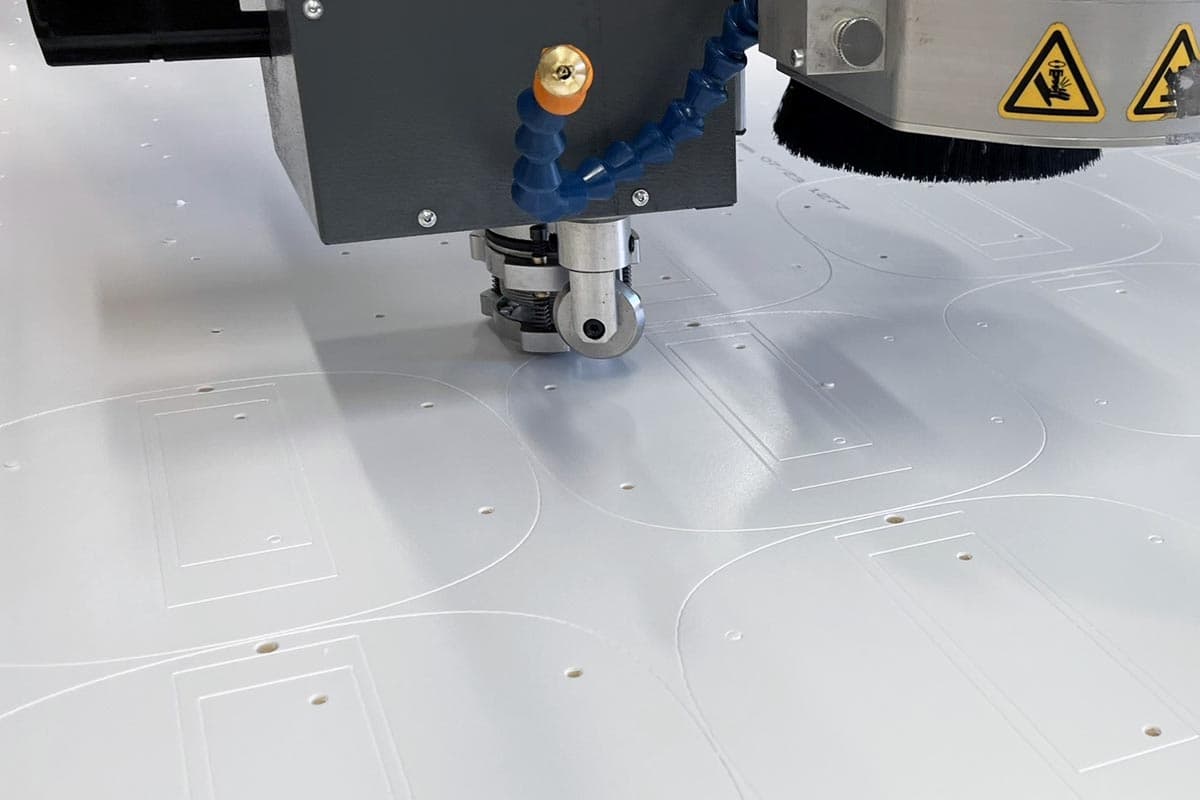
We produce flat seals from a wide range of technical materials. The most common materials used for flat seals are asbestos-free materials, but we can also produce them from engineering rubbers, graphite materials, mica-based materials, softened and microporous materials and other specialised engineering materials. We have two CNC machines with a table area of 3100 x 2100 mm and can therefore handle large parts and, thanks to our production capacity, large batches. For a truly accurate inspection of the part, we can use our optical measuring machine, which guarantees the dimensional accuracy of the part, complete with a dimensional report. We manufacture flange seals, gaskets for piping systems, lid and valve seals, insulation or anti-vibration elements and many other parts that are used as flat seals across the industry.


What materials do we work with?
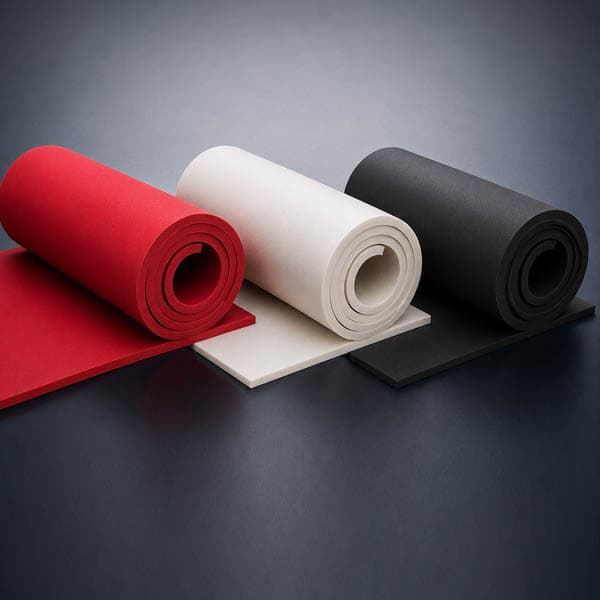
Flat seals are most often made of asbestos-free materials. There are a variety of these materials and they are distinguished by their resistance to heat, pressure and chemicals. These are materials based on aramid, organic components or graphite in combination with rubber, which form an environmentally friendly modern alternative to the asbestos-based materials previously used. However, we also use all technical rubbers, microporous materials as well as specialised sealing materials based on PTFE or mica. An overview of the materials we use for the production of flat seals:

How is the production of the flat seal done?
Inquire about flat gasket manufacturing
In all areas of our operations, we place great emphasis on maximum quality of products and services, responsible approach to the environment, and work safety. We believe that these values are the foundation for long-term development and for building stable relationships with our customers. The confirmation of the quality of our work is the fact that we hold the ČSN EN ISO 9001:2016, ISO 14001:2016, and ISO 45001:2018 certifications.
Frequently Asked Questions
What materials are used to make flat seals?
Flat seals are most often made of asbestos-free fibrous sealing plates (most often based on organic binders in combination with aramid, graphite and other additives), PTFE, expanded PTFE, graphite, mica materials and also technical rubbers (SBR, NBR, EPDM, CR, MVQ and others).
How is the production of the flat seal done?
CNC plotters are used for production, which cut the material using the oscillating knife method. The material is thus cut by a special knife that also oscillates vertically at high speed. As a result, the cut is clean and the flat seal is produced accurately and with high quality.
What kind of materials are needed for the production of seals?
A technical drawing (in .dwg, .dxf, .pdf format) is ideal, but not necessary. Flange seals are defined by standards that specify exact dimensions and hole size and location. At the same time, it is possible to produce gaskets according to a sample. This can be measured manually, using an optical measuring device or by using a touch probe directly on the CNC machine.
How to choose the right material for flat seals?
The choice of material for the flat seal depends primarily on the combination of operating pressure and operating temperature as well as the type of medium (oil, water, chemicals, etc.).
What are the tolerances and precision of flat seal production?
Thanks to CNC cutting technology, high precision can be achieved – in the order of tenths of a millimetre +/- 0.1 mm. The accuracy depends on the type and charekter of the material. Highly elastic materials, for example, achieve lower precision than materials of higher strength and dimensional stability.
Is it possible to make a customized flat seal?
Yes, bespoke manufacturing is the norm. Any shape cut-out can be produced and for selected materials a self-adhesive layer can be applied. Finished parts can also be marked and packaged specifically as required.