

CNC turning of plastics
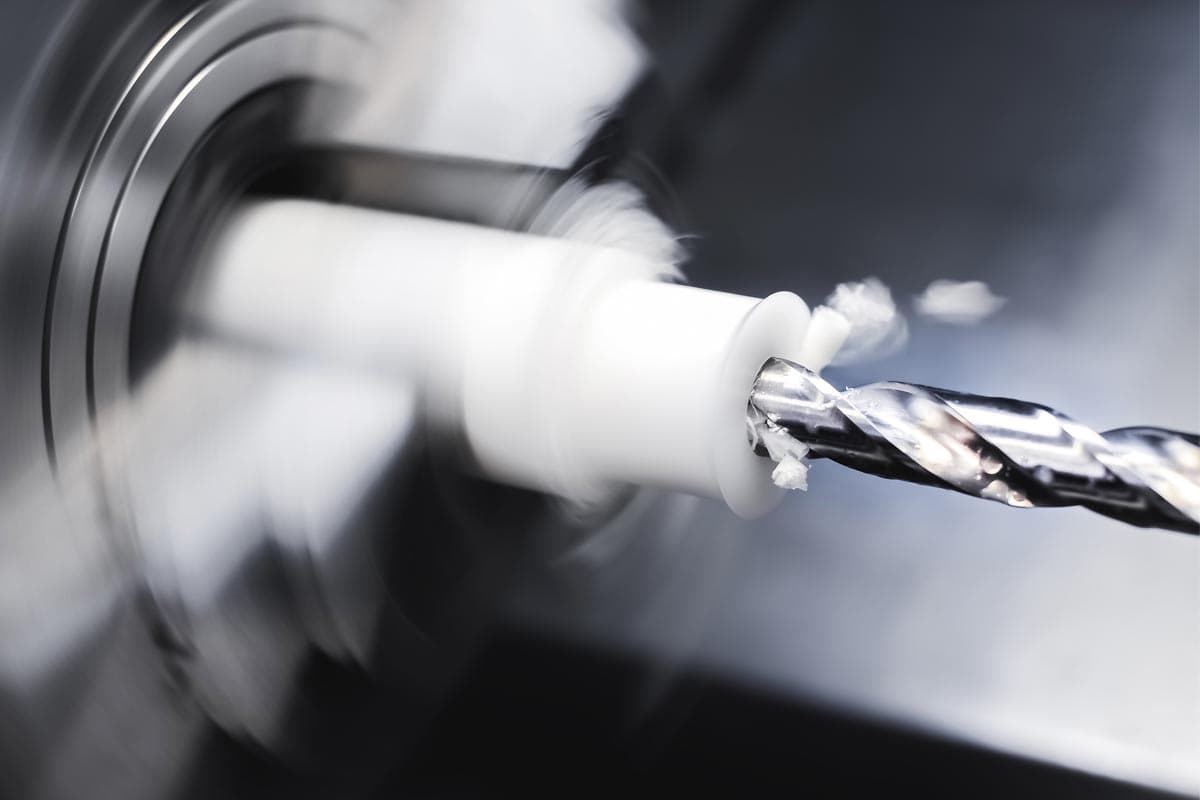
We produce turned parts from all technical plastics up to a diameter of 500 mm. Thanks to modern CNC technology we can efficiently produce even larger series. We use a state-of-the-art optical measuring instrument to check the parts.




What we can solve
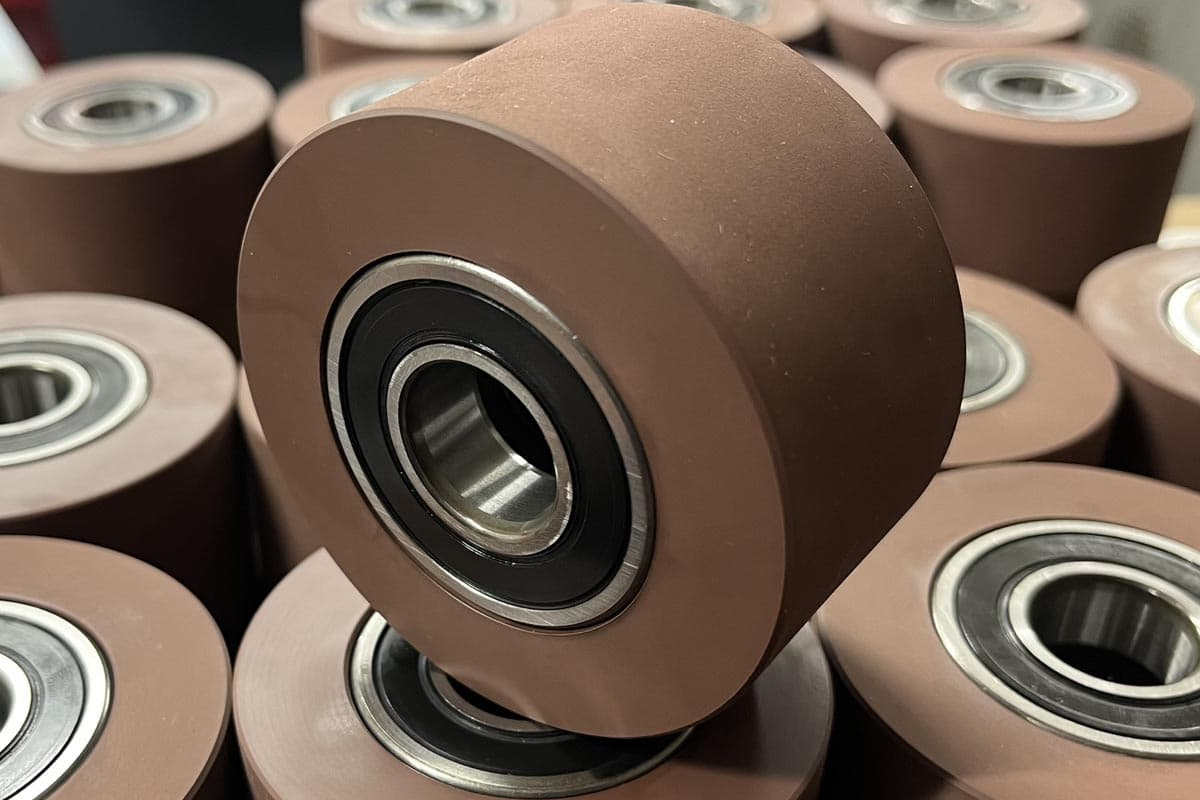
We can produce turned products from most technical plastics suitable for this purpose. POM-C, PA6, PE1000 are most commonly used for turning, but many other plastics can also be machined efficiently. When turning, we take into account the different properties of the materials and the associated machining conditions, which differ from conventional metal chip machining. We use a CNC lathe for production and can thus handle larger series, but we also use conventional machines that are suitable for piece series. For the inspection of final parts we can use our state-of-the-art optical measuring instrument, which allows us to guarantee dimensional accuracy and document it with a dimensional report. Thanks to our other technologies (especially CNC plastic milling), we can also handle parts that require a combination of turning and milling. Most commonly, we produce slip sleeves, bushings, stops, pulleys, pulleys, spacers, guides and many other structural and machine parts that are used across the industry.



What materials do we work with and can we turn?
We produce turned parts from all technical plastics suitable for this purpose. Some materials are not suitable for turning due to their properties or suitable semi-finished products (bars) are not produced as standard. However, the most commonly used materials for turning include POM-C, PA6, PE1000, but also PET, PEEK and other engineering plastics. An overview of all the engineering plastics we offer can be found below.
How does CNC turning of plastics work?
Inquire CNC turning of plastics
In all areas of our operations, we place great emphasis on maximum quality of products and services, responsible approach to the environment, and work safety. We believe that these values are the foundation for long-term development and for building stable relationships with our customers. The confirmation of the quality of our work is the fact that we hold the ČSN EN ISO 9001:2016, ISO 14001:2016, and ISO 45001:2018 certifications.
Frequently Asked Questions
What are the advantages of CNC turning of plastics?
The main advantages of CNC turning compared to conventional production are:
- high production accuracy and repeatability
- fast production and efficiency, especially for larger batches
- precise selection of machining conditions
- good quality of machined surfaces
What tolerances can be achieved?
The accuracy of the production depends mainly on the choice of material, the geometry of the part and the stability during machining (the possibility of vibrations that negatively affect the accuracy). The standard accuracy for plastics is +/- 0.1 mm, but even more precise tolerances can be achieved with suitable materials.
What to watch out for when turning materials?
Different plastics behave differently, so the specific machining method needs to be adapted to the chosen material. In particular, the thermal expansion and deformation of the material, the low stiffness of some plastics and the different formation of burrs compared to metal, which can negatively affect the surface of the part, play a role.
How to properly design the groove for the gasket?
The design of the groove for the gasket must correspond to the selected gasket type and follow the design standards. It is important that the correct dimensional tolerances are maintained, as well as the ideal roughness of the piston rod or cylinder functional surface.
What is the difference between plastic and metal turning?
Engineering plastics generally have significantly lower strength and higher thermal expansion compared to metal. In addition to other machining conditions, it is therefore necessary to select the appropriate machining tools and to address, for example, the different way the material is clamped in the machine.
What material do you machine less often?
Engineering plastics suitable for turning are mainly POM, PA, PE, PTFE, PET, PEEK, but other types and variants can also be used.