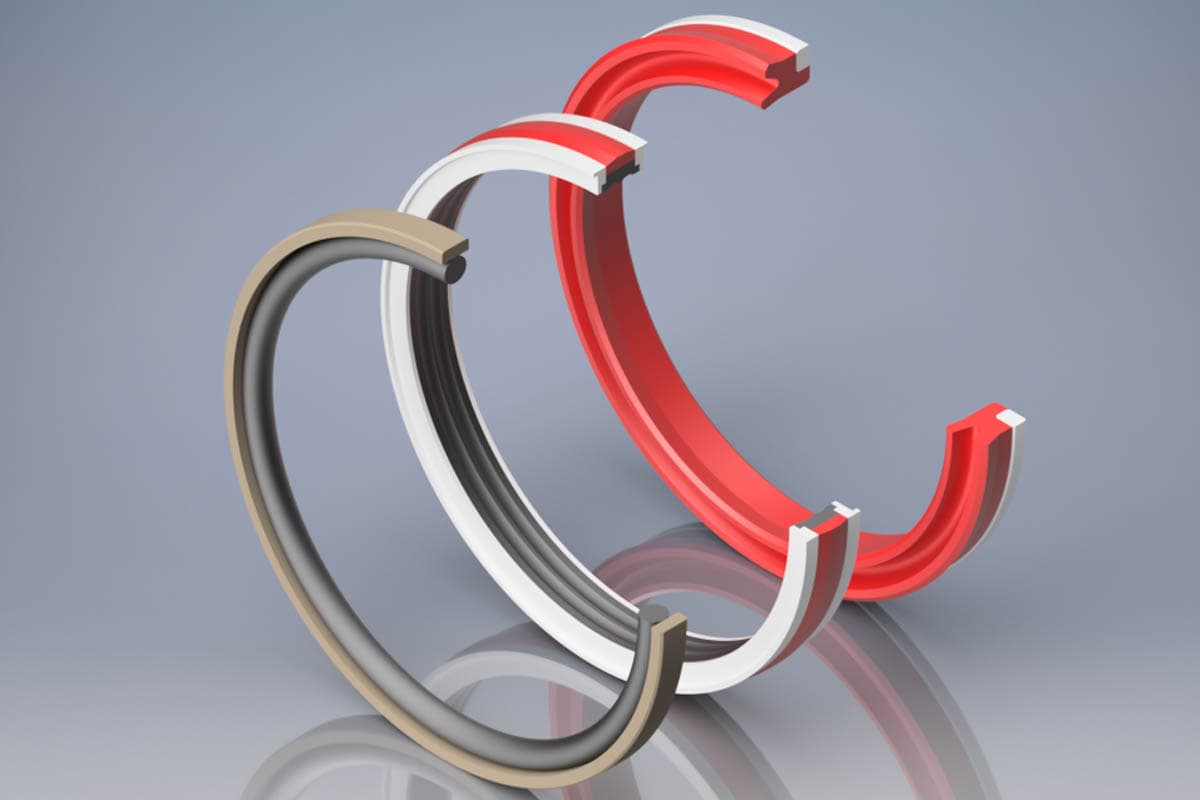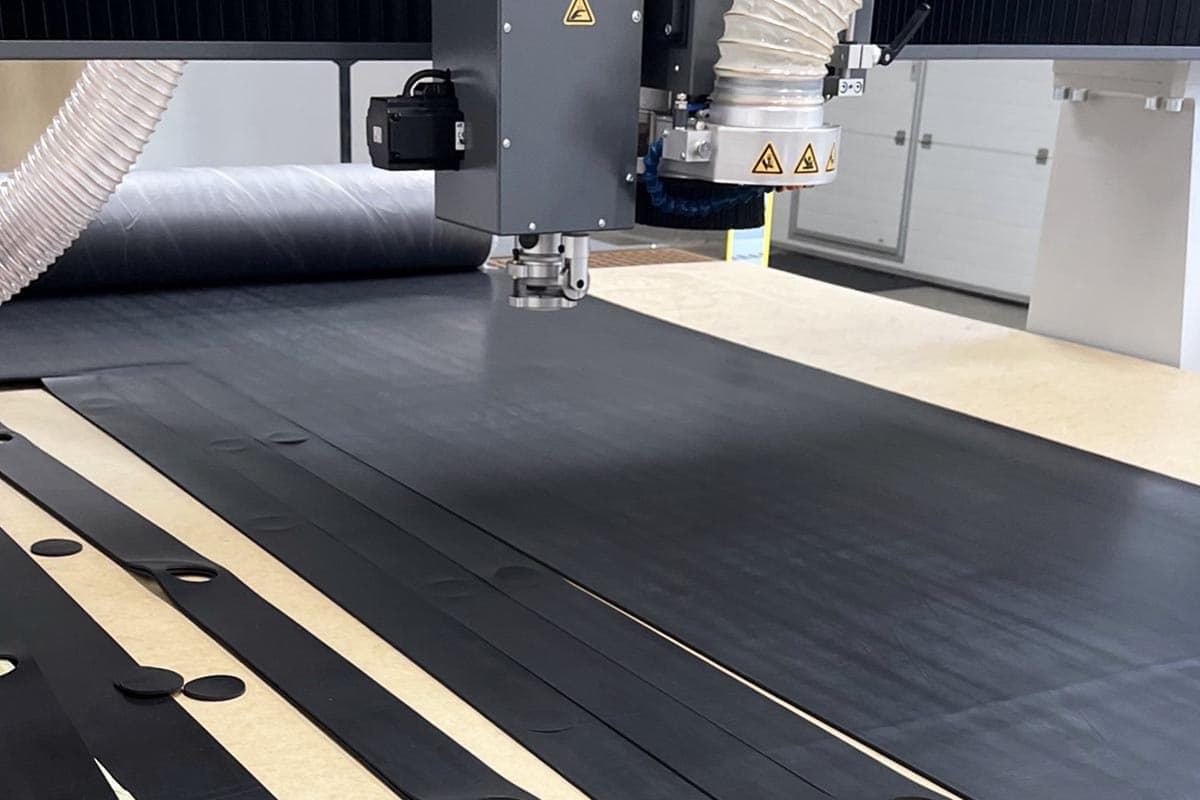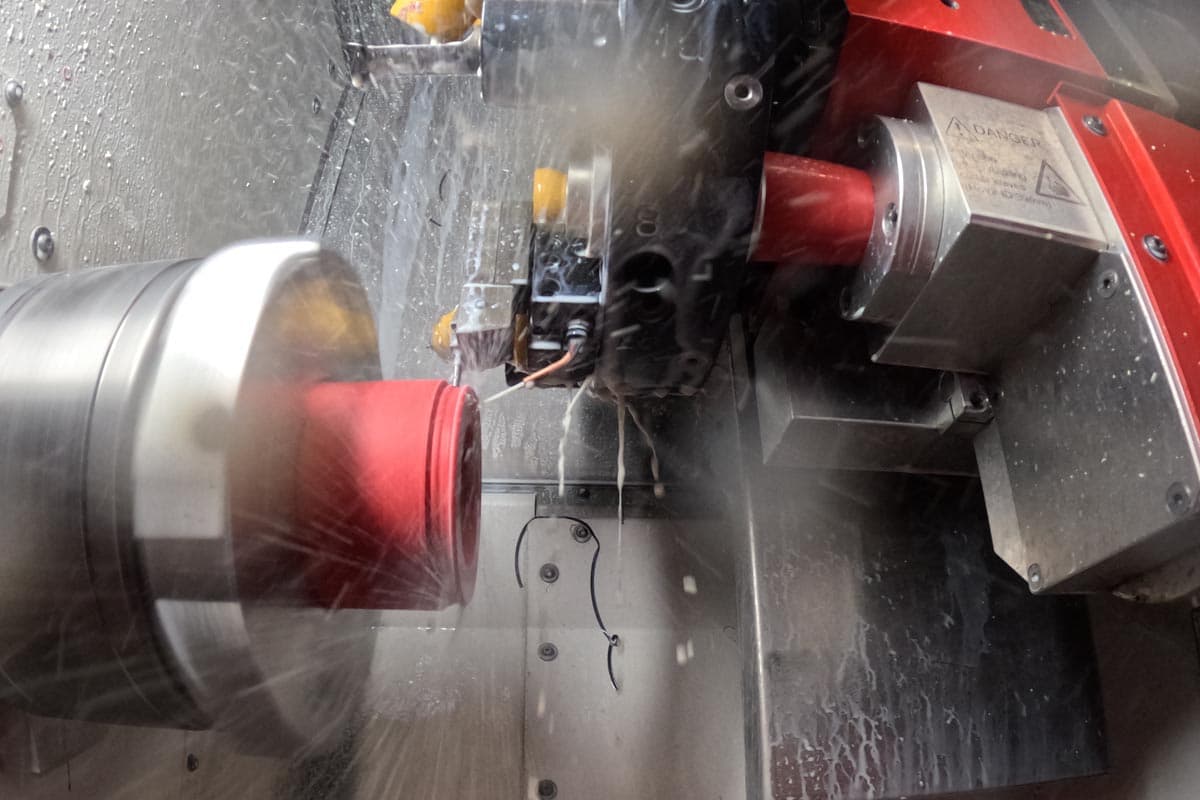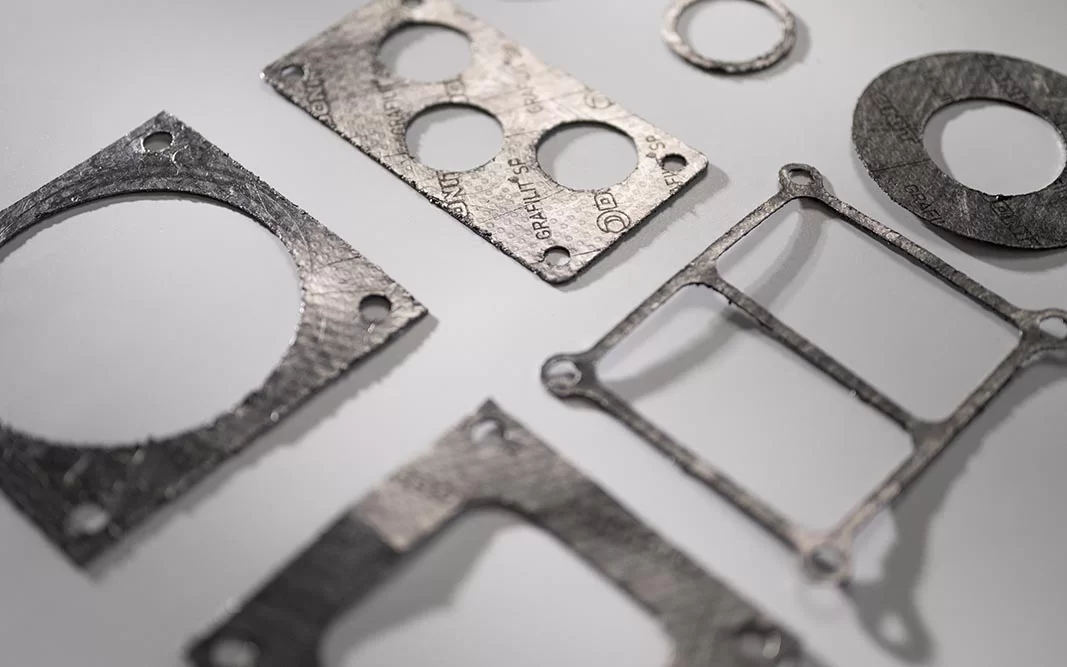


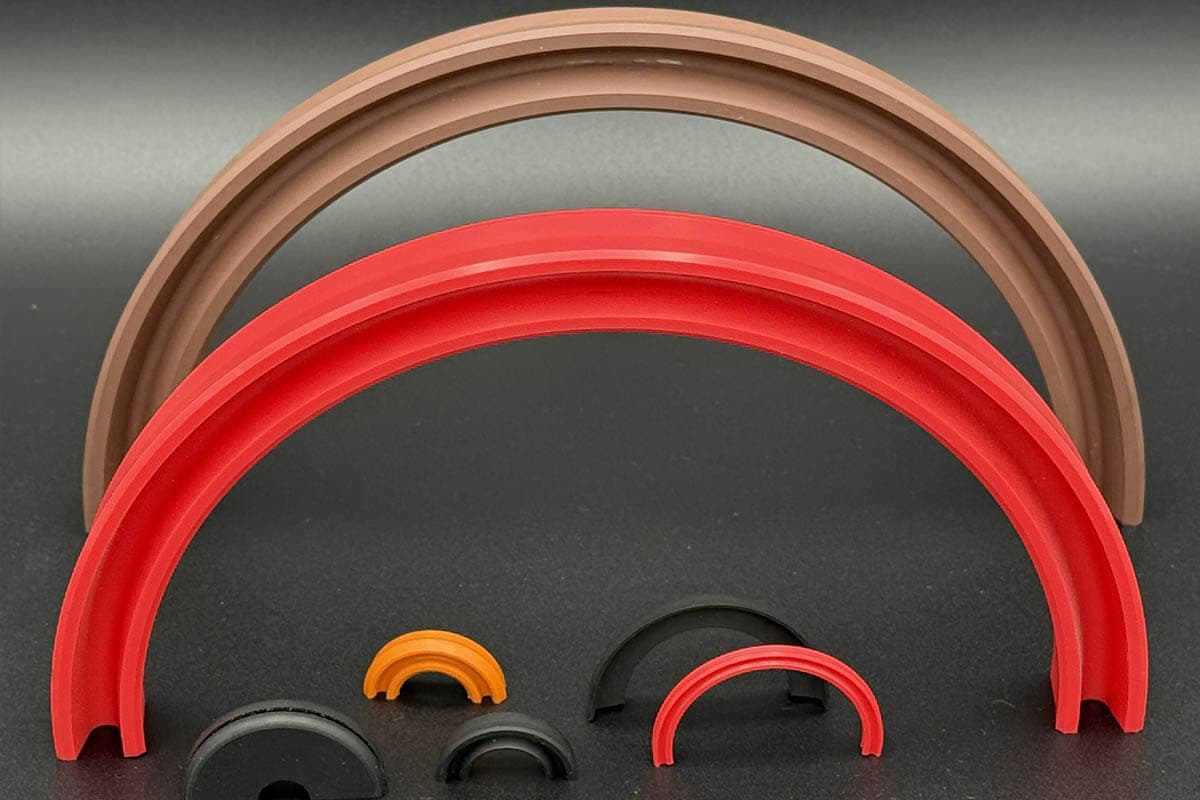
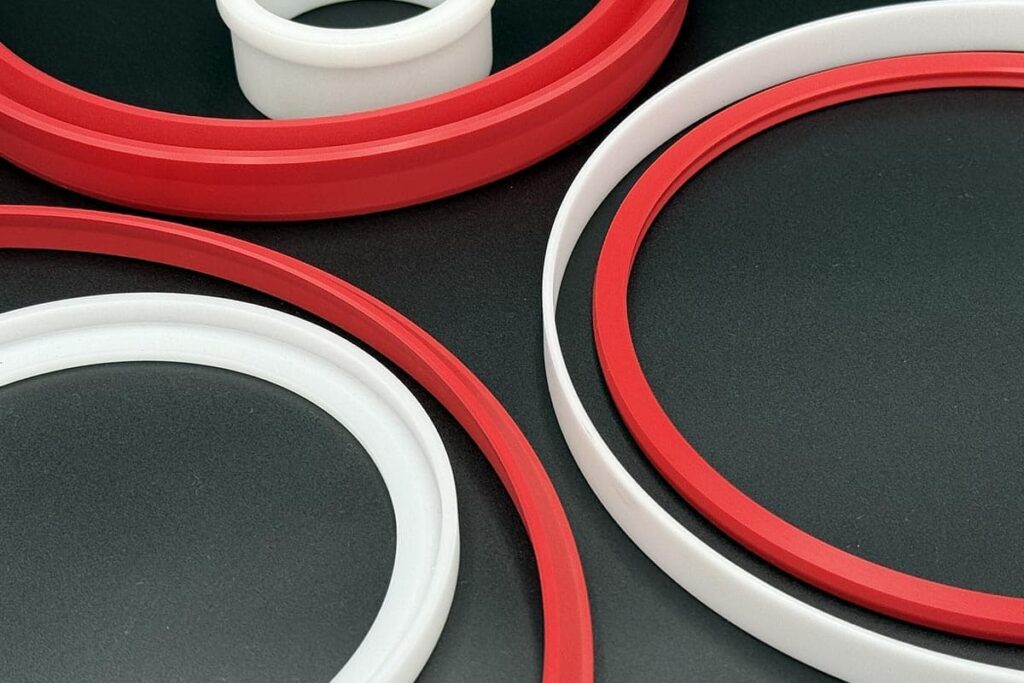
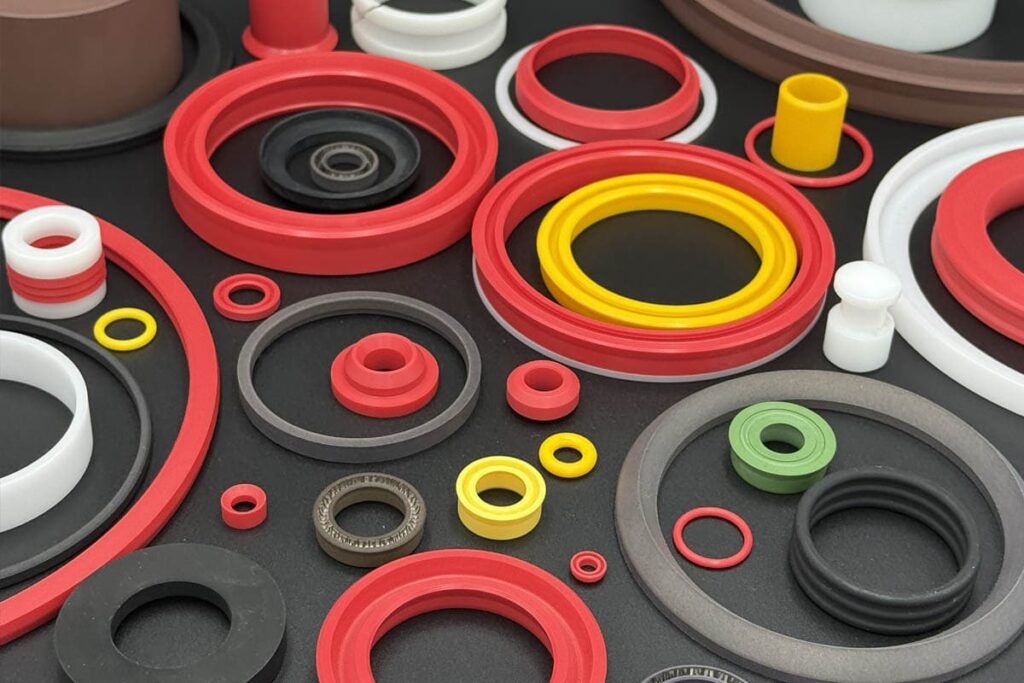
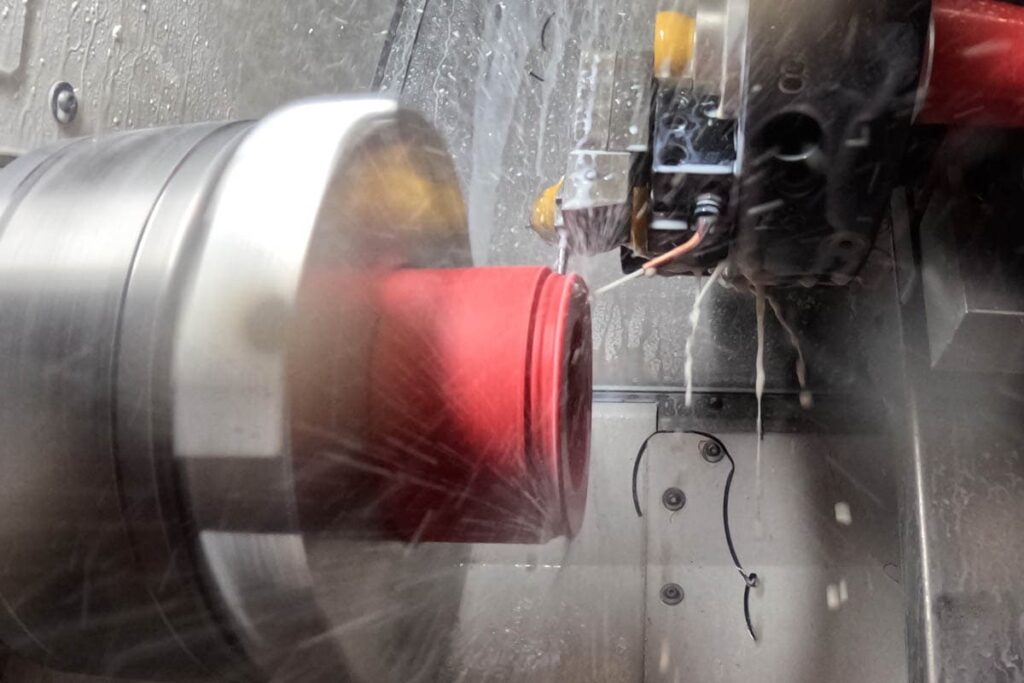
Hydraulic sleeves for atypical piston rods are an effective solution in cases where standardized seals cannot be used for various reasons. Custom-made hydraulic sleeves are manufactured by CNC turning, which makes it possible to produce even small quantities quickly, accurately and without the need to invest in expensive moulds. Typical materials are H-PU, NBR, FPM or EPDM. The dimensions, profile and geometry of the cuff can be precisely tailored to the specific situation.
Why standard hydraulic cuffs are often not enough
Standardized hydraulic seals are designed for common size ranges of hydraulic cylinders (most commonly according to ISO 5597:2018 or ISO 7425:2021). In practice, however, situations often arise where these standard seals cannot be used and an atypical solution must be sought to ensure proper sealing function.
Customized hydraulic cuffs should be used especially in the following situations:
- The piston rod has atypical dimensions that do not correspond to the standard size range.
- The hydraulic cylinder elements have been overhauled due to excessive wear.
- Design of custom machines with atypical hydraulic elements.
- Specific operating conditions where standard materials fail.
- Original parts are unavailable.
- The building space for the seal has been modified.
- New seals are needed immediately and urgently.
These cases can be solved operatively by manufacturing hydraulic sleeves designed exactly according to the application.
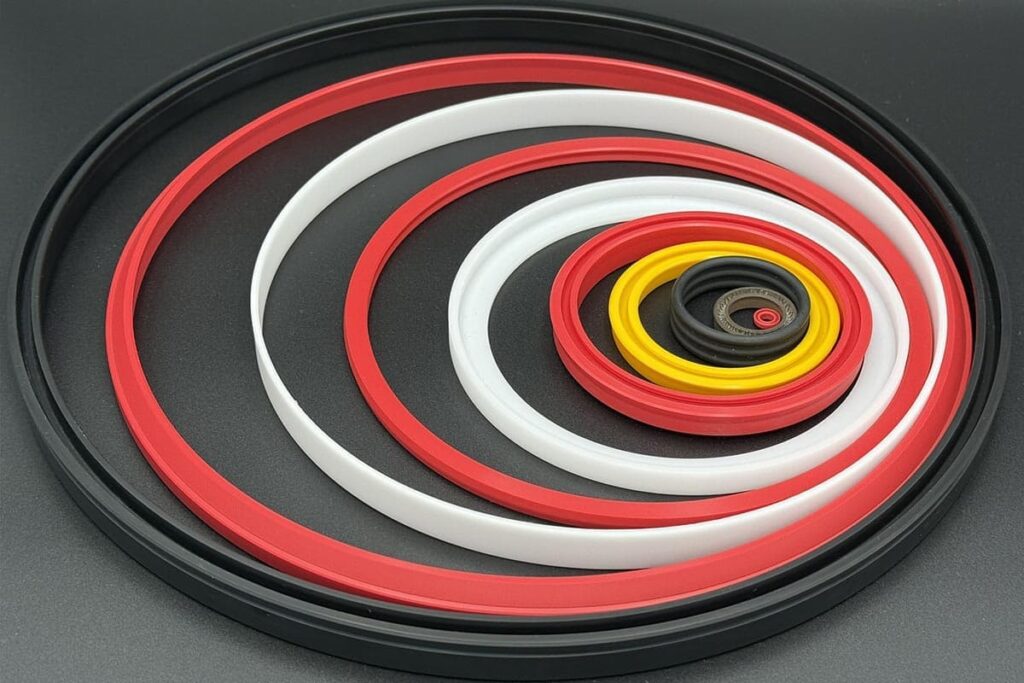
We are engaged in CNC production of seals and we can produce atypical hydraulic sleeves up to 500 mm in diameter.
Benefits of custom CNC manufacturing of hydraulic cuffs
Custom manufacturing of hydraulic cuffs brings significantly more flexibility compared to standardized solutions. The main advantages include:
- Production from one piece.
- No production mould required = significant financial and time savings.
- Possibility to change the dimensions of the part = excellent for testing, sampling.
- Wide range of materials.
- Repeatability, accuracy, speed.
- Production of atypical shapes or profiles of hydraulic seals.
Materials for hydraulic sleeves and their limits
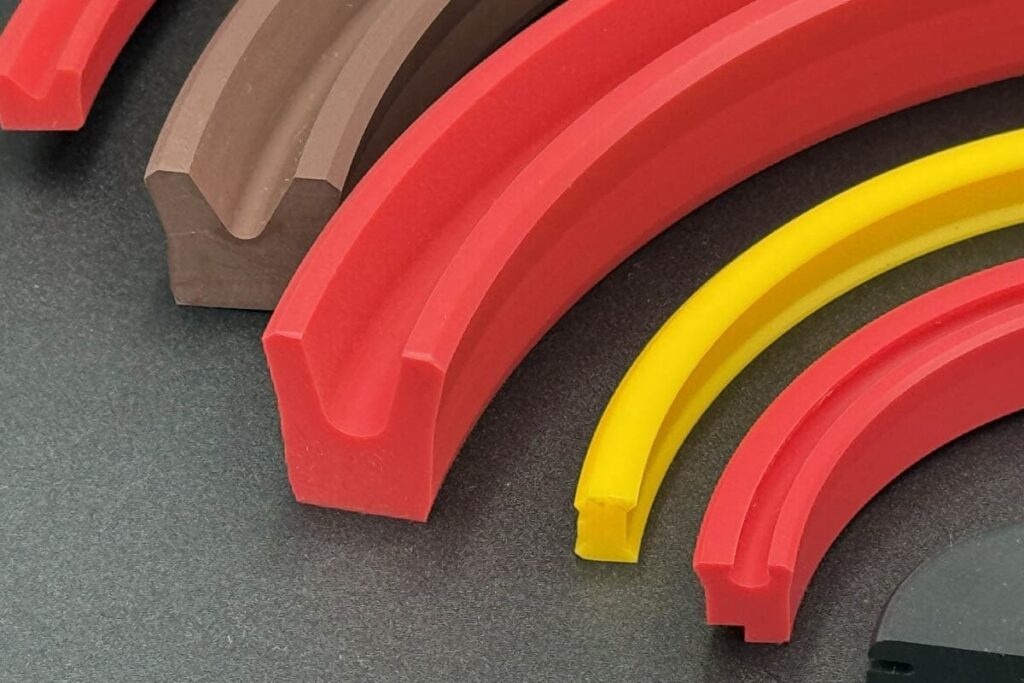
A wide range of technical materials are used for the production of hydraulic sleeves (more than 80 in our range ). The most commonly used materials include the following categories:
Polyurethane
It is characterized by a combination of excellent mechanical properties, high abrasion and wear resistance, flexibility and high tensile strength. Its resistance to hydrolysis makes it suitable for long-term contact with water. Selected variants meet FDA requirements and can therefore also be used in the food industry. Due to its parameters, it is one of the most commonly used materials for the production of gaskets.
- Most commonly used variants: H-PU 95 Sh.A | H- PU 55 Sh.D
- Temperature resistance: – 20 °C / + 115 °C
- Working pressure: 400 bar / 700 bar (depending on material and seal design)
Elastomers – NBR, EPDM, FPM
Rubber materials that have less hardness and more flexibility and elasticity. Due to their properties, these materials are often used for less stressed sealing elements and low hardness seals.
- Most commonly used variants: NBR 85 Sh.A | EPDM 85 Sh.A | FPM 82 Sh.A
- Temperature resistance:- 30°C / + 110°C | – 45°C / + 130°C | – 20°C / + 220°C
- Working pressure: 160 bar / 250 bar
PTFE
Fluoroplastic with exceptional chemical and heat resistance. Its excellent dry running properties make it ideal for seals and guides operating at low lubrication and high feed rates. The weakness of PTFE is its lower abrasion resistance and tendency to cold flow, which can be counteracted by using fillers such as bronze, glass fibre, carbon or MoS₂
- Most commonly used variants: virgin PTFE | PTFE + 40% bronze
- Temperature resistance: – 200 °C / + 260 °C
- Working pressure: 400 bar
Technical plastics
Thermoplastics with high resistance to pressure, wear and good frictional properties. In the field of sealing, especially for POM, PA and UMW-PE materials, for guide rings, retaining rings.
- Most commonly used variants: POM
- Temperature resistance: – 45°C / + 100°C
- Working pressure: according to seal type
From our experience: production of hydraulic cuffs
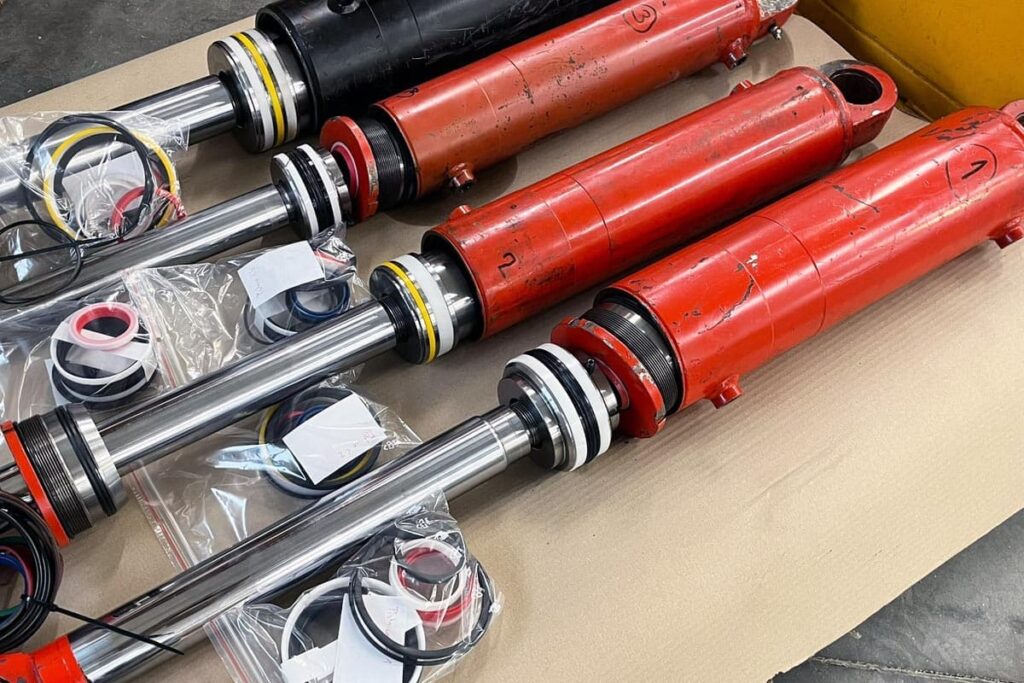
When designing a hydraulic seal, it is necessary to take into account all operating parameters and demands on the seal function.
Mechanical Engineering – Hydraulic Sheet Seal
- Task:
The customer addressed the limited lifetime of the seals at an operating pressure of 500 bar. The piston hydraulic sleeve was experiencing extrusion of material into the groove, causing the seal to fail and lose operating pressure. A standard PUR hydraulic sleeve was used. - The selected seal profile:
DK102R - Selected material:
H-PU95 Sh.A + POM support ring - Result:
The use of a profile with a support ring increased the system’s pressure capacity to 700 bar. The service life has been extended many times over and there are no breakdowns or seal failures.
Power engineering – hydraulic valve drive
- Task:
The hydraulic cylinder used standardised NBR components. However, the long-term operating temperature often reached up to 140°C, which led to thermal deformation of the seals and failure of the sealing function. - The selected seal profile:
DS101 - Material chosen:
FPM 82 Sh.A - Result:
The newly selected FPM material has a temperature resistance of up to +220°C. Thanks to its high temperature resistance, the seal is no longer deformed by heat and the service life is significantly extended.
FAQ – frequently asked questions
What are the most common materials for hydraulic sleeves?
Hydraulic sleeves are most commonly made of PUR, NBR, EPDM, FPM elastomers, PTFE and engineering plastics. The choice of materials significantly affects the durability, resistance and service life of the seals.
How much working pressure can hydraulic cuffs withstand?
It depends on the material and profile of the gasket. NBR sleeves have a resistance up to 160 bar, H-PU up to 400 bar. When using H-PU with a retaining ring, up to 700 bar can be used.
How long does it take to manufacture hydraulic cuffs?
Cuffs can be produced very quickly by CNC turning. New sealing cuffs can be produced in a matter of hours. We try to keep enough starting materials in stock to be able to respond to urgent requests and we can produce the seals the same day if required.
Why is it often not possible to use standardised hydraulic cuffs?
In practice, there are cases when the dimensions of the sealing grooves for various reasons (wear, repairs, etc.) do not correspond to the standard and it is not possible to use seals from the standard dimensional range. Standard materials also have their own temperature or chemical limits and therefore a customized solution must be chosen for specific applications.
Summary
Custom-made hydraulic sleeves can quickly and efficiently solve the sealing of atypical cylinders and hydraulic equipment. They are dimensionally and materially designed to suit the exact situation and thus guarantee excellent sealing performance, temperature and chemical resistance and durability. Thanks to CNC manufacturing technology, they can be produced quickly and without the need to invest in expensive moulds.
Are you looking for atypical hydraulic sleeves for your machines? We have been manufacturing hydraulic seals for a long time and will be happy to advise you on the selection of a suitable sealing element, which we will then manufacture. Contact us and we will prepare a tailor-made offer of seals for you.