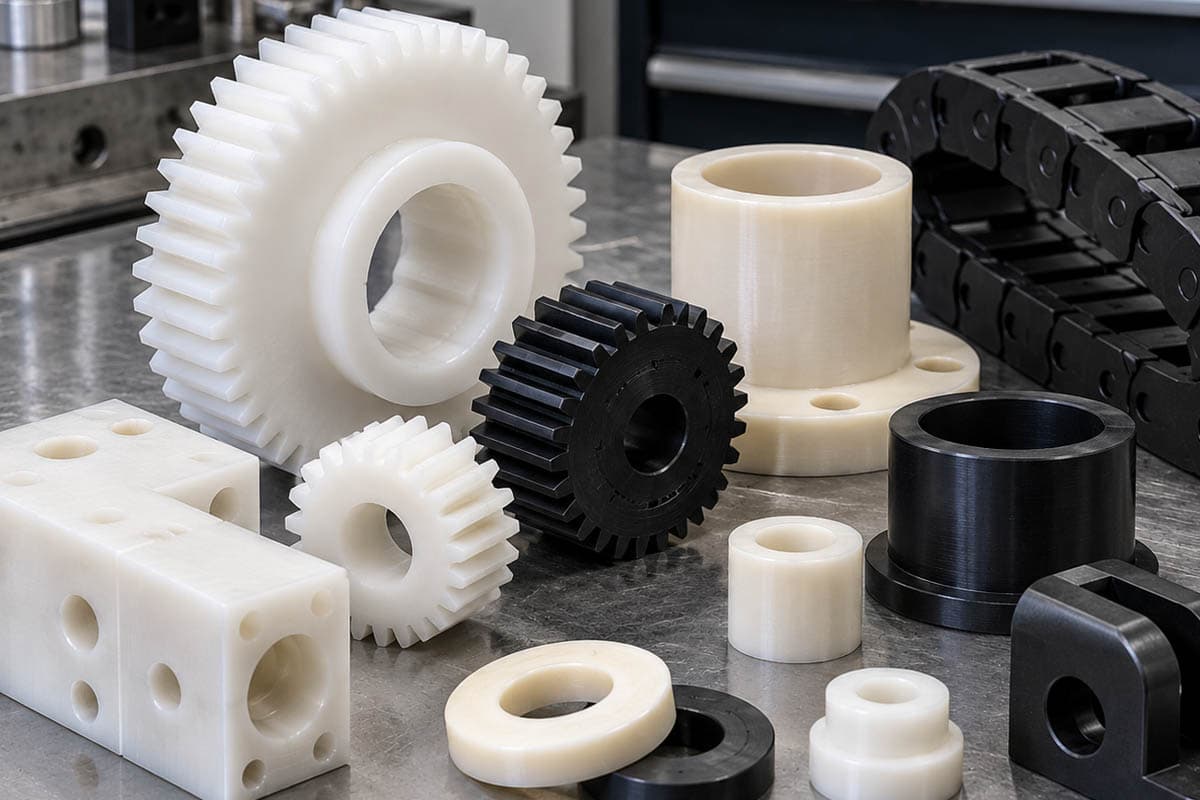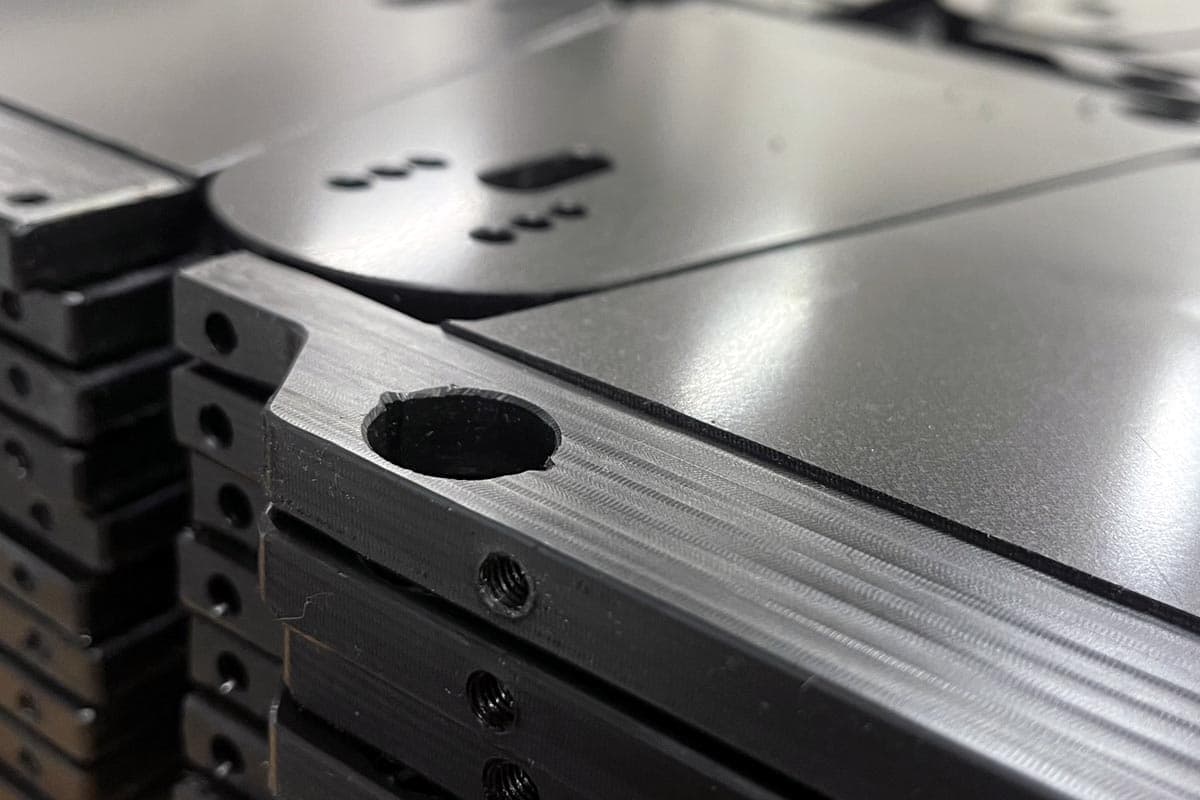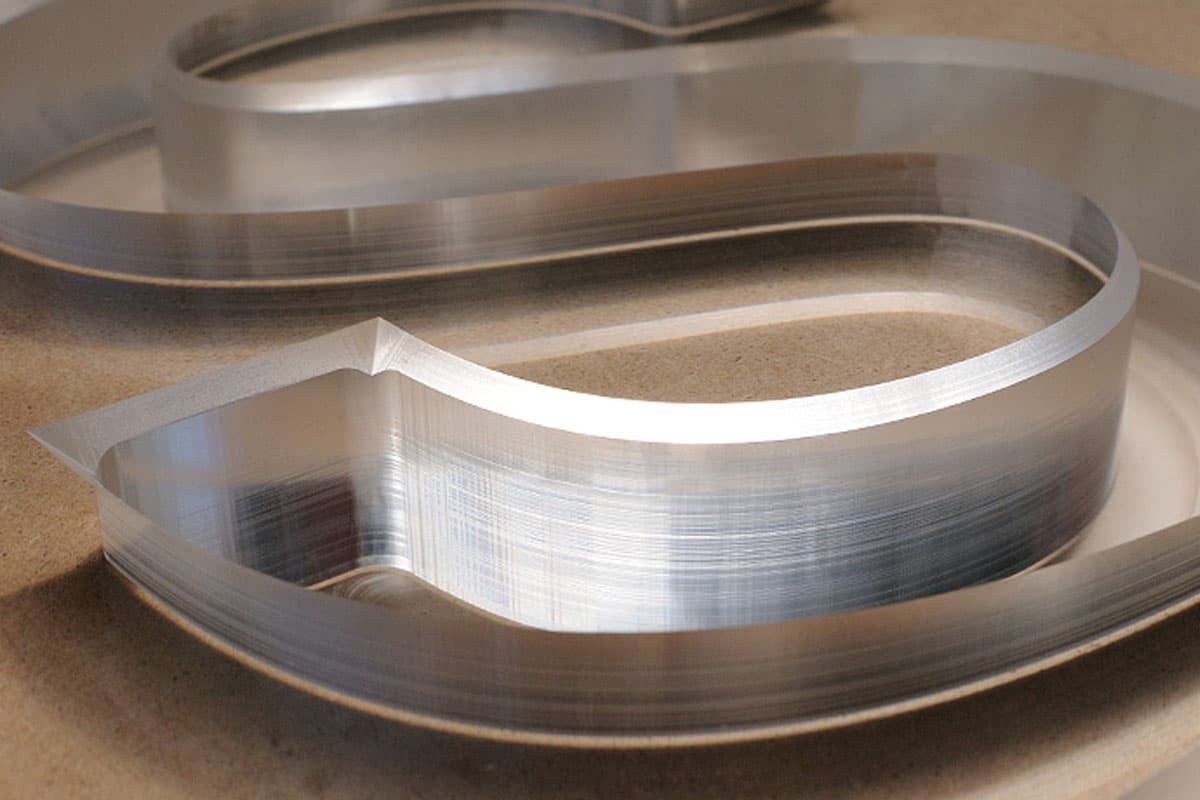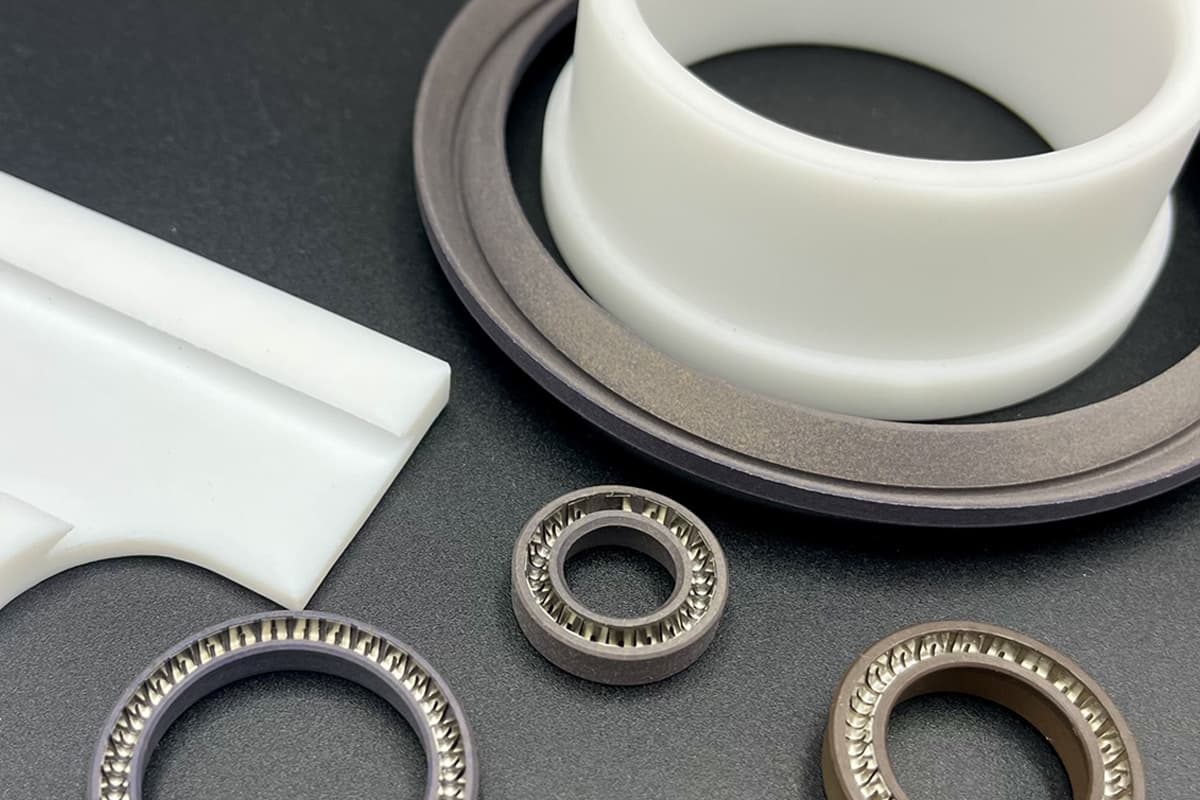


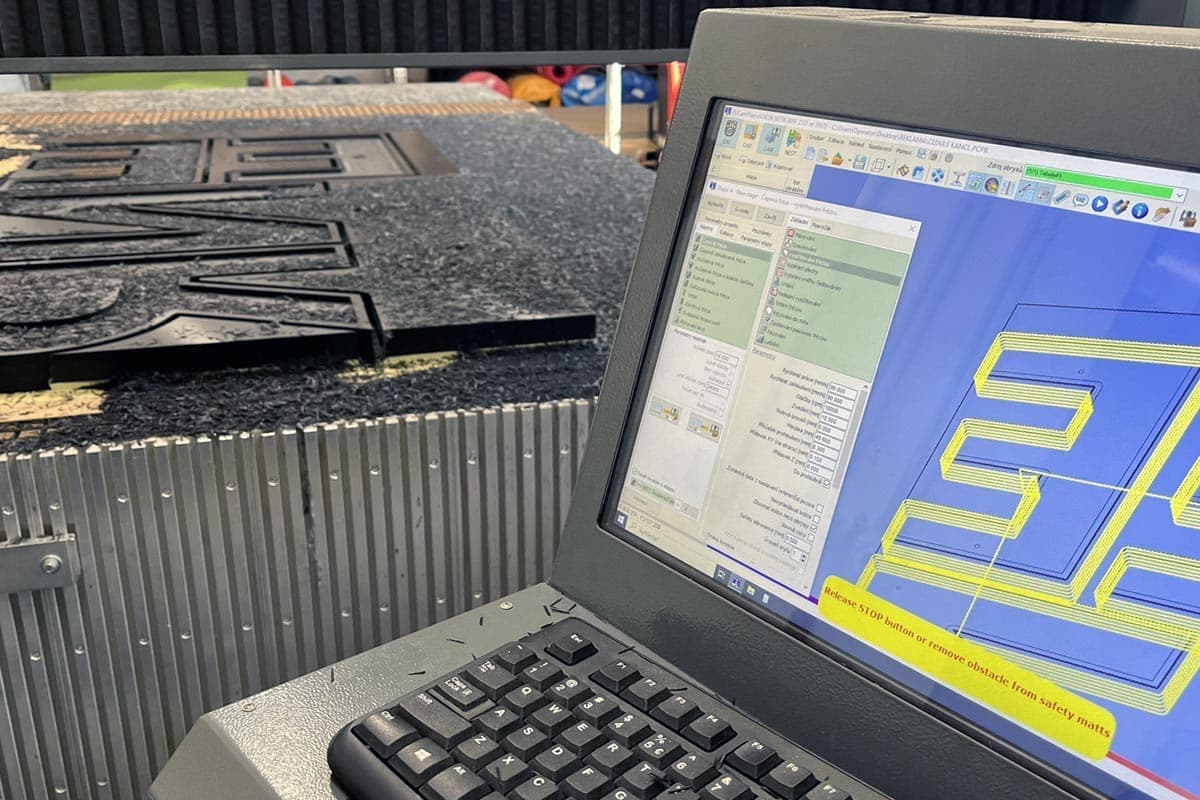
CNC milling is a type of machining process where a multi-axis machine tool removes material from a plastic semi-finished product according to specified parameters. Depending on the selected material, it allows for highly precise production within a tolerance of ±0.05 mm. Milling is an ideal choice for prototype production as well as for the serial production of technical parts for mechanical engineering and other industrial sectors.
What are the advantages of CNC plastic milling?
Compared to other plastic processing technologies (especially plastic injection molding), milling does not require any initial investment in a production mold. This investment, which for larger parts can range in the hundreds of thousands of Czech korunas, is often the most significant obstacle (both economic and time-related) in the production of prototypes and the serial production of industrial parts from technical plastics. Milling is therefore often a significantly more suitable method economically and in terms of time for these types of production orders. Key advantages include:
- Commencement of production without the need for investment in a mold or other technological preparation
- Processing of a wide range of technical plastics
- High precision (tolerance up to ±0.05 mm) and material processing quality
- Suitable for single-piece, small-batch, and serial production in the order of thousands of units
Materials for CNC Plastic Milling
Almost all technical plastics can be milled. The choice of material determines the resulting mechanical, thermal, and chemical properties of the part. Below are the most commonly milled technical plastics with their key parameters.
Polyamide (PA6, PA66)
High toughness, good resistance to oils and lubricants. Operating temperature up to 100 °C (short-term 130 °C). Suitable for gears, sliding bushings, and guide rails. The disadvantage is higher moisture absorption, which causes dimensional changes.
Polyoxymethylene (POM-C, POM-H)
Excellent dimensional stability, low moisture absorption, excellent sliding properties. Post-machining tolerance of ±0.05 mm is stable over the long term. POM-C (copolymer) is easier to machine than POM-H (homopolymer). Standard choice for precision mechanical parts, stops, and sliding inserts.
Polyethylene (PE300 / PE500 / PE1000)
Extremely high wear resistance, approved for food contact (FDA, EU 10/2011). Excels in exceptional sliding properties, extreme wear resistance, high impact toughness, and significant chemical resistance. Used, for example, for guide rails, protective elements, and abrasion-resistant components.
Polyetheretherketone (PEEK)
Top-tier technical plastic for extreme conditions: operating temperature up to 250 °C, exceptional chemical resistance, low flammability (UL94 V-0). The material price is significantly higher than PA or POM — it is used where other plastics fail.
PTFE (Teflon)
Lowest coefficient of friction of all plastics (μ = 0.04–0.10), chemically inert to practically all media. A soft material with a tendency to creep under pressure — unsuitable for applications with point loading. Ideal for seals, sliding surfaces, and parts in aggressive chemical environments.
HDPE and PP
Inexpensive, easy to machine, chemically resistant. Used for tanks, covers, and structural parts of lower precision. Tolerance typically ±0.1–0.2 mm due to thermal expansion.
Polycarbonate
Transparent technical plastic used in many applications as a substitute for traditional glass. It excels in mechanical resistance, weather resistance, and wide processing possibilities (bending, gluing).
Podívejte se na přehled dostupných materiálů z plastu a jejich technické listy.
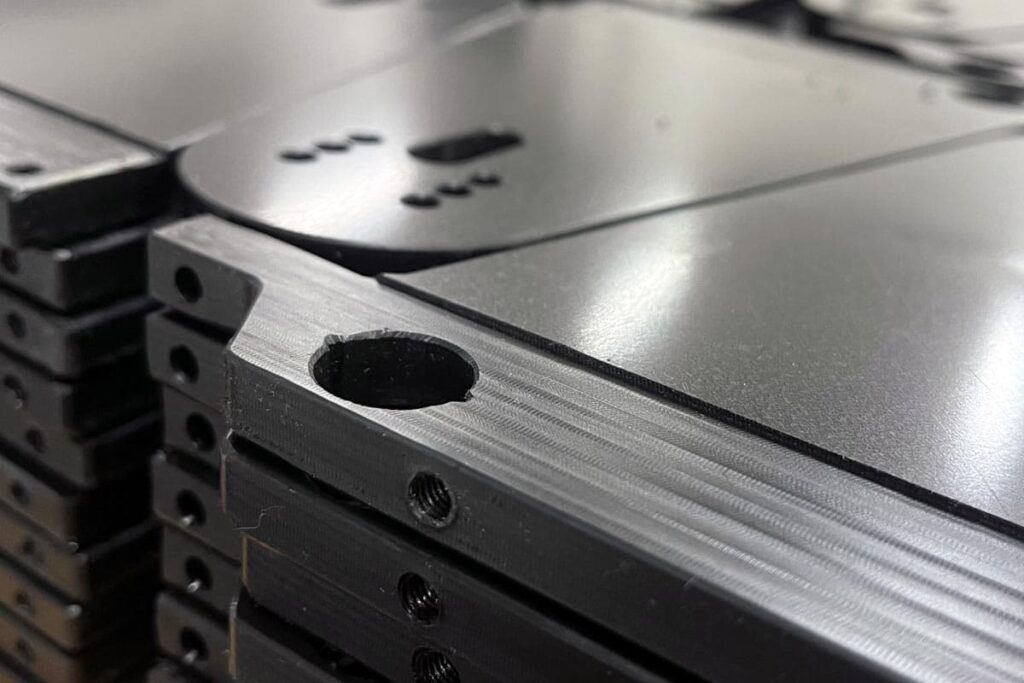
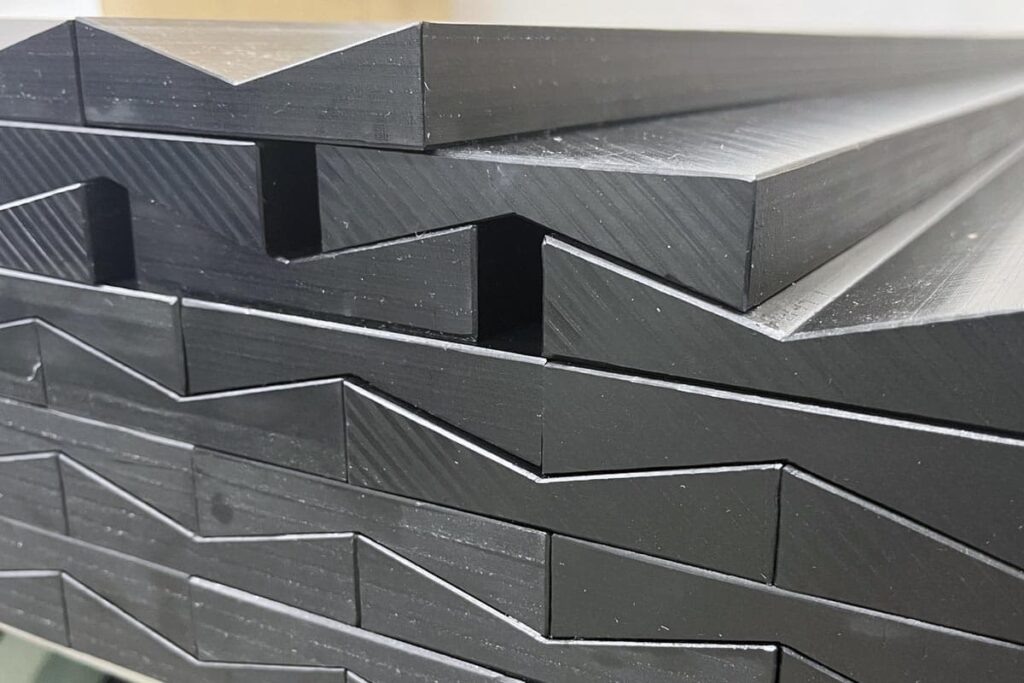
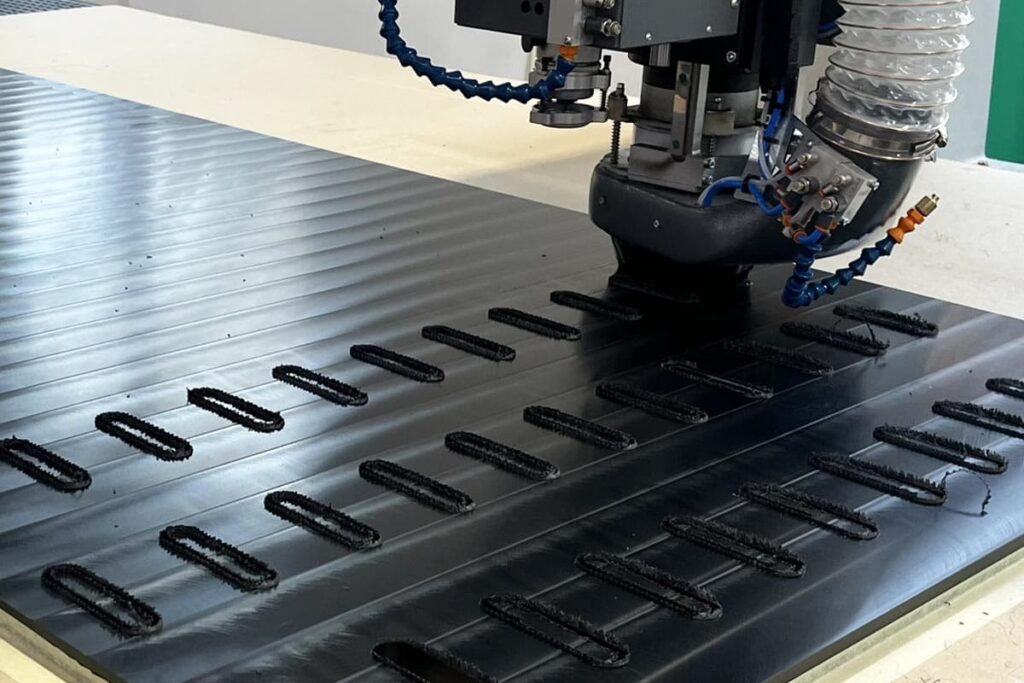
From our practice: product examples
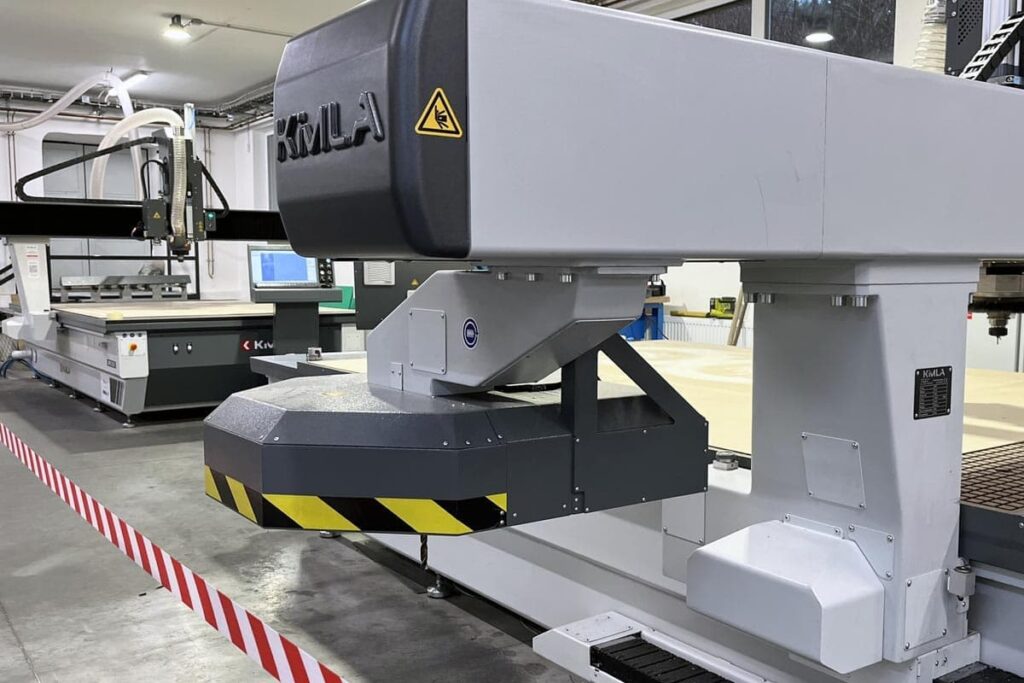
V naší CNC výrobě využíváme 2 moderní CNC frézky s pracovní plochou 3100 x 2100 mm. Díky tomu dokážeme vyrábět přesně, kvalitně a naše výrobní kapacita umožňuje efektivní výrobu i velkých sérií.
1. Food Industry – filling line structural elements
- Assignment:
A manufacturer of custom beverage filling lines was looking for the production of precise machine parts made of abrasion-resistant technical plastic with excellent sliding properties and a long service life. - Materiál:
PE1000 s FDA certifikátem - Result
Components milled from PE1000 meet all requirements, function excellently in practice, and do not cause any damage or abrasion to the processed products. Different filling line designs require different part dimensions, making milling an efficient and economically advantageous option.
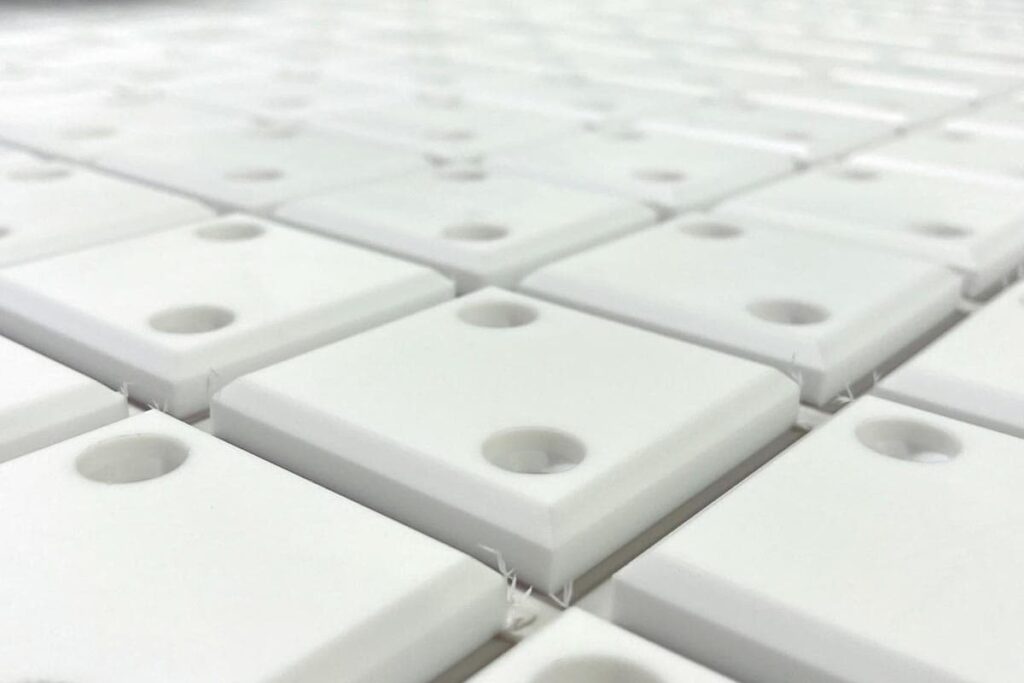
2. Playgrounds – structural elements
- Assignment:
A playground manufacturer was looking for a way to produce structural parts for use in playgrounds. Requirements included safety (rounded edges, smooth surface, no burrs), material resistance to weather conditions, high strength and stability, and the possibility of choosing various colors. - Materiál:
Sendvičové PE desky v mnoha barevných variantách - Result
The material ideally meets the selected requirements. The resulting parts are perfectly machined on both sides without any sharp edges or corners. Given the requirement for single-piece production, CNC milling is the most efficient method of material processing.
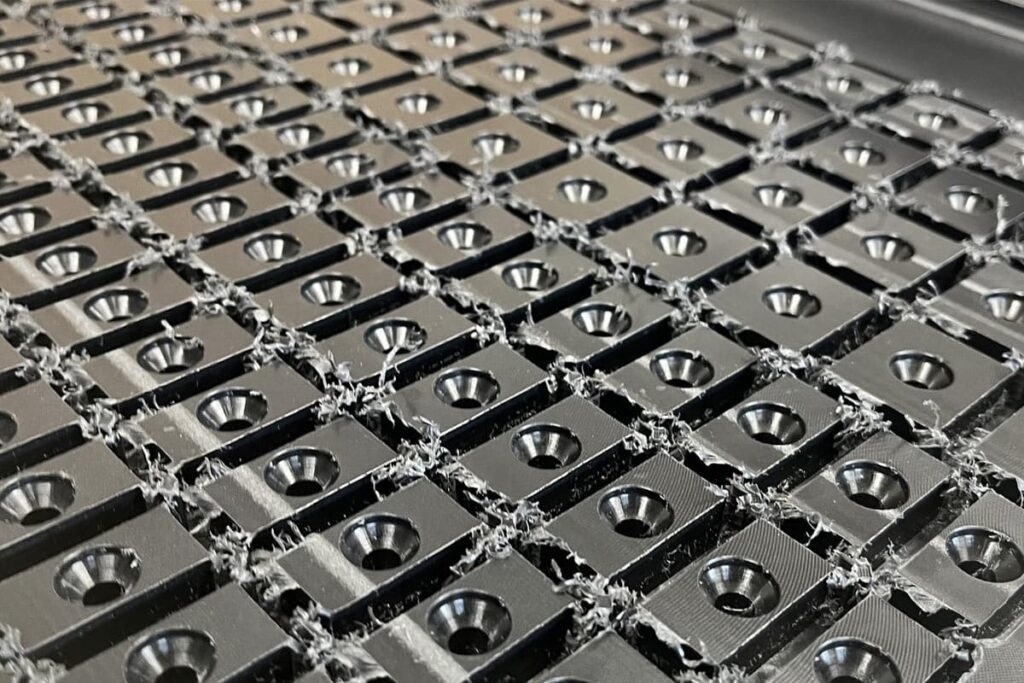
3. Advertising Industry – visible structural elements
- Assignment:
An advertising stand manufacturer approached us with a request for the production of precision parts used as components of a presentation stand for small recreational boats. The parts required stability and dimensional accuracy, economic efficiency, and especially a glossy surface on the visible part without scratches. - Materiál:
PE300 v lesklé variantě - Result
We selected a material that has a glossy surface and meets all the required demands. During milling, it was necessary to protect the glossy surface with a protective film to prevent any scratching or damage. The result is high-precision parts that also meet the requirements for aesthetic finish.
Technological parameters of CNC plastic milling
Cutting conditions
Plastics have significantly lower thermal conductivity than metals — heat accumulates at the cutting point and causes melting or deformation. Key principles:
- High cutting speeds (vc = 200–800 m/min depending on the material), low feed rate prevent overheating
- Air cooling or mist cooling instead of cutting fluid — for hygroscopic plastics (PA), fluid causes swelling
- Sharp tools with a large rake angle (γ = 15–20°) for clean chip removal
Achievable tolerances and surface quality
| Parameter | Standard production | Precision production |
|---|---|---|
| Dimensional tolerance | ±0.1 mm | ±0.05 mm |
| Hole tolerance | H8 | H7 |
| Surface roughness Ra | 1.6–3.2 μm | 0.8 μm |
| Perpendicularity / parallelism | 0.1 mm/100 mm | 0.05 mm/100 mm |
Standards and certifications
CNC plastic milling is governed by general machining process standards — specifically ISO 2768 mk for general tolerances of linear and angular dimensions. For food applications, EU Regulation No. 10/2011 on plastic materials intended to come into contact with food is decisive.
Our production facilities comply with ČSN EN ISO 9001:2016, ISO 14001:2016, and ISO 45001:2018, and we apply the principles of these certifications throughout the entire production process.
When is CNC plastic milling the right choice?
CNC Plastic Milling makes sense for:
- single-piece production and small series (hundreds to low thousands of units) without the need for investment in a mold
- prototyping before the final decision on serial production technology
- production of parts with complex geometry, internal pockets, or precise holes
- requirements for specific certified materials (food industry, electrical engineering, medicine)
If the series exceeds low thousands of units and the geometry allows it, injection molding tends to be more economical — even in such cases, however, milling serves for the production of the mold or the first verification samples.
FAQ
-
What are the minimum series for CNC plastic milling?
Milling is economical starting from 1 unit. Unlike injection molding or pressing, there are no costs for tools or molds. The price per unit decreases as the quantity increases — from approximately 50 units, it pays to invest in optimizing clamping and tool paths.
-
What tolerances can be achieved in CNC plastic milling?
Depending on the selected material and part geometry, the tolerance ranges around ±0.05 mm; for materials that are harder to process with poorer thermal expansion (such as PP), the tolerance is ±0.1-0.2 mm.
-
What format of documentation is needed for an inquiry?
The ideal documentation is a technical drawing in .dxf / .dwg or .pdf format. However, pricing is also possible based on a sample of an old part, which we can precisely measure using measuring probes and an optical measuring device.
-
What is the delivery time for milled parts?
If we have the material in stock, parts can be produced within a week or even faster by agreement. We maintain a stock of basic materials to be able to respond flexibly even to urgent requests.
-
When to choose plastic milling instead of injection molding?
CNC plastic milling is worthwhile even for series up to several thousand units and also for parts with frequent design changes.
Related articles
Polyethylene (PE) – a versatile engineering plastic for industrial applications