

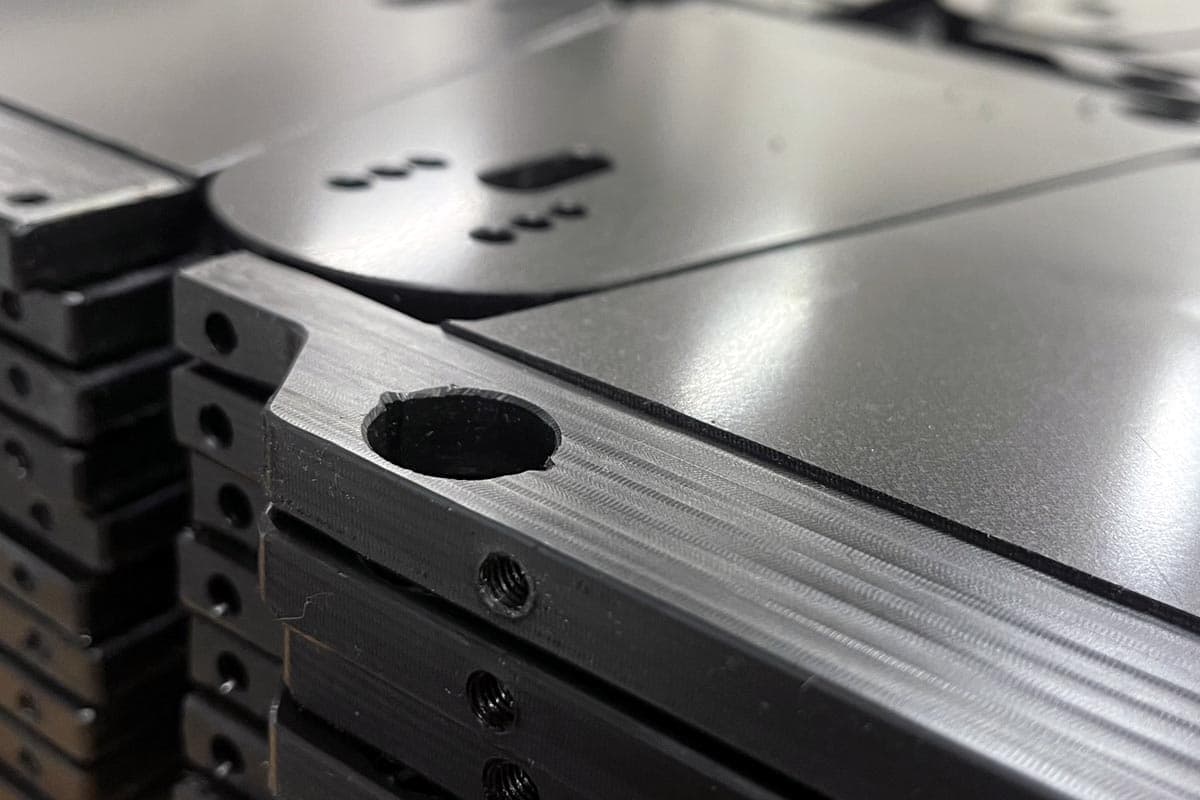
PE1000, also known as UHMW-PE (Ultra-High Molecular Weight Polyethylene), is one of the most durable engineering plastics used in industry. Thanks to its exceptionally high abrasion resistance, very low coefficient of friction, and excellent chemical resistance, it is used in conveyor technology, mechanical engineering, the food industry, agriculture, and heavy industry.
The material is ideal for the manufacture of sliding elements, guide rails, wear-resistant segments, conveyor parts, or components subjected to intense mechanical stress. Although it is a relatively soft plastic, its service life is significantly longer than that of conventional engineering materials in many applications.
In this article, we will take a detailed look at the properties of PE1000, its technical specifications, areas of application, and CNC machining options.
Article Contents
What is PE1000 (UHMW-PE)?
PE1000 is an engineering thermoplastic belonging to the polyethylene (PE) group. It differs from common types, such as PE300 or PE500, primarily in its extremely high molecular weight, which ranges from approximately 3 to 10 million g/mol.
It is precisely this long molecular structure that gives the material its characteristic properties:
- exceptional resistance to abrasion,
- very low coefficient of friction,
- high toughness,
- shock-absorbing capability,
- excellent chemical resistance.
Unlike metallic materials, PE1000 does not corrode, is not prone to seizing, and does not require lubrication in all applications. As a result, it is often used as a maintenance-free engineering material.
How is the PE1000 manufactured?
PE1000 (UHMW-PE – Ultra-High Molecular Weight Polyethylene) is produced by the polymerization of ethylene under precisely controlled conditions. Unlike common types of polyethylene, such as PE300 or PE500, the production process results in polymer chains with an exceptionally high molecular weight, ranging from approximately 3 to 10 million g/mol. It is precisely this long molecular structure that forms the basis for the material’s unique mechanical properties.
The long polymer chains are tightly intertwined, which significantly increases resistance to wear, impact, and fatigue. On the other hand, processing PE1000 is more technologically demanding than that of conventional thermoplastics. The high viscosity of the melt makes it virtually impossible to use conventional injection molding or extrusion to produce complex products.
For this reason, PE1000 is most commonly manufactured using compression molding or polymer powder sintering. In these processes, the polymer powder is heated to a temperature just below its melting point and, under high pressure, is compacted into a homogeneous material with a minimal number of internal defects. The result is semi-finished products with excellent mechanical properties and very high homogeneity.
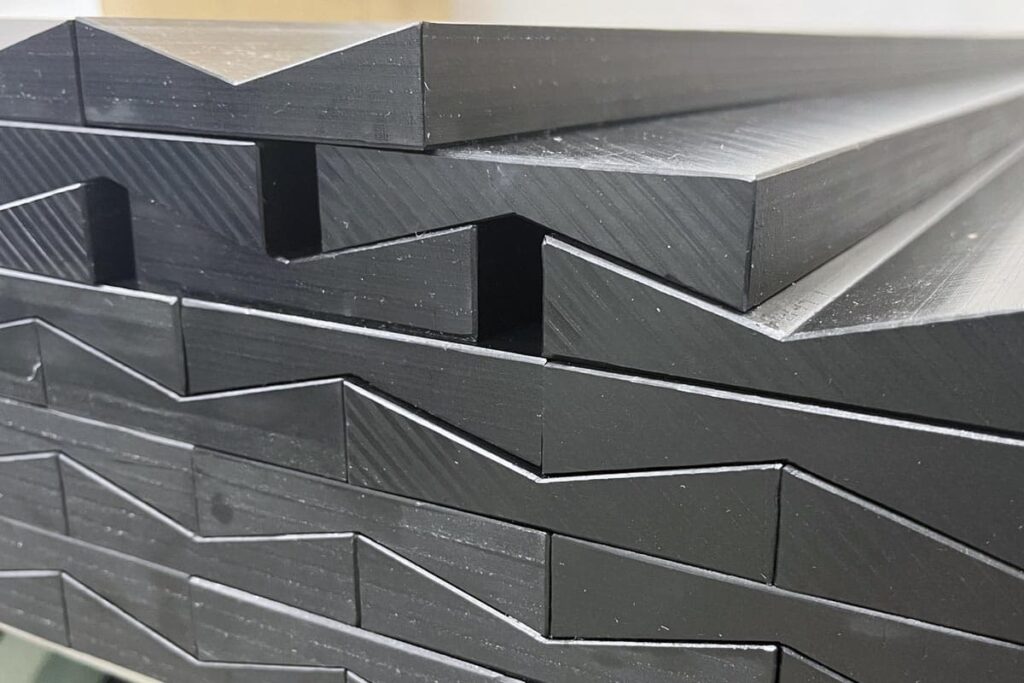
After cooling, semi-finished products of various shapes and sizes are formed, most commonly in the form of slabs, bars, and tubes.
These semi-finished products serve as the basis for the subsequent manufacture of technical parts. Unlike injection-molded plastic parts, final products made from PE1000 are, in most cases, manufactured using CNC machining, which allows for high dimensional accuracy and the production of both one-off and mass-produced components.
A major advantage of this manufacturing process is its flexibility. A wide range of different parts can be produced from a single semi-finished product without the need to invest in expensive molds. This is particularly cost-effective when manufacturing prototypes, replacement parts, small batches, or custom components with specific dimensions.
In addition to the standard natural version, PE1000 is also available in a range of modifications tailored to specific applications. For example, variants with enhanced UV resistance, antistatic types (ESD), conductive modifications, materials approved for food contact (FDA and EU 10/2011), and blends with additives that improve sliding properties and service life under extreme loads.
Key Properties of PE1000 Material
PE1000 (UHMW-PE) is considered one of the highest-performance engineering plastics for applications in which wear resistance, low friction, and long service life are critical. Thanks to its combination of mechanical, physical, and chemical properties, it offers a suitable alternative to metal materials and other engineering plastics.
It is precisely this set of properties listed below that makes PE1000 suitable for use in conveyor technology, mechanical engineering, the food industry, agriculture, the mining industry, and the manufacture of material-handling equipment.
Exceptional abrasion resistance
The greatest advantage of PE1000 is its extreme resistance to abrasive wear. The material retains its properties even during prolonged contact with moving parts or abrasive materials such as sand, gravel, coal, wood chips, or bulk mixtures.
Compared to standard engineering plastics, PE1000 has a service life several times longer in applications involving intense friction. In some operations, it exhibits less wear than bronze, cast iron, or even certain types of hardened steel.
As a result, it is used, for example, for:
- conveyor guide rails,
- sliding segments,
- bin liners,
- skid plate,
- protective plates,
- wear-and-tear parts for machines.
In practice, this means lower maintenance costs, fewer production line downtimes, and longer replacement intervals for individual components.
Very low coefficient of friction
PE1000 is among the materials with the lowest coefficient of friction in the entire group of engineering plastics. Its surface is naturally slippery, which allows parts to move smoothly without significant resistance.
Low friction offers a number of practical advantages:
- less wear on moving parts,
- less stress on the drives,
- reduction in energy consumption,
- reducing heat generation due to friction,
- quieter operation of the equipment,
- Can operate without additional lubrication in many applications.
That is precisely why PE1000 is often used for chain conveyor guide systems, slide guides, or plastic belt guides
High impact toughness
Another important property is its exceptional toughness. PE1000 is highly resistant to impacts, vibrations, and dynamic loads without cracking or breaking.
Unlike some other plastics, it retains this property even at very low temperatures. The material is therefore suitable for use in cold storage facilities, freezers, or outdoor applications.
The typical operating temperature range is approximately:
- −200 °C to +80 °C during long-term operation,
- It can withstand higher temperatures for short periods, but prolonged exposure to such temperatures reduces its mechanical strength.
Thanks to its high toughness, PE1000 is particularly well-suited for parts subjected to repeated impacts or varying loads.
Excellent chemical resistance
PE1000 exhibits very good resistance to a wide range of chemicals. The material is not susceptible to corrosion and withstands the effects of many aggressive media commonly found in industrial environments.
For example, it is resistant to:
- water,
- seawater,
- most mineral acids,
- principles,
- alcohols,
- cleaning products,
- salt solutions,
- many organic substances.
Conversely, it is not recommended for prolonged contact with strong oxidizing agents or concentrated oxidizing acids, which can damage the polymer’s structure.
Thanks to its chemical resistance, PE1000 is also used in the chemical industry and in the handling of corrosive substances.
Minimal water absorption and dimensional stability
PE1000 absorbs almost no water. Its water absorption is less than 0.01%, which is significantly lower than that of polyamide (PA6), for example.
Low moisture absorption offers several important advantages:
- maintains its dimensions even in humid environments,
- minimal swelling of the material,
- stable mechanical properties,
- long service life of components.
This is particularly important for precision guide elements or components operating in high-humidity environments.
Low weight
With a density of approximately 0.93 g/cm³, PE1000 is one of the lightest engineering materials.
Compared to steel, it is about eight times lighter, which makes it possible to significantly reduce the weight of moving parts in machines and material-handling equipment.
Lower weight contributes to:
- easier installation,
- less stress on the structure,
- lower energy consumption,
- easier handling during servicing.
Excellent noise and vibration damping
Unlike metal materials, PE1000 can effectively absorb vibrations and dampen noise generated by moving parts.
That is why it is often used for:
- guide rails,
- sliding guides,
- conveyor systems,
- handling equipment.
Using the PE1000 can significantly reduce noise levels on production lines and improve the working environment for operators.
Electrical Insulation Properties
PE1000 is, by definition, an electrical insulator with very good dielectric properties. This makes it suitable for applications where electrical insulation or the separation of conductive parts is required.
The following are also available for special applications:
- antistatic (ESD) versions,
- electrically conductive modifications,
- materials containing carbon additives.
These modifications are used, for example, in the electronics industry or in environments where there is a risk of electrostatic discharge.
Physiological Safety
Many PE1000 grades meet the requirements for food contact under both European legislation and U.S. FDA regulations. The material does not release harmful substances, does not affect the taste or odor of food, and is characterized by very good hygienic safety.
As a result, it is commonly used in the production of:
- conveyor guide rails,
- sliding components of packaging lines,
- parts for food processing machinery,
- handling techniques,
- equipment for processing meat, baked goods, or beverages.
Good machinability
Although PE1000 is a very tough material, it can be machined to a high standard using CNC technology. With the right cutting tools and appropriately selected cutting conditions, it is possible to achieve high dimensional accuracy and a high-quality surface finish.
This material is suitable for:
- CNC milling,
- CNC turning,
- drilling,
- cutting,
- threading,
- the manufacture of complex machine parts.
At our company, we machine PE1000 from sheet and rod stock and use it to manufacture precision components based on technical drawings or supplied samples. Thanks to modern CNC technologies, we are able to handle both single-piece production and repeat runs with high precision and quality of workmanship, and we also have measuring equipment for precise product inspection.
Technical Specifications for PE1000
| Property | Typical value |
|---|---|
| Density | approx. 0.93 g/cm³ |
| Hardness | 62–66 Shore D |
| Absorbency | <0.01% |
| Coefficient of friction | very low |
| Maximum long-term temperature | approx. +80 °C |
| Minimum operating temperature | down to −200 °C |
| Electrical Conductivity | insulator |
| Chemical Resistance | very high |
| UV resistance | Standard version (limited) |
Benefits of PE1000
The main benefits include:
- extreme wear resistance,
- very long service life,
- minimal friction,
- excellent chemical resistance,
- lightweight,
- low operating noise,
- impact resistance,
- good machinability,
- minimal water absorption,
- Option for food safety certifications.
Disadvantages of PE1000
Although it is a top-quality material, it is not suitable for all applications.
The restrictions include:
- lower stiffness than POM,
- higher thermal expansion,
- poorer dimensional stability at higher temperatures,
- more difficult to glue,
- limited UV resistance in standard versions.
Where is the PE1000 used?
Thanks to its unique combination of high wear resistance, low coefficient of friction, chemical resistance, and toughness, PE1000 is among the most versatile engineering plastics used in industry. It is used wherever components are exposed to intense mechanical stress, contact with abrasive materials, or prolonged sliding motion.
Compared to metal materials, it offers lower weight, quiet operation, corrosion resistance, and often a longer service life. Thanks to these properties, PE1000 is a common component of production lines, conveyor systems, and specialized machinery across many industrial sectors.
Conveyor Systems and Material Handling Equipment
One of the most common applications for PE1000 is in conveyor systems. Its low coefficient of friction allows for the smooth movement of conveyed products, while its high abrasion resistance ensures a long service life even during continuous operation.
PE1000 is used, for example, in the production of:
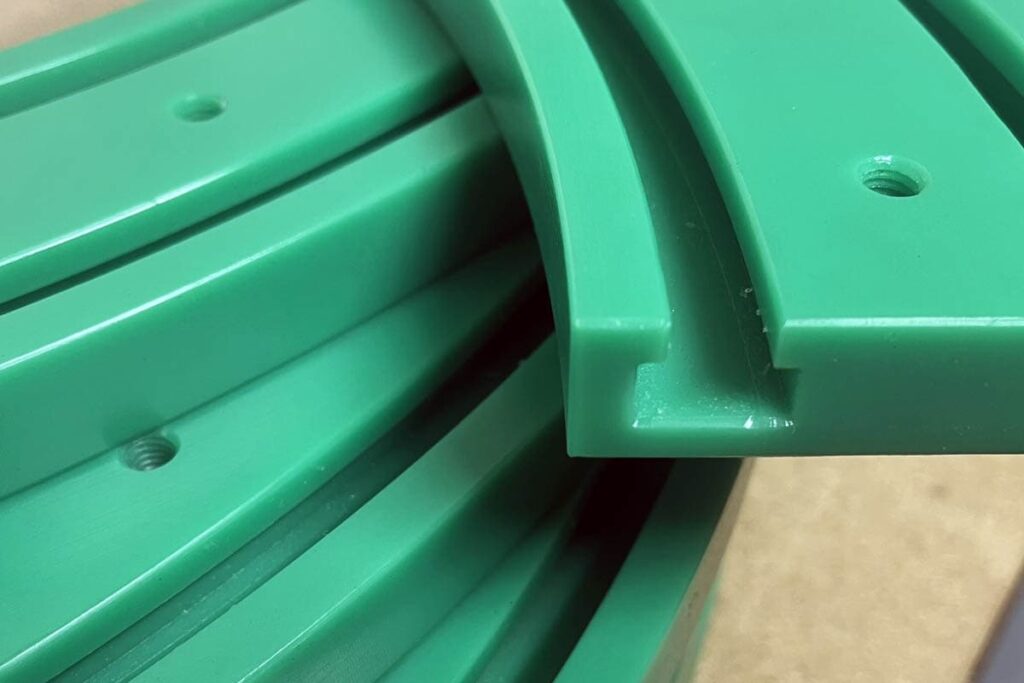
- guide rails for chain conveyors,
- sliding profiles,
- arc-shaped lines,
- support rails,
- slide belts,
- guide segments,
- tensioning elements.
Another major advantage is that they are quieter than metal guides and require less lubrication, which reduces the maintenance requirements for the entire system.
Engineering
In the engineering industry, PE1000 is used as a structural material for components that are subjected to repeated motion or friction. Thanks to its toughness and wear resistance, it is a suitable alternative to metal or bronze parts.
Typical products include:
- sliding bushings,
- guide elements,
- wear segments,
- stops,
- protective pads,
- pulleys,
- spacer elements,
- support plates,
- sliding guide.
Using PE1000 can extend maintenance intervals and reduce the risk of seizing in moving parts.
Food Industry
PE1000 is one of the most commonly used plastics in food processing facilities. Variants with the appropriate certifications for food contact meet the requirements of both European legislation and FDA regulations.
This material is particularly suitable because:
- minimal water absorption,
- high chemical resistance,
- easy to clean,
- low friction,
- resistance to cleaning agents.
It is used, for example, for:
- conveyor rails,
- chain guides,
- sliding surfaces,
- guide segments,
- machine parts for packaging lines,
- handling equipment.
Another significant advantage is its quiet operation and long service life, even during continuous production.
Agriculture
In agricultural machinery, components often operate in environments with high levels of dust, moisture, and abrasive contaminants. Thanks to its wear resistance, PE1000 is a suitable material for manufacturing components exposed to these conditions.
Typical applications include:
- skid plate,
- guide rails,
- protective plates,
- conveyor components,
- replaceable inserts,
- Guide components for harvesters.
In addition, low friction reduces material buildup and improves the smooth flow of agricultural products.
Mining Industry
Handling bulk materials such as coal, gravel, sand, or ore results in extreme abrasive wear. PE1000 is used here as a protective material that significantly extends the service life of process equipment.
The most common applications are:
- bin liners,
- hoppers,
- slide chutes,
- hoppers,
- protective plates,
- guide segments.
At the same time, the low coefficient of friction improves material flow and reduces material buildup on the walls of the equipment.
Chemical Industry
Thanks to its high resistance to a wide range of chemicals, PE1000 is also suitable for chemical plants. The material withstands exposure to acids, bases, salt solutions, and many cleaning agents.
It is used, for example, in the production of:
- protective covers,
- guide elements,
- sliding segments,
- tank linings,
- handling components.
Another advantage is that the material does not corrode and retains its properties even in humid environments.
Logistics and Packaging Equipment
Modern automated warehouses and packaging lines place high demands on the precision and reliability of individual components. Thanks to its low friction and high wear resistance, PE1000 is suitable for manufacturing parts that ensure the smooth movement of products.
For example, the following are manufactured:
- guide rails,
- stops,
- sliding segments,
- handling devices,
- conveyor components,
- protective covers.
The material’s low noise level is a particular advantage in high-speed production lines.
Water Management and Wastewater Treatment Plants
Thanks to its minimal water absorption and high chemical resistance, PE1000 is also used in water treatment and wastewater treatment facilities.
Typical applications include:
- guide elements,
- skid plate,
- wear segments,
- protective pads,
- sliding guides.
The material withstands humid environments over the long term without the risk of corrosion or degradation.
Energy
In power plants, PE1000 is primarily used as a material for sliding and guide components that operate under high mechanical loads.
For example, the following are manufactured:
- fuel conveyor lines,
- replaceable inserts,
- guide segments,
- protective plates.
The material’s long service life helps reduce downtime of process equipment.
Typical PE1000 Products
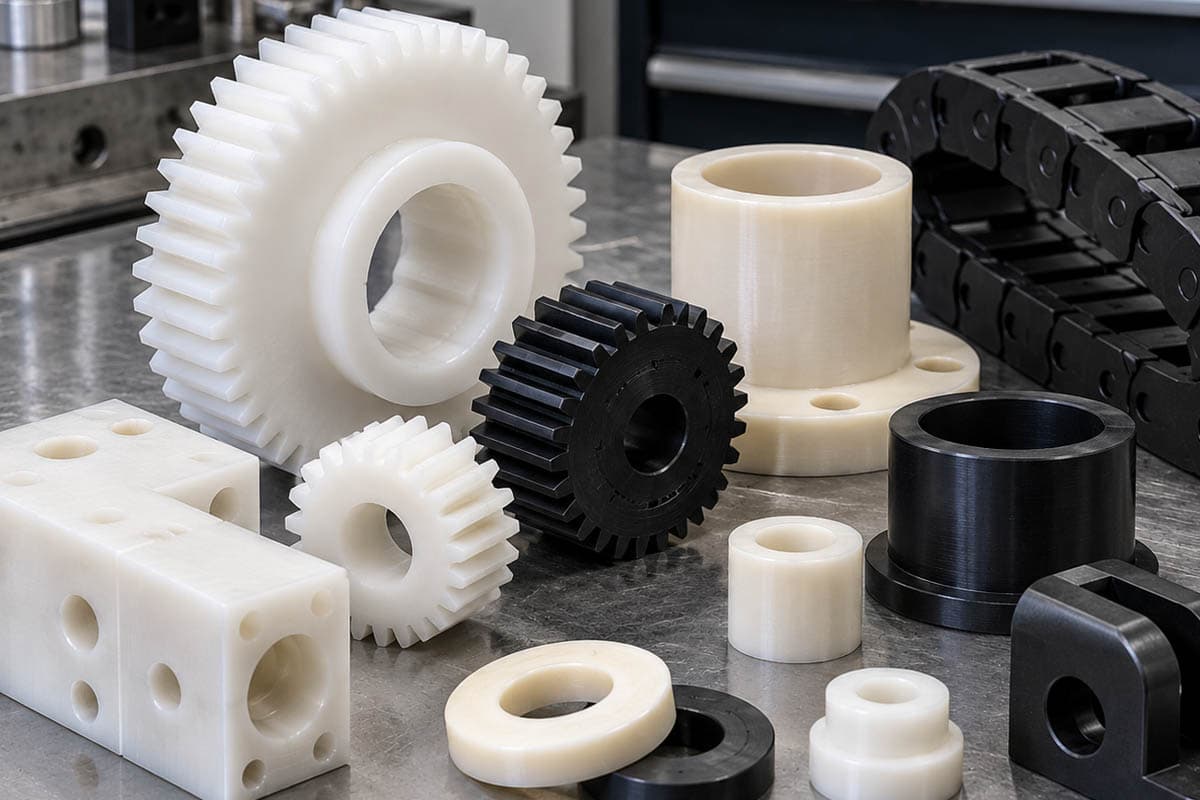
Thanks to its good machinability, PE1000 can be used to manufacture a wide range of engineering parts. The most common ones include:
- conveyor guide rails,
- sliding guide,
- wear segments,
- sliding bushings,
- rollers,
- spacer rings,
- protective plates,
- stops,
- bin liners,
- slide plates,
- wiper blades,
- equipment for production lines,
- handling parts,
- Custom-made machine components.
CNC Machining of PE1000
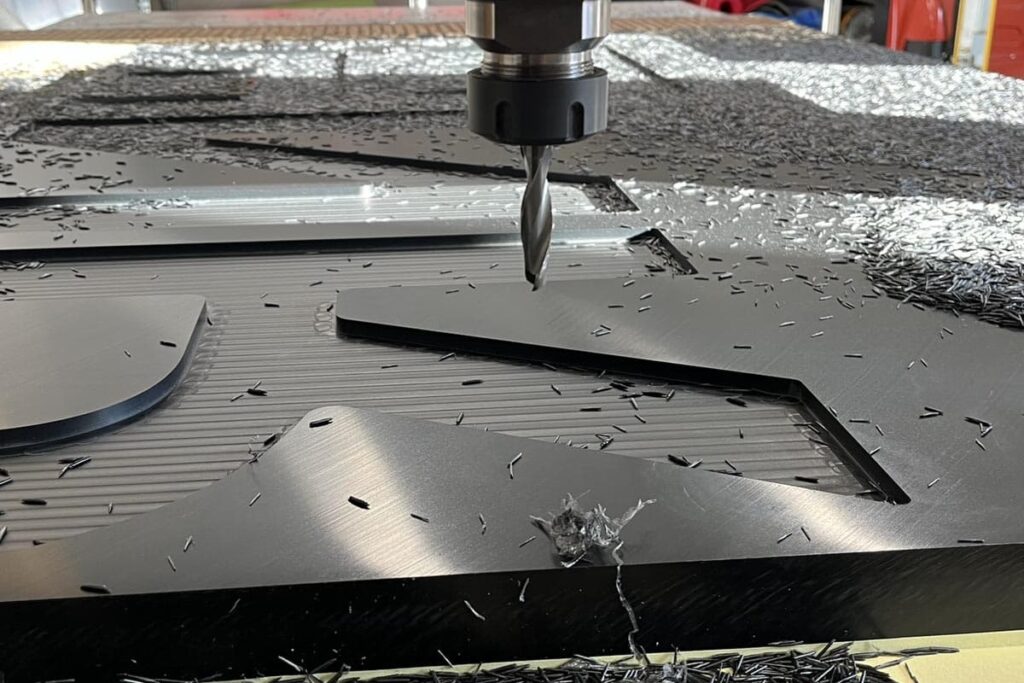
Although PE1000 is one of the most tough engineering plastics, it machines very well using modern CNC technologies. This makes it possible to produce precision parts with high dimensional accuracy from sheet or rod stock, both in single-piece and mass production.
Unlike injection-molded plastic parts, CNC machining offers significantly greater flexibility. There is no need to invest in expensive molds, so prototypes, replacement parts, and small production runs can be manufactured cost-effectively. Furthermore, design changes can be made simply by modifying the manufacturing documentation, without altering the production tools.
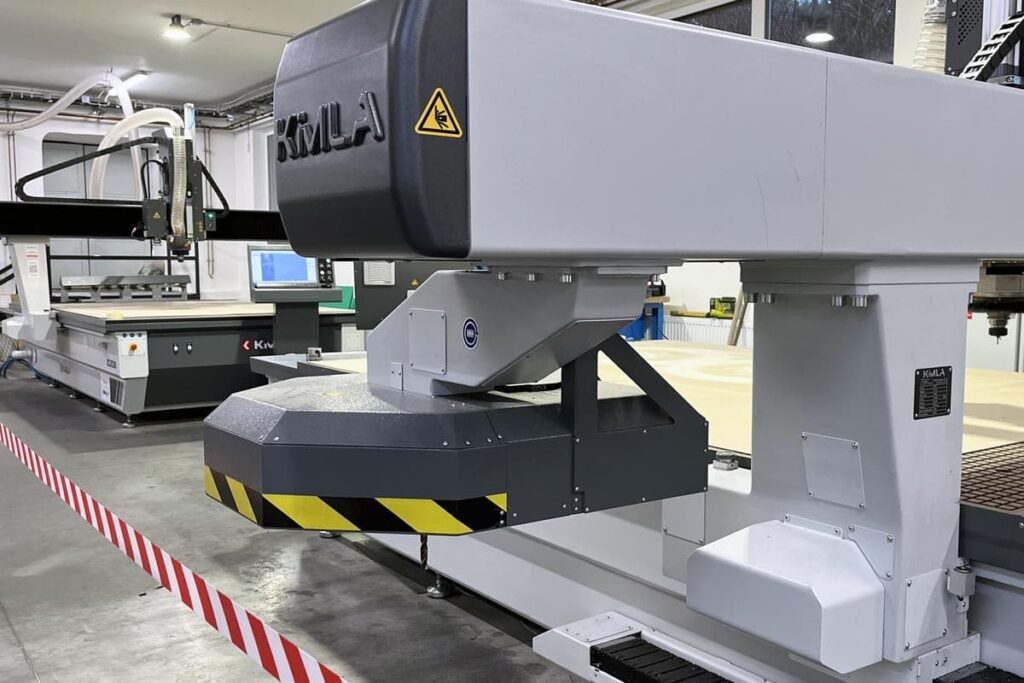
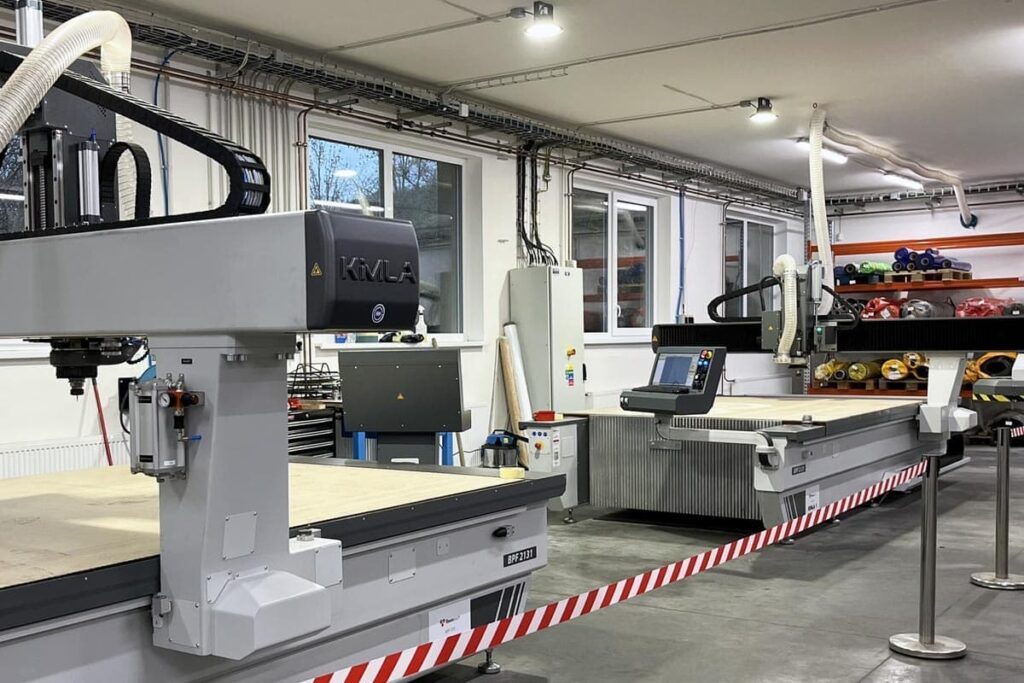
We manufacture a wide range of technical components from PE1000, precisely according to technical drawings, 3D models, or supplied samples. Thanks to our modern CNC milling machines and lathes, we are able to machine both simple and complex parts with an emphasis on precision, repeatability, and quality of workmanship.
Specifics of PE1000 Machining
Machining PE1000 differs in many ways from machining metals and even some other engineering plastics. Although the material is relatively soft, it is also very tough and flexible. It is precisely these properties that require the right machining technology and appropriate cutting conditions.
During production, the following points in particular must be taken into account:
- higher thermal expansion of the material,
- lower modulus of elasticity,
- the ability to deform elastically when clamped,
- the formation of long chips,
- Susceptibility to overheating when cutting conditions are improperly selected.
For this reason, very sharp tools designed for machining plastics are used, and the machining parameters are set to ensure efficient chip removal and minimize heat generation. A properly selected process ensures a high-quality surface finish, high dimensional accuracy, and a long tool life.
CNC Milling of PE1000
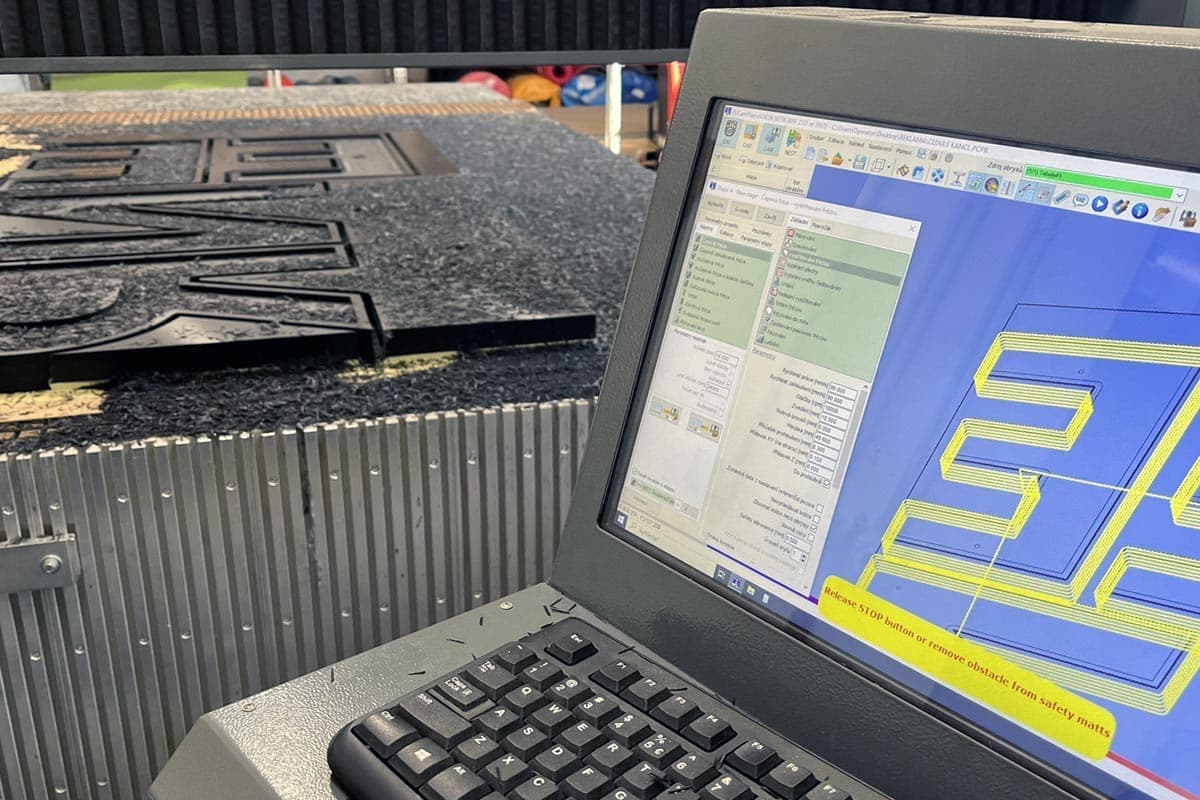
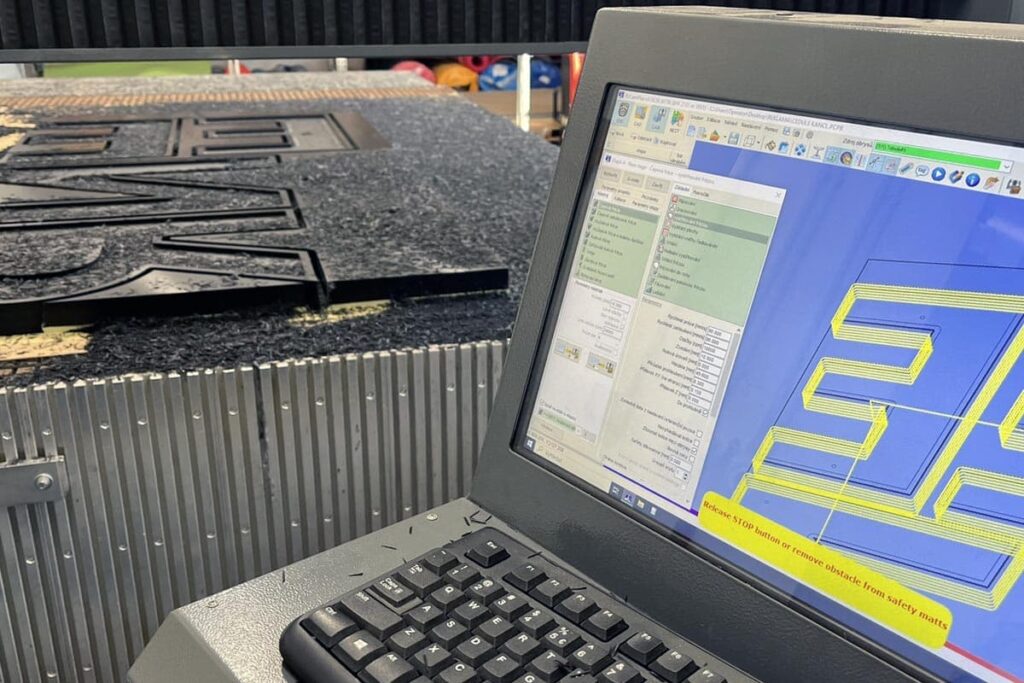
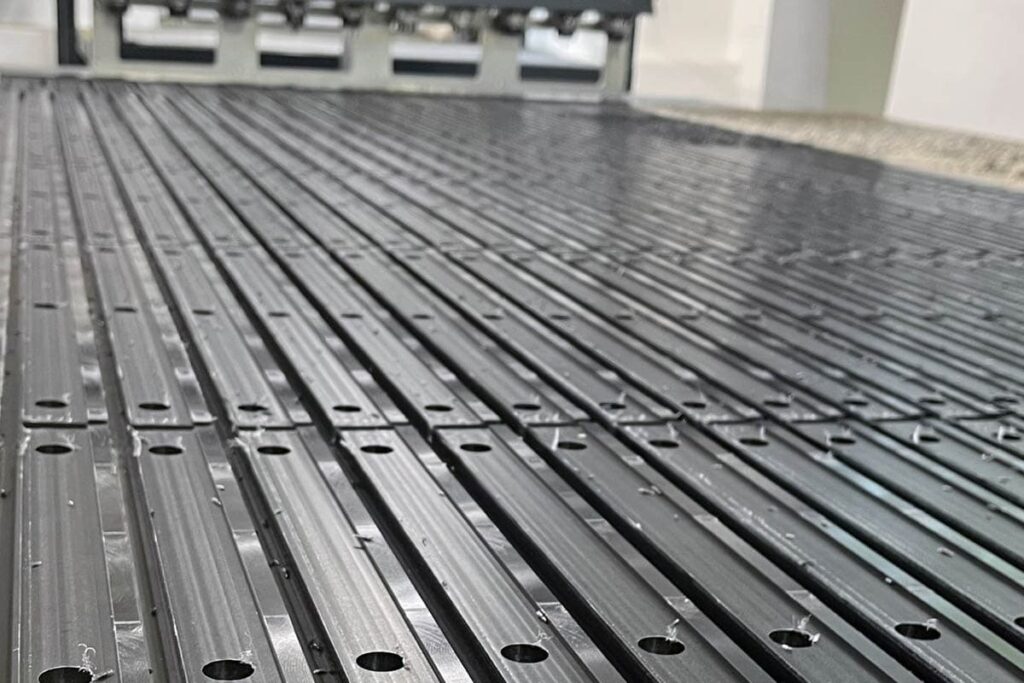
CNC milling is the most common method for manufacturing parts from PE1000 sheet stock. Modern multi-axis machining centers make it possible to produce both simple and highly complex components with high precision.
Milling can be used to produce, for example:
- conveyor guide rails,
- sliding segments,
- protective plates,
- products,
- machine components,
- support rails,
- bin liners,
- Engineering components tailored to individual requirements.
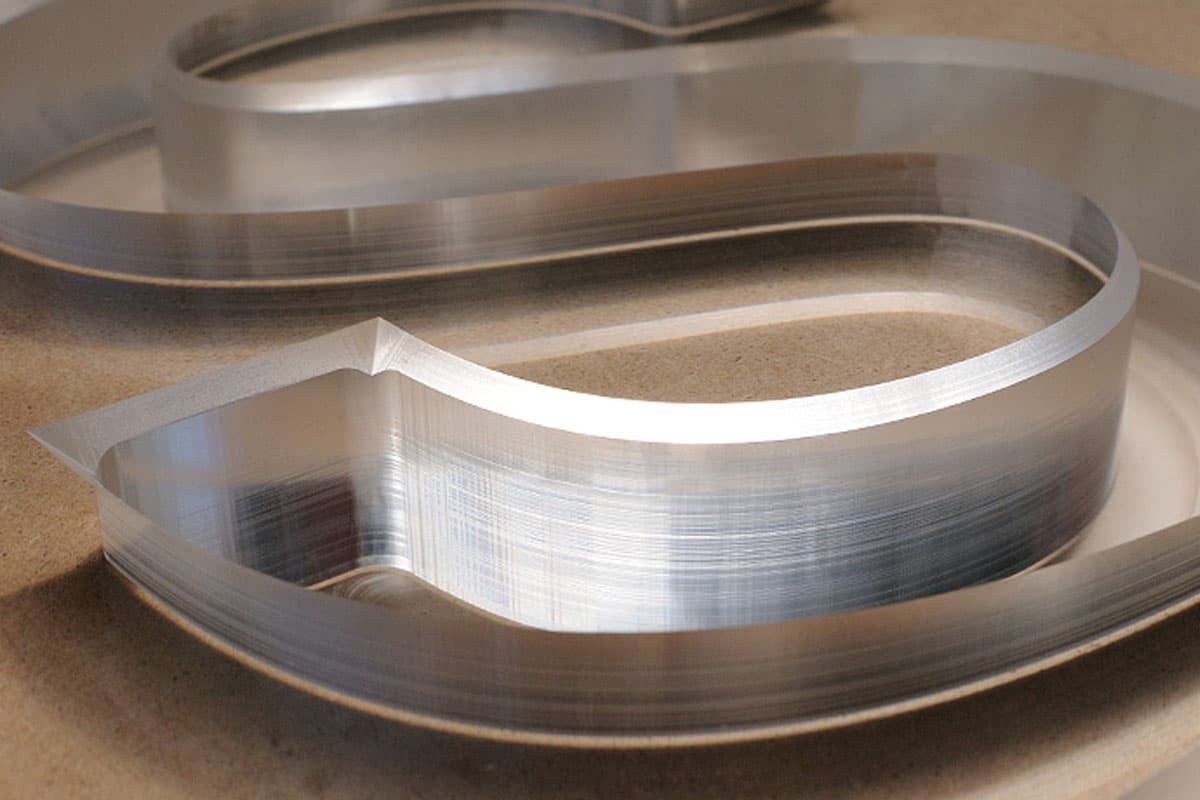
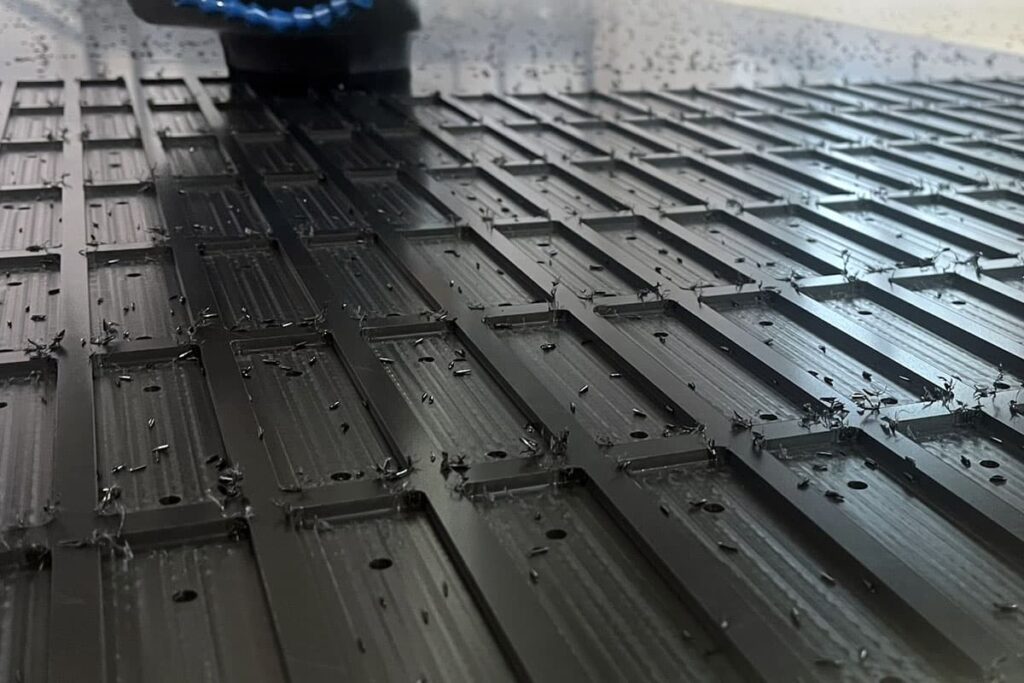
One advantage of CNC milling is the ability to machine virtually any shape, including pockets, grooves, holes, and even complex 3D geometries. Thanks to digital control, high production repeatability is also ensured, which is particularly important for mass-production orders.
CNC Turning PE1000
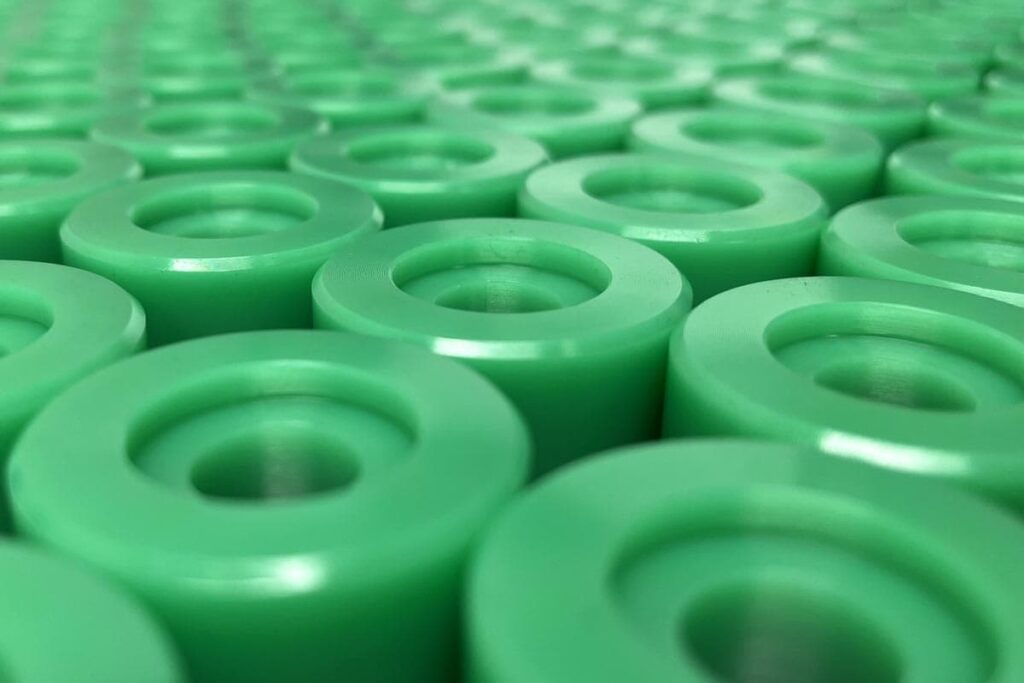
CNC turning is the most suitable technology for rotary components. Thanks to precise machining control, it is possible to produce components with high circularity, concentricity, and a high-quality surface finish.
The products we manufacture most often are:
- sliding bushings,
- guide rollers,
- spacer sleeves,
- pulleys,
- bearing housings,
- protective rings,
- Special rotary parts.
Thanks to its toughness, PE1000 is particularly suitable for components used in sliding bearings or in environments with high abrasive loads.
Drilling, Threading, and Finishing Operations
In addition to milling and turning, PE1000 can also be machined very well using other technologies.
This material allows you to:
- drilling through holes and blind holes,
- countersinking,
- reaming,
- groove milling,
- the production of pockets,
- thread cutting,
- chamfering,
- engraving.
Thanks to their minimal water absorption, the finished components retain their dimensional stability even when used in humid environments.
Machining Accuracy
When manufacturing parts from PE1000, it is important to take the material’s physical properties into account. Compared to metals, it has higher thermal expansion and lower stiffness, which can affect achievable tolerances, particularly for large components.
An experienced manufacturer therefore adapts:
- clamping method,
- machining strategy,
- cutting conditions,
- finishing operations,
- design tolerances of the finished part.
A properly designed manufacturing process makes it possible to produce highly precise components that meet the requirements of most industrial applications.
Advantages of CNC Machining Over Injection Molding
Machining from semi-finished parts offers several significant advantages over injection molding.
Among the most important are:
- there is no need to manufacture expensive injection molds,
- Cost-effective production starting with just one unit,
- rapid prototyping,
- minor design changes,
- high production flexibility,
- the ability to manufacture large parts,
- Short lead times.
That is precisely why CNC machining is the most common method for manufacturing technical parts made of PE1000.
Custom Manufacturing of PE1000 Parts at REONTECH CZ
Our manufacturing facility specializes in custom CNC machining of engineering plastics, including PE1000. We manufacture products from high-quality sheet and rod stock according to each customer’s individual requirements.
We offer the following services:
- CNC milling of plastic parts,
- CNC turning of rotary parts,
- the production of individual items and series,
- machining according to technical drawings,
- manufacturing based on the supplied sample,
- technical consulting on part design,
- help in choosing the most suitable material,
- optical measurement of parts.
Our goal is not merely to manufacture products according to drawings. Thanks to our experience in machining engineering plastics, we can recommend appropriate design modifications, optimize manufacturing processes, and propose solutions that will contribute to a longer service life for components and lower operating costs for our customers.
What is the difference between PE1000 and PE500?
The main difference lies in the material’s molecular weight. PE1000 (UHMW-PE) has significantly longer polymer chains, which give it higher abrasion resistance, a lower coefficient of friction, and better toughness than PE500. Conversely, PE500 is typically a more economical choice for less demanding applications where there are no extreme requirements for service life or abrasion resistance.
What are the main advantages of PE1000?
PE1000 stands out primarily for its exceptional wear resistance, very low coefficient of friction, high chemical resistance, and excellent impact toughness. Thanks to these properties, it is ideal for the manufacture of sliding and guide elements, conveyor components, or parts operating under demanding conditions.
Is PE1000 suitable for the food industry?
Yes. Many PE1000 grades meet the requirements of European legislation and FDA regulations for food contact. The material is therefore commonly used in the manufacture of guide rails, conveyor components, sliding elements, and other parts for food production lines.
Can PE1000 be machined using CNC technology?
Yes. PE1000 is highly machinable and is commonly processed by CNC milling, turning, drilling, or cutting. By machining from semi-finished parts, it is possible to produce both individual pieces and small or large production runs without the need to manufacture injection molds.
What products are most commonly made from PE1000?
The most common products include conveyor guide rails, slide bushings, wear segments, slide plates, hopper liners, protective plates, rollers, spacer rings, and various structural components for mechanical engineering and automated production lines.
Is PE1000 suitable for outdoor use?
The standard natural finish has limited resistance to long-term UV exposure. For outdoor applications, it is therefore recommended to use a UV-stabilized or black finish, which offers significantly greater resistance to sunlight.
What is the maximum operating temperature that PE1000 can withstand?
PE1000 is suitable for long-term operation at temperatures up to approximately +80 °C. It can withstand even higher temperatures for short periods; however, prolonged exposure to such temperatures leads to a deterioration in mechanical properties and increased material deformation.
Conclusion
PE1000 (UHMW-PE) is one of the highest-quality engineering plastics for applications where high wear resistance, low friction, and a long service life are critical. Thanks to its properties, it is widely used in mechanical engineering, conveyor technology, the food industry, logistics, agriculture, and other industrial sectors. When combined with modern CNC machining, it enables the production of precise and reliable components tailored to the specific requirements of each project.
We specialize in the custom manufacturing of technical parts made from PE1000 and other engineering plastics. Thanks to our experience with CNC milling and turning, modern manufacturing technologies, and a personalized approach to every order, we deliver components that meet high standards for quality, precision, and long-term reliability.
Do you need custom-made PE1000 parts? Contact us with your drawings or a description of your application. We’ll be happy to recommend the most suitable material and manufacturing technology and provide you with a no-obligation quote.