

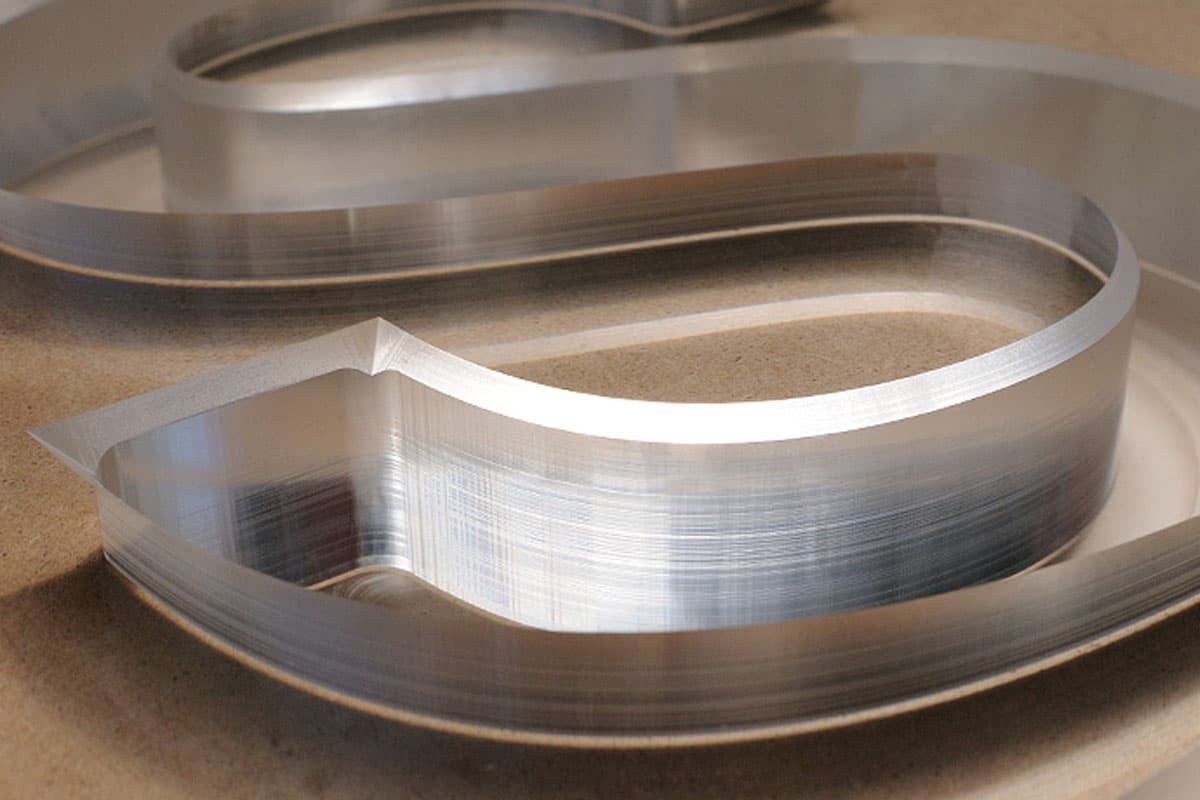
Polycarbonate sheets are among the most widely used engineering plastics in industry, construction and engineering. They are characterized by high impact strength, good dimensional stability, low weight and excellent optical properties. Thanks to these parameters, they are suitable not only for protective covers and transparent elements, but also for precision machined technical parts manufactured using CNC technology.
What is polycarbonate?
Polycarbonate(PC) is an amorphous thermoplastic with a combination of mechanical strength, toughness and transparency. Compared to conventional plastics, it offers significantly higher impact resistance and a wide operating temperature range. This combination of properties means it is used in a wide range of situations where it replaces traditional glass.
Information on polycarbonate sheets and other transparent plastics can be found in our materials database.
Polycarbonate sheets – the main advantages
Polycarbonate sheets are used wherever a combination of mechanical resistance and low weight is required. Their main advantages include:
Extreme impact resistance
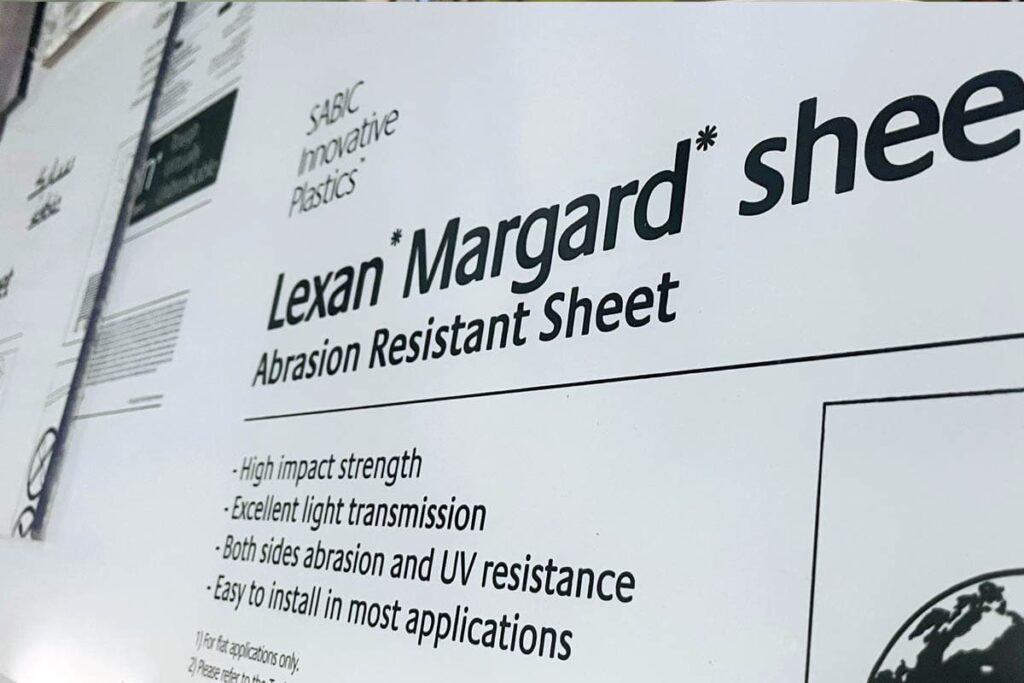
Polycarbonate is up to 200 times more resistant to breakage than ordinary glass. This is why it is used for machine safety guards, protective shields or vision panels. There are also further hardened variants of polycarbonate that have even better mechanical strength and durability. Typical is Margard polycarbonate, which is used for safety glass or exposed machine tool visors.
Low weight
Compared to glass, polycarbonate achieves approximately half the weight while maintaining high strength. Polycarbonate sheets are thus a very suitable solution for the construction industry, where they reduce the stresses on structures.
Excellent optical properties
Clear polycarbonate panels allow high light transmission while providing greater security than conventional glass panels. For applications where shading is required it is advisable to use darkened versions (colour versions called bronze or smoke polycarbonate).
Good machinability
The material can be efficiently machined by milling, drilling, cutting and engraving. With the right machining technology, polycarbonate sheets are less likely to crack, which is often a problem with acrylic(PMMA), for example.



Polycarbonate sheets – selected parameters
The most commonly used option is clear compact, full polycarbonate. For mechanically stressed applications in industry, a double-sided hardened type of material is used. Margard.
Full polycarbonate, clear
A universally applicable material, with a double-sided UV protection layer and excellent weather resistance.
Thanks to its excellent impact resistance, it is ideally suited for use in the construction industry, but it is also used in many other industrial sectors.
Its main advantages include high light transmission, strength, usability in a wide range of temperatures, good sound and thermal insulation properties, easy machinability and other properties. Thanks to its UV resistance, it retains its optical properties over the long term and does not degrade.
The temperature resistance of the material is -40° to +135°C
Available thicknesses: 2, 3, 4, 5, 6, 8, 10, 12, 15 mm
Standard sizes: 2050 x 3050 mm, 2050 x 6050 mm
Colourvariants: clear, bronze, grey, opal white
Product examples and applications:
Transparent covers, displays, shields, protective glass, light panels, decorative and advertising elements, parts exposed to UV radiation where high impact resistance is not required.
Polycarbonate hardened, Margard, clear
Polycarbonate with a special double-sided coating providing exceptional surface hardness and protection against common chemicals and sprays. Transparent material with double-sided UV protection.
Its main advantages include high light transmission, strength, usability in a wide range of temperatures, resistance to weather conditions, good sound and thermal insulation properties, easy machinability and other properties.
The temperature resistance of the material is -40° to +120°C
Available thicknesses: 3, 4, 5, 6, 8, 10, 12 mm
Standard dimensions: 2000 x 3000 mm
Colourvariants: clear, bronze, grey, opal white
Examples of products and applications:
Machine tool covers and hatches, safety partitions, hole fillers in transport, noise barriers, machine covers in the timber industry and other demanding applications.

From our practice: polycarbonate sheets and their applications
1. Food industry – production line covers
- Job:
The customer was looking for a supplier of clear transparent covers that serve as a safety feature and also for visual control of the production process, - Material of choice:
Full clear polycarbonate - Result
The parts fulfil their purpose in the long term and do not lose their optical or other properties. Maintenance and cleaning are easy and time-saving and the products have met the requirements of the specification.
1. Engineering industry – machine tool visions
- Job:
The customer had a question about material for windows and visors of machine tools. The material is chemically stressed (cooling emulsions, oils) and must have excellent impact resistance in the event of a crash (workpiece falling out due to poor clamping). - Material of choice:
Margard double-sided hardened polycarbonate - Result
Hardened polycarbonate meets all requirements and serves its purpose in the long term. Thanks to its durability, there is no loss of transparency or mechanical scratches.
Machining polycarbonate
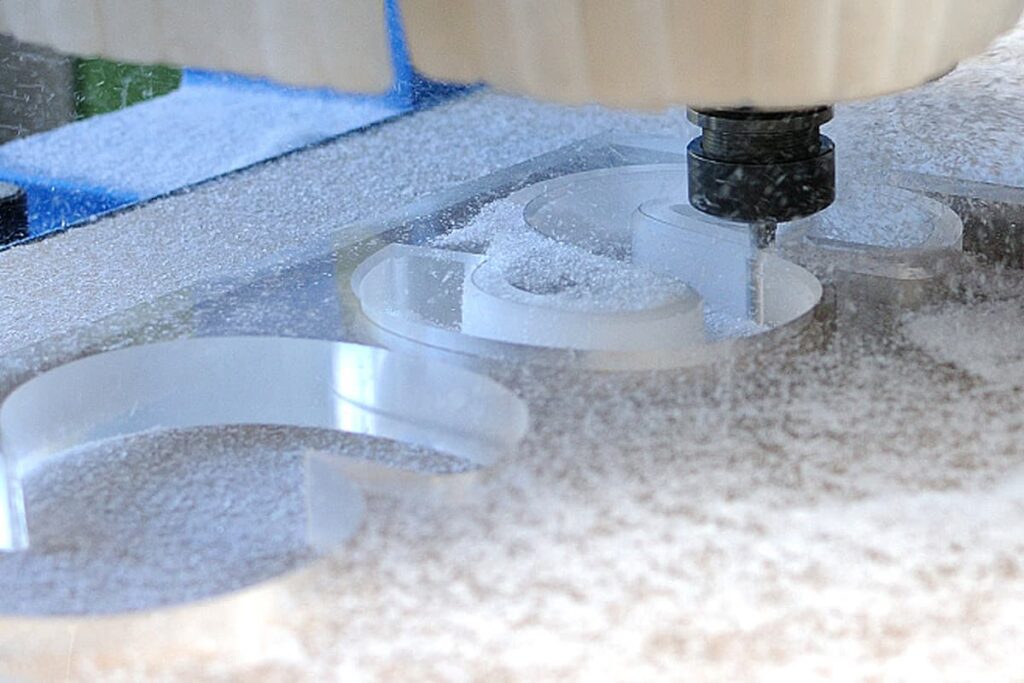
Polycarbonate plates are technical plastics suitable for precision CNC machining. Thanks to its toughness, it does not form brittle chips during machining and allows the production of complex shapes. They are standardised, for example, according to ISO 527, which defines the methodology for testing the tensile properties of plastics.
CNC milling of polycarbonate
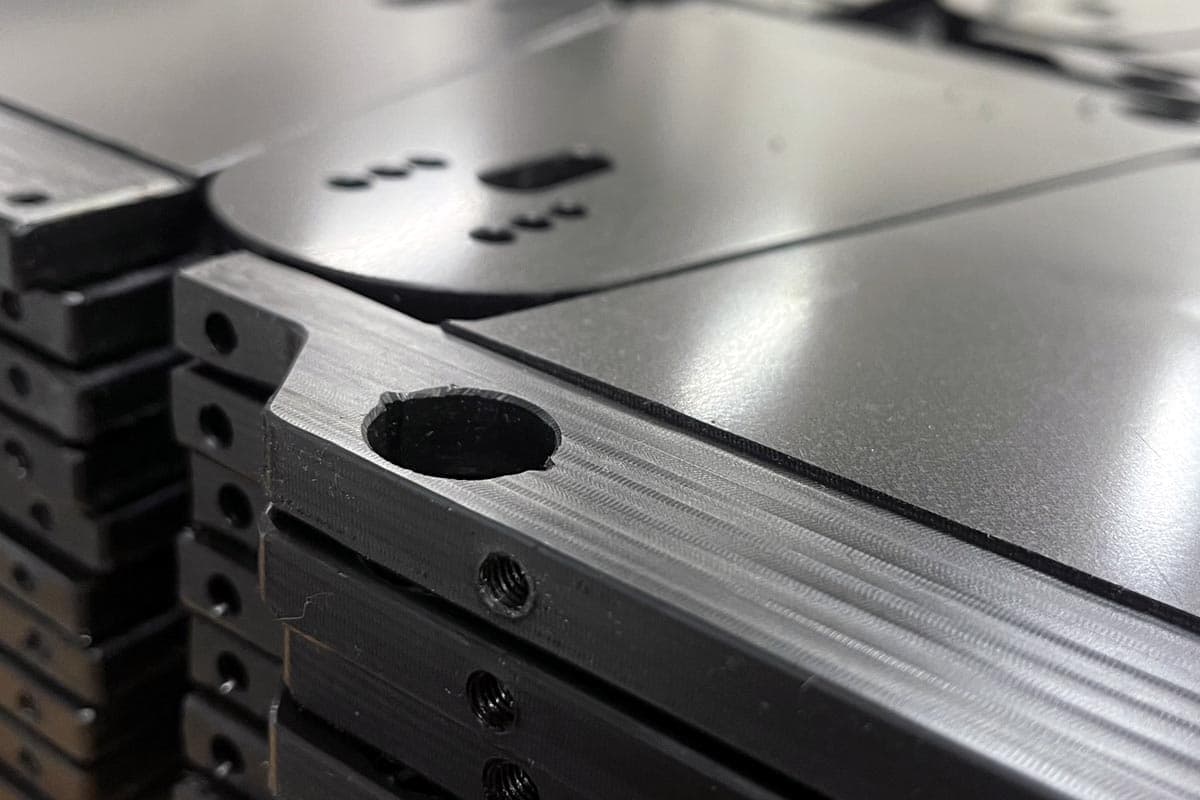
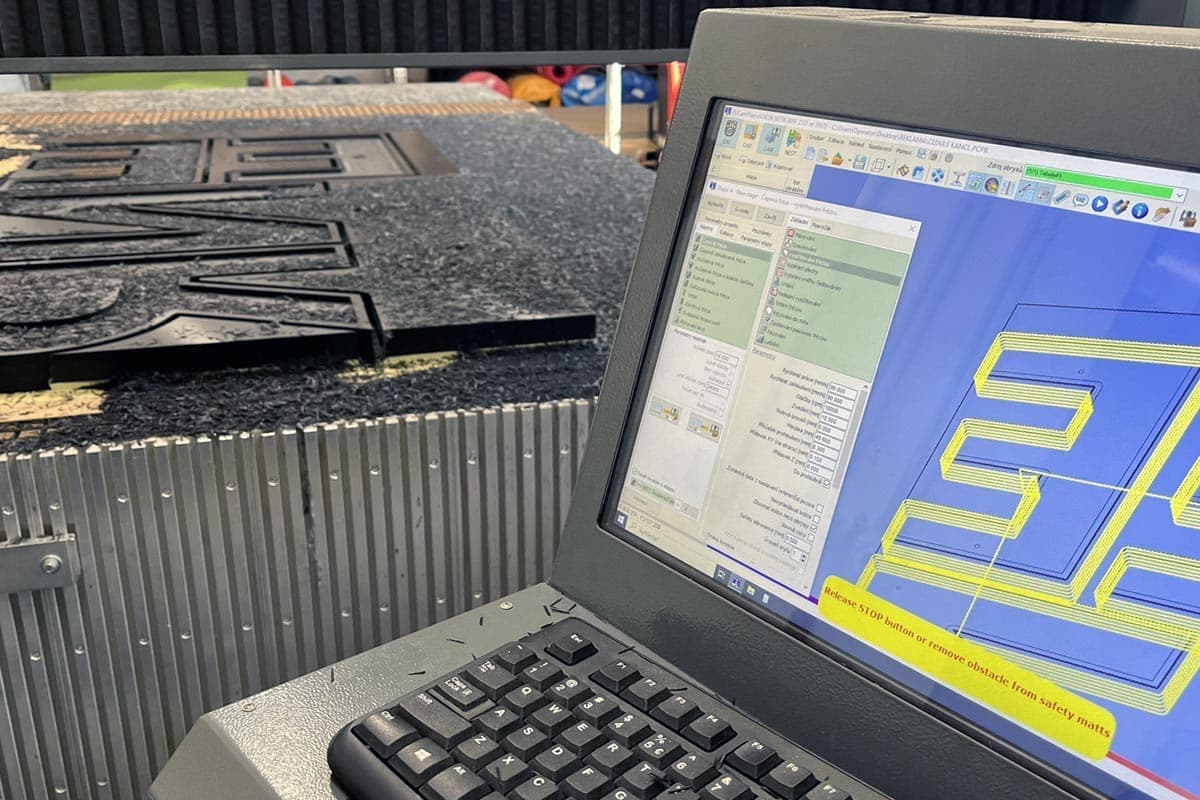
It is the most common method of machining, where high precision can be achieved (in the order of +/- 0.1 mm) and with the appropriate choice of tool and machining parameters, the machined edges can also be polished to achieve full transparency on the machined sides. At our company, we are engaged in this method of processing polycarbonate and can handle milling of polycarbonate up to a size of 3100 x 2100 mm on our two CNC milling machines.
CNC drilling
Polycarbonate allows the creation of precise holes without cracks or edge breakage. It is important to use the appropriate tool geometry and adequate cooling.
Cutting
Polycarbonate sheets can also be cut on table saws. The key is to use a dedicated saw blade with a higher tooth count to ensure a precise and clean cut. Cutting polycarbonate is fast and accurate and in some cases is therefore more time efficient than milling. However, it is important to take the utmost care when handling the material to avoid possible mechanical scratches.
Polycarbonate bending, shaping
Polycarbonate can also be bent and shaped very efficiently. Depending on the bending radius, a suitable method of design is chosen, with hot bending being used for larger bends. In this method, the material is heated to a certain temperature at which the material acquires a certain ductility before the bending jig can be shaped to the desired bends. It is important to maintain the technological heating and cooling times to avoid cracking of the material and to maintain full optical transparency.
What to watch out for when machining polycarbonate
Although polycarbonate is very easy to machine, its material properties must be respected.
The most common errors include:
- too high cutting speeds leading to overheating of the material,
- improper tool geometry,
- Insufficient chip evacuation and poorly adjusted cooling,
- mechanical stresses at sharp internal corners,
- careless handling leading to scratching of the material,
- Failure to follow the bending procedure – cracks or other damage may occur.
FAQ – Frequently Asked Questions
What is the difference between polycarbonate and Plexiglas (PMMA)?
Polycarbonate offers significantly higher impact strength. It is more impact resistant, while PMMA provides higher surface hardness and slightly better optical clarity.
Are polycarbonate sheets suitable for outdoor use?
Yes, especially the UV stabilised variants. These have long-term resistance to weathering and sunlight and have a lifespan of many years without loss of properties.
Can polycarbonate sheets be used as machine guards?
Yes. Due to its high impact resistance, polycarbonate is one of the most commonly used materials for safety and protective covers for industrial equipment. For particularly demanding applications, hardened versions of the material are used.
How can polycarbonate be machined?
Polycarbonate plates are very suitable for CNC milling, but they can also be cut on table saws. Polycarbonate can be bent and hot formed to create complex bends and shapes.
Summary
Polycarbonate sheets are an excellent and versatile technical material with high impact resistance, good thermal stability and excellent machinability. Thanks to the possibility of precision CNC milling, drilling and cutting, they are used in industrial enclosures, machinery, automation and electrical engineering. For applications requiring a combination of strength, transparency and durability, polycarbonate is one of the most commonly used engineering plastics.
Do you need to deal with polycarbonate production or advice on the most suitable option? Contact us and we will be happy to advise you or produce the necessary part directly on our CNC machines.