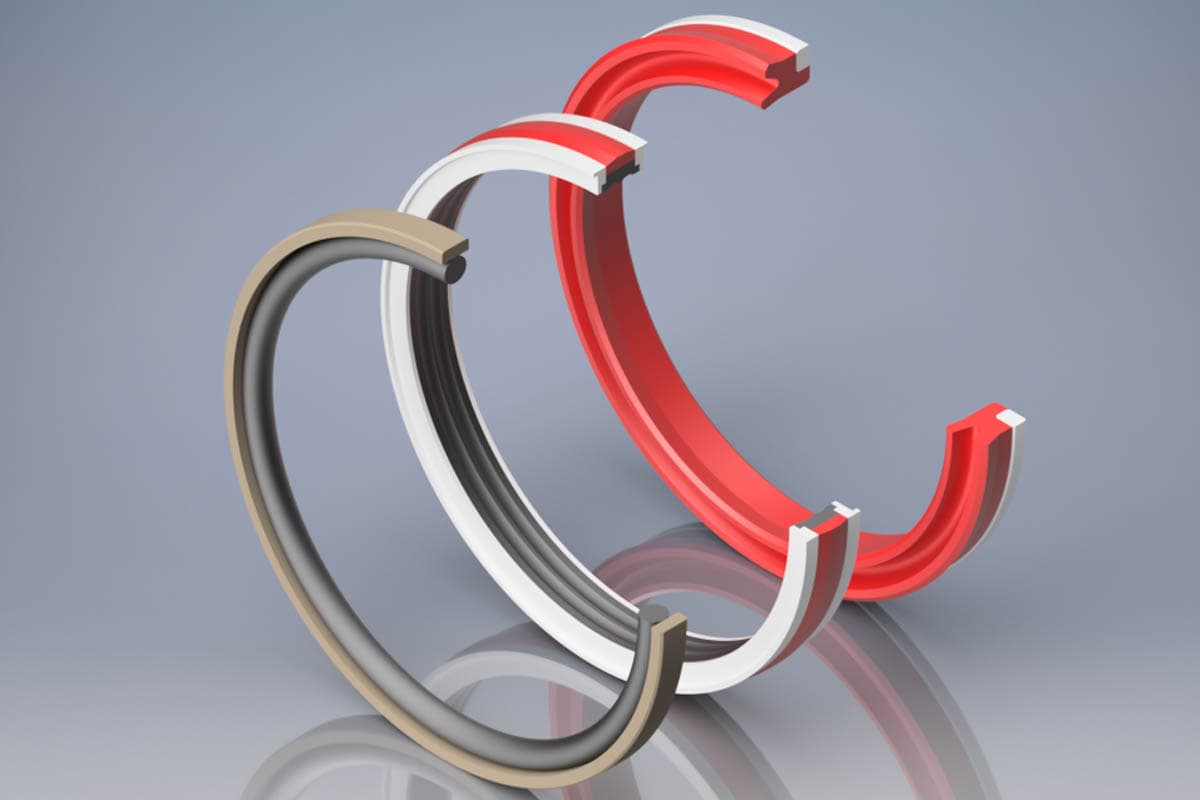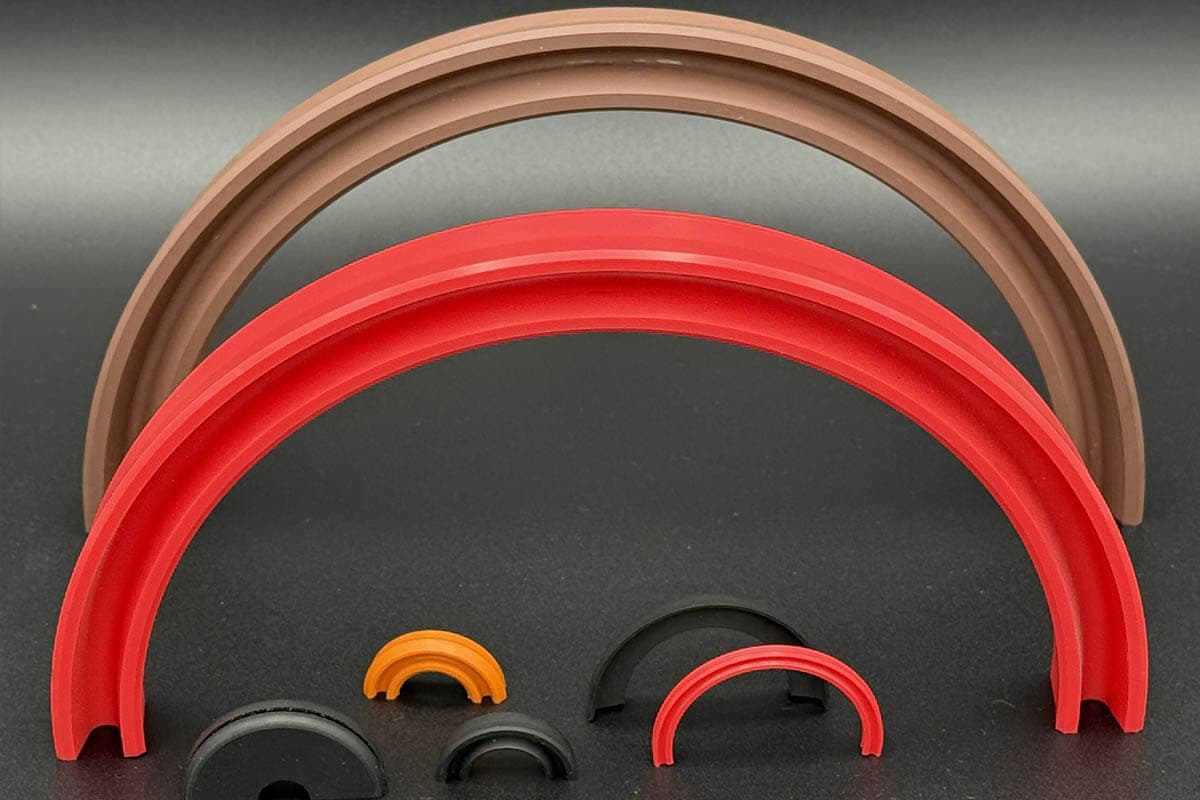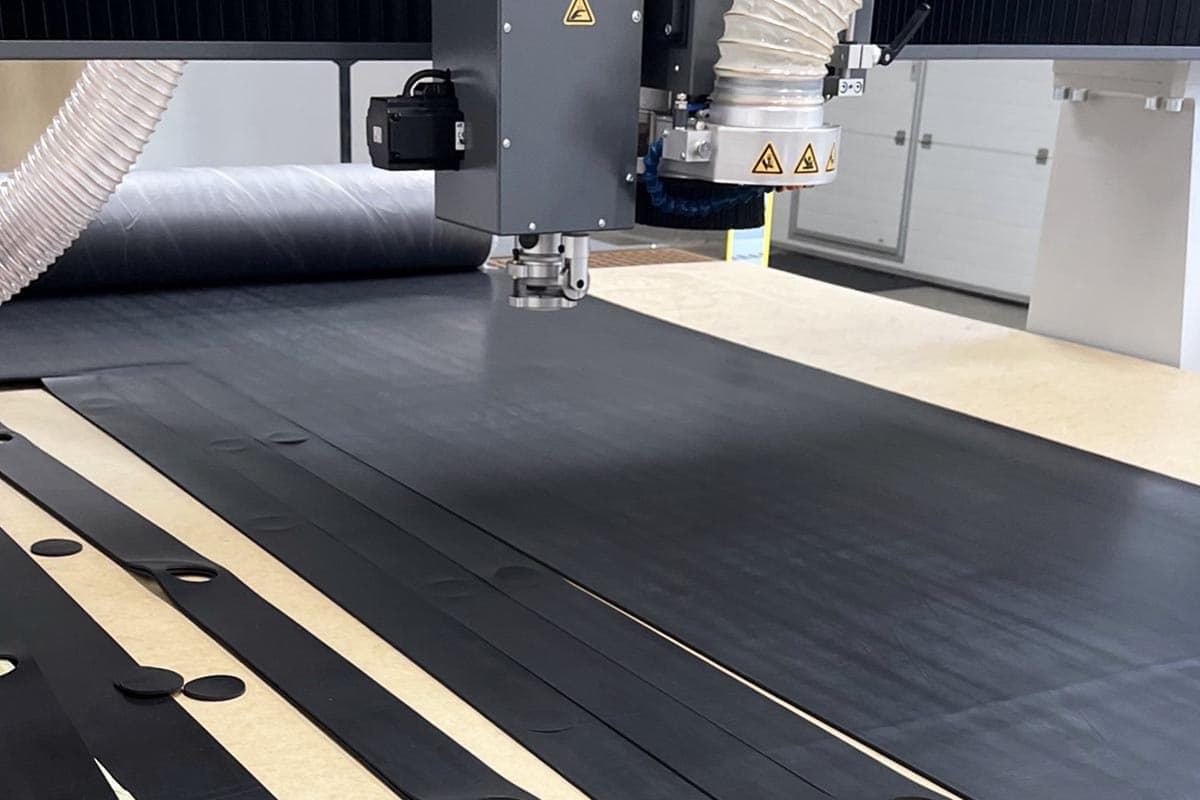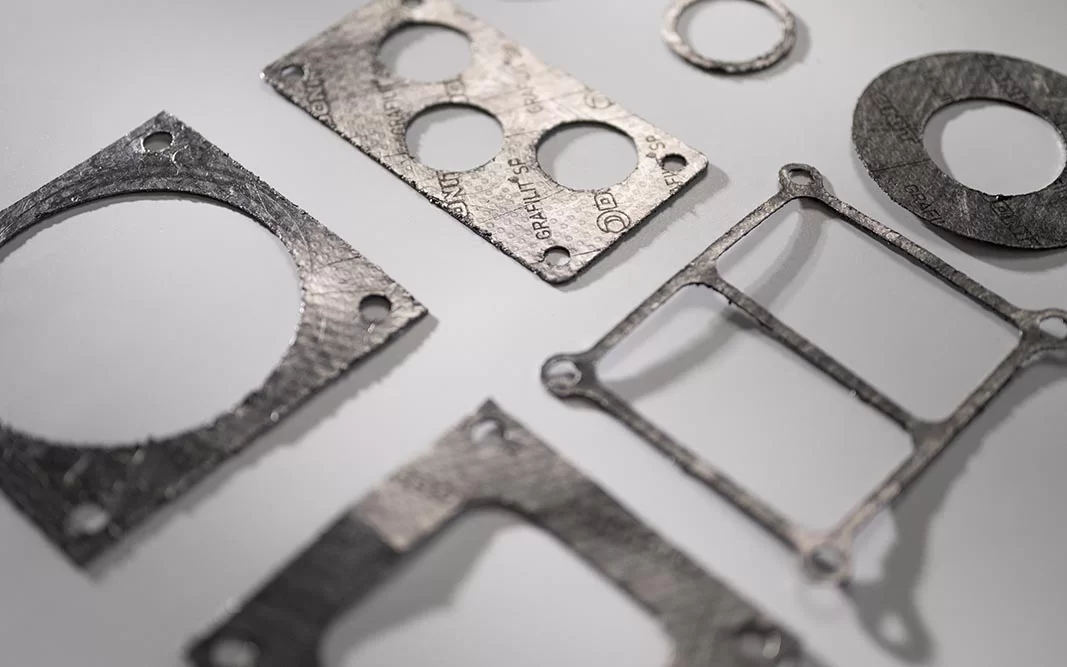


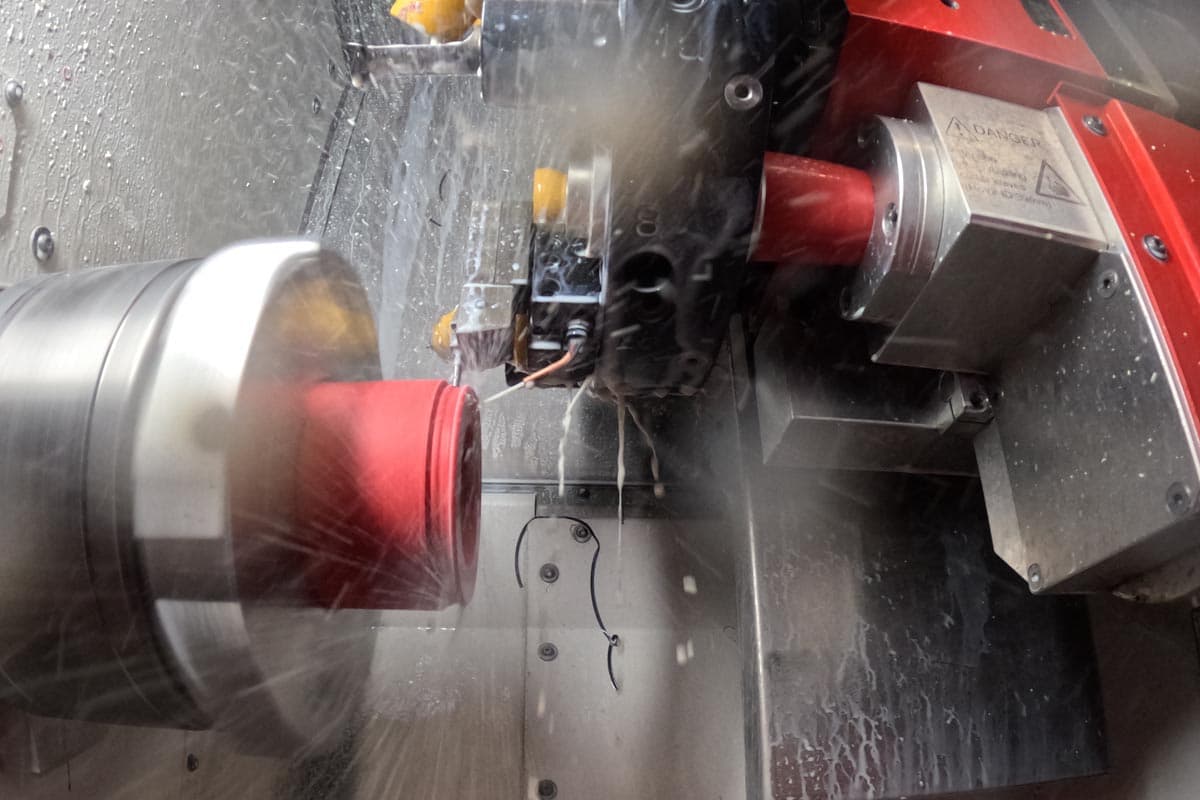
Machining is the most efficient method for custom production of seals in small and medium series, especially for hydraulic and pneumatic applications. It allows for precise tolerances and rapid response to individual design requirements without the need for mold manufacturing. The result is a technically precise, functionally optimized seal with a short lead time.
Why choose machined seals for custom manufacturing
Zakázková CNC výroba těsnění metodou soustružení je vhodnou volbou všude tam, kde nelze z různých důvodů využít standardizované těsnění. Typicky jde o atypické rozměry, nestandardní profily, nedostupnost originálního dílu nebo specifické provozní podmínky (tlak, teplota, chemická odolnost).
Machining enables:
- mold-free production – zero costs for molds and other production preparation
- flexible design changes during production
- high repeatability thanks to CNC control
- economical production starting from just 1 unit
Unlike molded seals, there is no need to invest in expensive molds (typically tens to hundreds of thousands of CZK with a preparation time of several weeks), which is crucial for prototyping or small series. However, thanks to automation elements in machining, this method can be economically and time-efficient even for larger series of parts in the thousands of units.
Materials for seal manufacturing and their properties
A wide range of technical materials is used for seal manufacturing via machining (we have more than 80 in our portfolio). The most commonly used materials include the following categories:
Polyurethane
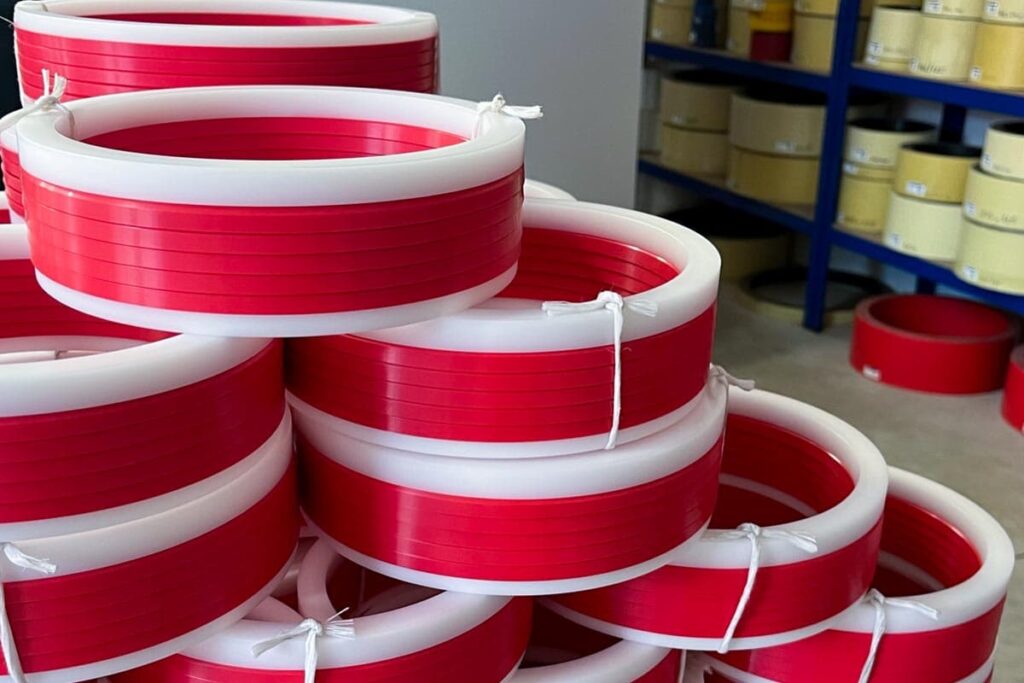
A material that excels in a combination of excellent mechanical properties, high resistance to abrasion and wear, elasticity, high tensile strength, and other parameters. It is hydrolysis-resistant and can therefore be used for long-term contact with water. Selected types are FDA-certified and can be used in the food industry. Due to its properties, it is the most frequently used material for seal manufacturing.
Elastomery – NBR, EPDM, FPM
A group of rubber materials that have lower hardness and greater flexibility and elastic properties. Different types vary in chemical and temperature resistance as well as mechanical properties. Given these characteristics, these materials are often used for less stressed sealing elements and low-hardness seals.
Těsnění PTFE
PTFE (polytetrafluoroethylene) is a fluoroplastic with exceptional chemical and thermal resistance that exceeds most other plastics. It is resistant to almost all aggressive substances and finds applications in the food industry. Thanks to its excellent dry-running properties, it is ideal for seals and guide elements operating at low lubrication and high feed speeds. The weakness of PTFE is lower abrasion resistance and a tendency toward “cold flow,” which can be suppressed by using fillers such as bronze, glass fibers, carbon, or MoS₂ – therefore, these filled variants are often used for hydraulic applications.
Technické plasty pro výrobu těsnění
Technical plastics such as POM (polyoxymethylene), PA (polyamide), UHMW-PE (ultra-high-molecular-weight polyethylene), or reinforced fabric laminates are proven materials with wide-ranging uses. These thermoplastics and composites are characterized by high pressure resistance, low friction, good wear resistance, and the ability to operate even during emergency dry runs. Due to these properties, they are used in the sealing field primarily for guide elements, back-up rings, and other parts for demanding industrial applications.


From our practice: product examples
V naší CNC výrobě využíváme soustruh s možností výroby až do vnějšího průměru výrobku 500 mm. Skladem si udržujeme širokou zásobu základních materiálů abychom dokázali operativně a flexibilně reagovat i na urgentní požadavky.
1. Resealing a hydraulic cylinder – immediate production
- Assignment:
A customer had an urgent need to reseal a hydraulic cylinder for a forestry machine – a harvester. The cylinder had a significant hydraulic fluid leak and reduced performance. They brought the disassembled hydraulic cylinder to us in the morning. - Material:
H-PU 95 Sh.A, POM-C, PTFE+Bronze - Result:
We measured the cylinder and manufactured a new set of seals. This involved several different sealing elements, with one unit required for each. Everything was completed in approximately 2 hours, allowing the customer to put the machine back into operation that afternoon and continue working. The hydraulic cylinder was fully functional again.
2. Automotive industry – custom seal cups
- Assignment:
A company specializing in custom car modifications contacted us with a need for an atypical seal to be used in an engine turbocharger and exposed to high temperatures. - Material:
FPM (Viton) - Result:
Based on the provided drawing, we programmed an atypical sealing profile and manufactured 5 units. Due to the temperature requirements, we used FPM material (temperature resistance up to 220°C).
3. Hydraulic cylinder seals – series production, custom solution
- Assignment:
A hydraulic cylinder manufacturer needed seals for their series production. Various atypical sizes, materials, and designs were required. Series ranging from dozens to several hundred units. - Material:
H-PU, NBR, EPDM, FPM, PTFE - Result:
Based on the customer’s design requirements, we proposed a custom solution. According to current production projects, we manufactured various sizes and quantities in batches of up to several hundred units. Delivery time: 1 week.
Comparison of Machining and Molding
Machining is particularly suitable for smaller series, but it often finds its place in series production as well. In terms of materials and technical parameters of the final pieces, both technologies are comparable, and machined seals can, in the vast majority of cases, be used as a replacement for molded ones and vice versa.
| Machining | Molding, Injection Molding | |
|---|---|---|
| Series size | 1–1,000 units | 10,000+ units |
| Tooling costs | 0 CZK | High, up to hundreds of thousands of CZK |
| Lead time | Days, can be immediate | Weeks |
| Flexibility for changes | High | Minimal, almost impossible to perform |
| Price per unit | Higher | Low |
| Shape complexity | Limited by tools | Very complex shapes possible |
| Materials, technical parameters | Comparable | Comparable |


What is the minimum series for CNC seal manufacturing?
Production is possible from just 1 unit without the need for investment in molds or tools.
How quickly can machined seals be delivered?
Standardly, we manufacture seals in approximately 2–3 days. For urgent requests, however, we can produce new custom seals immediately.
What pressure can a machined seal withstand?
It depends on the material used and the design of the seal. Standard H-PU seal cups can be used up to 400 bar, but we can manufacture elements with resistance up to 1,500 bar.
Can a machined seal be used as a replacement for a standard part?
Yes, in the vast majority of cases, a machined seal can be used as a replacement for a standard molded part. Thanks to a wide choice of materials and the possibility of modifications, machined seals can often be better optimized for a given application, thereby increasing seal performance and equipment lifespan.
Máte zájem o CNC výrobu těsnění nejen pro hydrauliku a pneumatiku? Kontaktujte nás a rádi s Vámi celou věc prodiskutujeme a vypracujeme nezávaznou cenovou nabídku.