

PTFE (polytetrafluoroethylene, also known as Teflon) is one of the most durable industrial engineering plastics. It has excellent chemical resistance, low coefficient of friction, temperature resistance of -200 /+260 °C and minimal surface adhesion. Due to these properties, PTFE is used for the production of seals, sliding elements, insulators and other parts for aggressive chemical and food environments.
What is PTFE and why is it used in industry
PTFE je fluoropolymer s mimořádnou chemickou a tepelnou odolností. Materiál byl vyvinut pro aplikace, kde běžné technické plasty selhávají vlivem působení teploty, chemikálií nebo tření. Díky jeho špičkovým parametrům se PTFE používá v náročných průmyslových aplikacích, kde zajišťuje delší životnost, vyšší bezpečnost a spolehlivost. Nevýhodou je nižší mechanická pevnost, kterou lze však částečně řešit plněním.
The main properties of PTFE include:
- Operating temperature: -200 to +260 °C
- very low coefficient of friction: 0.04-0.10
- electrical strength: approx. 60-100 kV/mm
- absorbency: <0.01 %
- High chemical resistance to acids, alkalis and solvents
- non-sticky surface
- excellent dielectric properties
PTFE is also a physiologically harmless material and meets the requirements for use in the food or pharmaceutical industry. PTFE virgin (pure material without fillers) meets the FDA and EU 1935/2004 standards.
Přehled námi nabízených variant tohoto materiálu naleznete v naší databázi technických plastů: PTFE materiál
Material variants of PTFE
The disadvantage of pure PTFE is its lower mechanical strength and higher creep effect (deformation due to long-term stress). For this reason, the material is often enriched with fillers that modify the necessary mechanical properties. The most commonly used material variants of PTFE include:
PTFE virgin
PTFE virgin is a highly versatile fluoroplastic with exceptional properties. Its extremely low coefficient of friction, excellent chemical resistance and stability over a wide temperature range make it one of the most widely used engineering plastics. It is electrically non-conductive, resistant to ageing and moisture.
It is resistant to almost all chemicals, has excellent sliding properties and high resistance to ageing. The material is FDA approved and can be used in the food industry. Due to its lower elasticity, pure Teflon is not suitable for higher mechanical loads. The material also has a lower resistance to abrasion. For more demanding applications, it is therefore preferable to use one of the PTFE-filled variants.
Material temperature resistance: -200 °C to +260 °C
Examples of products and uses:
Seals and insulating elements, slip rings and washers, parts for the chemical industry, electrical insulation components, food and pharmaceutical applications, tank and pipe linings, plain bearings and valves.
PTFE + Bronze
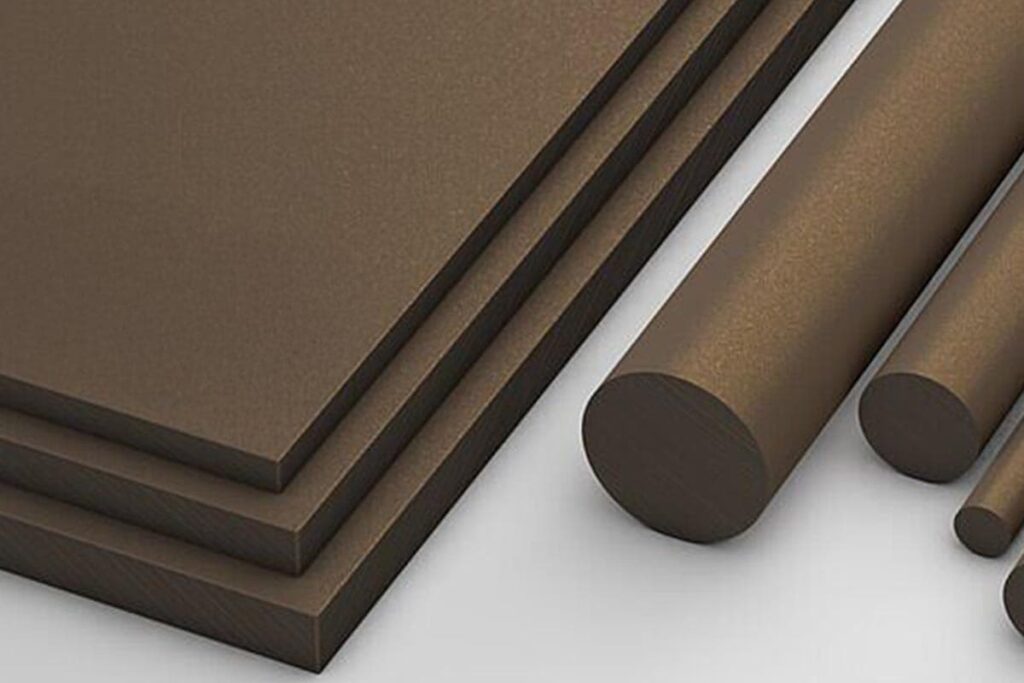
PTFE + bronze is a composite material combining the advantages of pure PTFE with the strength and stability of bronze filler (bronze content is typically 40% or 60%). It still retains very good sliding properties and chemical resistance. Compared to pure PTFE, the tendency to extrusion is also reduced while maintaining excellent sliding properties. The added bronze also provides increased abrasion resistance.
The temperature resistance of the material is -200° to +260°C
Examples of products and uses:
Self-lubricating bearings, sliding bushings, piston rings, sealing elements, guides and slide rails in hydraulics and pneumatics, parts for high mechanical loads, components for higher temperature environments.
PTFE + Carbon
PTFE + carbon is a composite material with excellent sliding properties, complemented by higher strength, hardness and wear resistance due to the addition of carbon. Compared to pure Teflon, it has lower thermal expansion, better dimensional stability and longer life under dynamic loading.
The temperature resistance of the material is -200° to +260°C
Examples of products and uses:
Slip and seal bushings, bearings and washers, compression rings, pump and valve components, pneumatic and hydraulic parts, applications requiring high friction and wear resistance, seals for rotating dynamic applications.
PTFE + Graphite
PTFE + graphite is a reinforced composite that combines the excellent sliding properties of Teflon with the strength and thermal conductivity of graphite. The material is characterized by a low coefficient of friction, high dimensional stability and good wear resistance even under higher loads. Graphite also has improved thermal conductivity and reduced water absorption. However, the addition of graphite slightly reduces the chemical resistance.
The temperature resistance of the material is -200° to +260°C
Examples of products and uses:
Plain bearings and bushings, sealing rings, washers and sliding plates, components for the chemical and food industries, pump and valve parts, parts subject to high friction and dynamic loads.
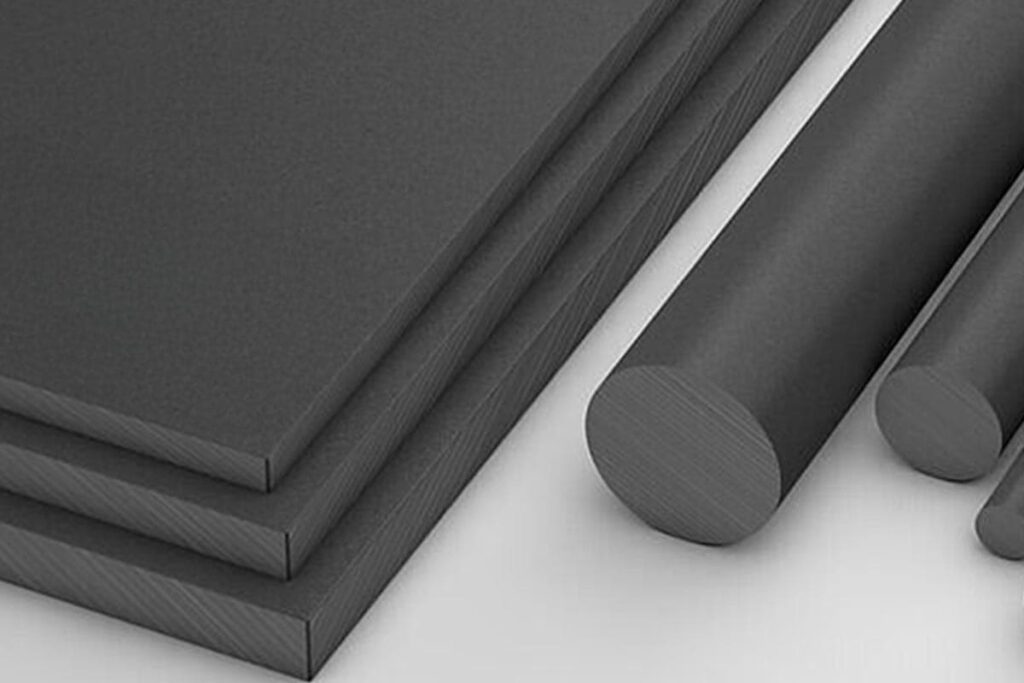
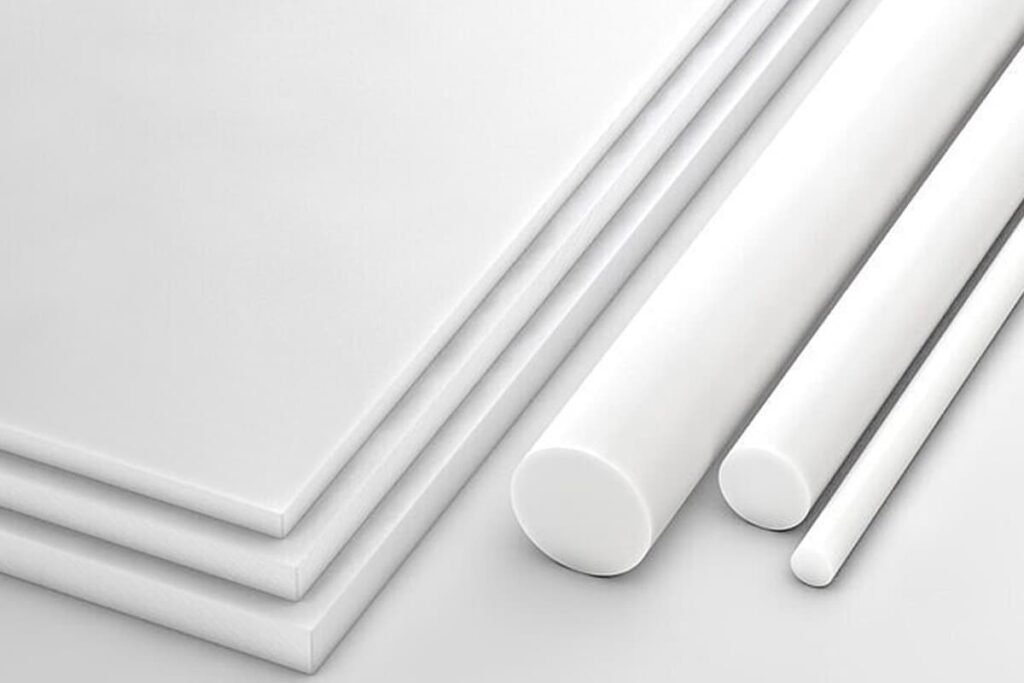
Expanded PTFE
Expandovaný Teflon je technický těsnicí materiál vyrobený ze 100 % polytetrafluoretylenu (PTFE). Díky biaxiální vláknité struktuře se vyznačuje velmi dobrou mechanickou pevností, vysokou pružností a výbornou přizpůsobivostí těsněnému povrchu. Materiál má vynikající těsnicí vlastnosti, velmi nízký koeficient tření a vysokou chemickou odolnost vůči širokému spektru médií, jako jsou oleje, paliva, voda, kyseliny, zásady i plyny.
Expanded PTFE also has minimal water absorption, is non-toxic, and is suitable for use in the food and pharmaceutical industries. Thanks to its softness and high compressibility, it adapts well even to uneven or damaged sealing surfaces and ensures long-term reliable sealing.
The temperature resistance of the material is -240°C to +260°C.
Examples of products and uses:
Flange gaskets, face seals, seals for chemical apparatus, pipe joints, equipment in the chemical, petrochemical, food, and pharmaceutical industries, and applications requiring high chemical resistance and reliable sealing even on lower-quality sealing surfaces.
The material is certified to: VDI 2440, EN 13555, DIN 28090-1 issued by the AMTEC testing laboratory.
Z naší praxe: naše produkty z PTFE
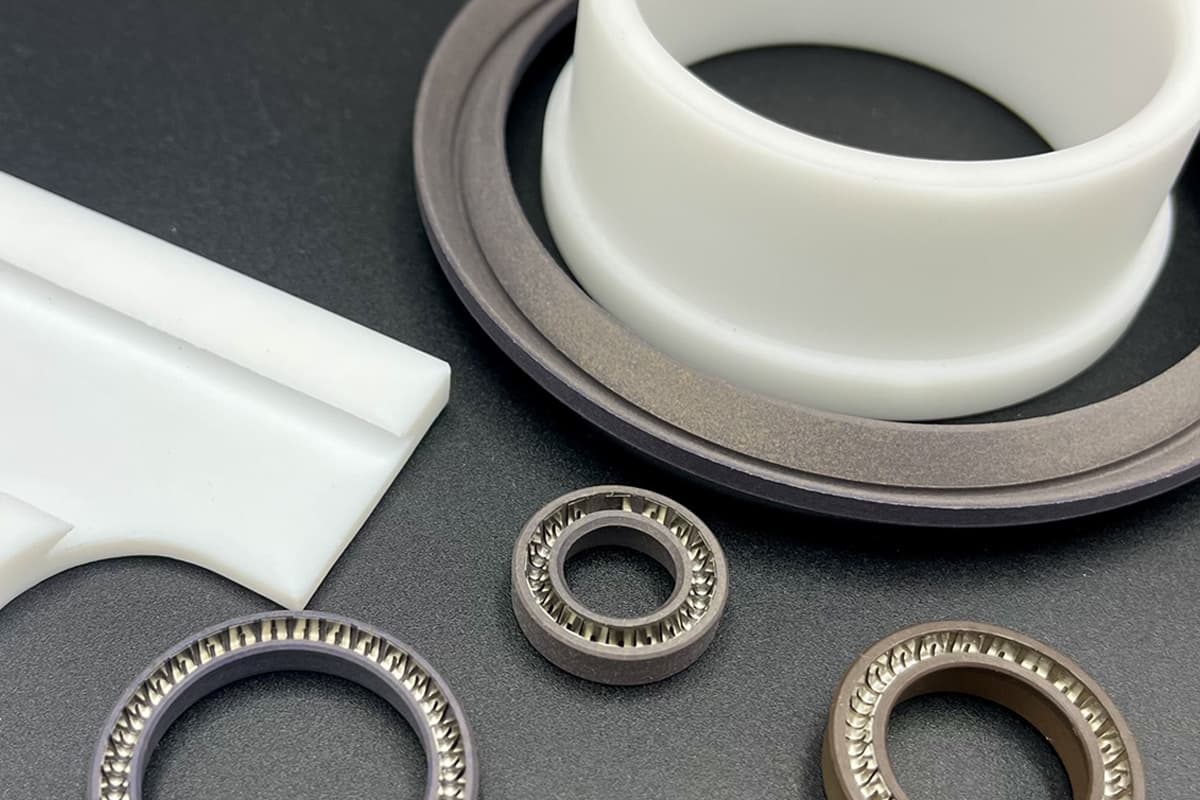
Z PTFE a jeho plněných variant vyrábíme širokou škálu těsnění určených především pro hydraulické aplikace. Pro použití v hydraulice se nejčastěji využívá varianta PTFE+40% Bronz – přídavek bronzi zlepšuje mechanickou odolnost materiálu. Materiál se často používá pro kombinované těsnění prvky, tzv. omegaty, kde se kombinuje elasticita a pružnost pryže (často O-kroužek) s kluznými vlastnostmi a mimořádnou odolností PTFE.
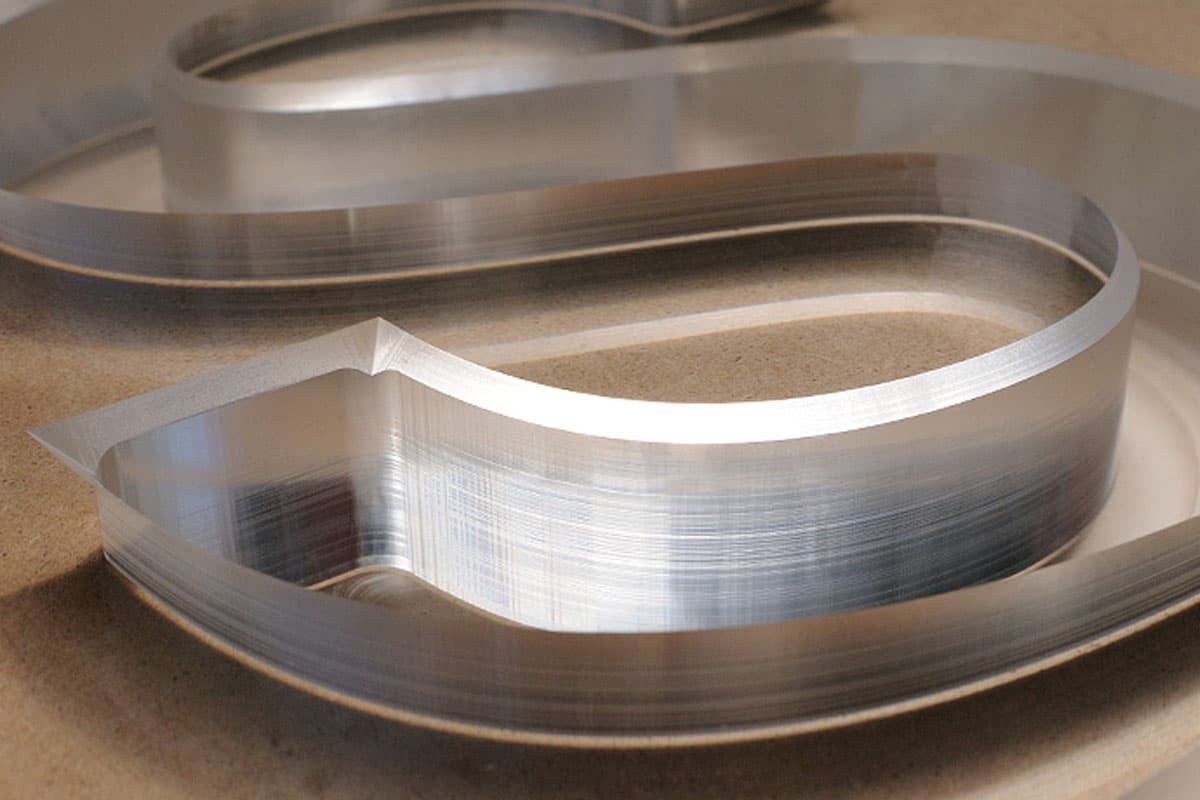
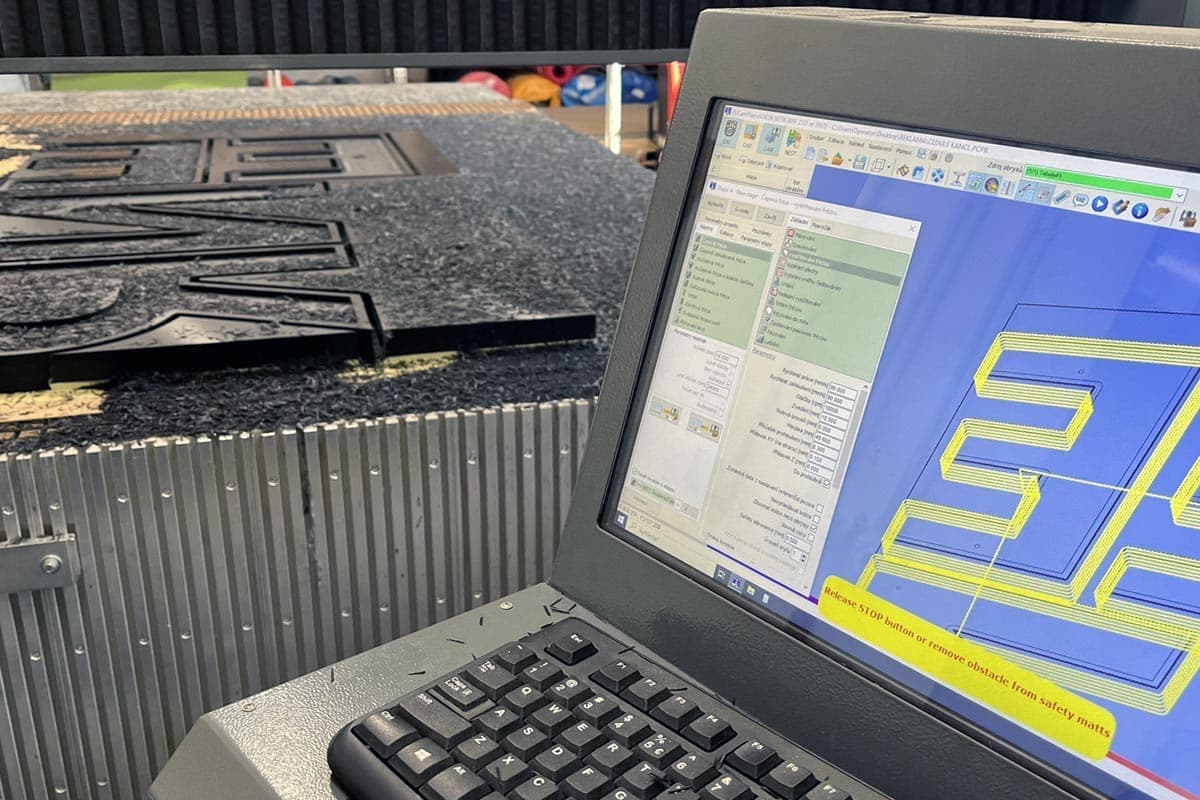
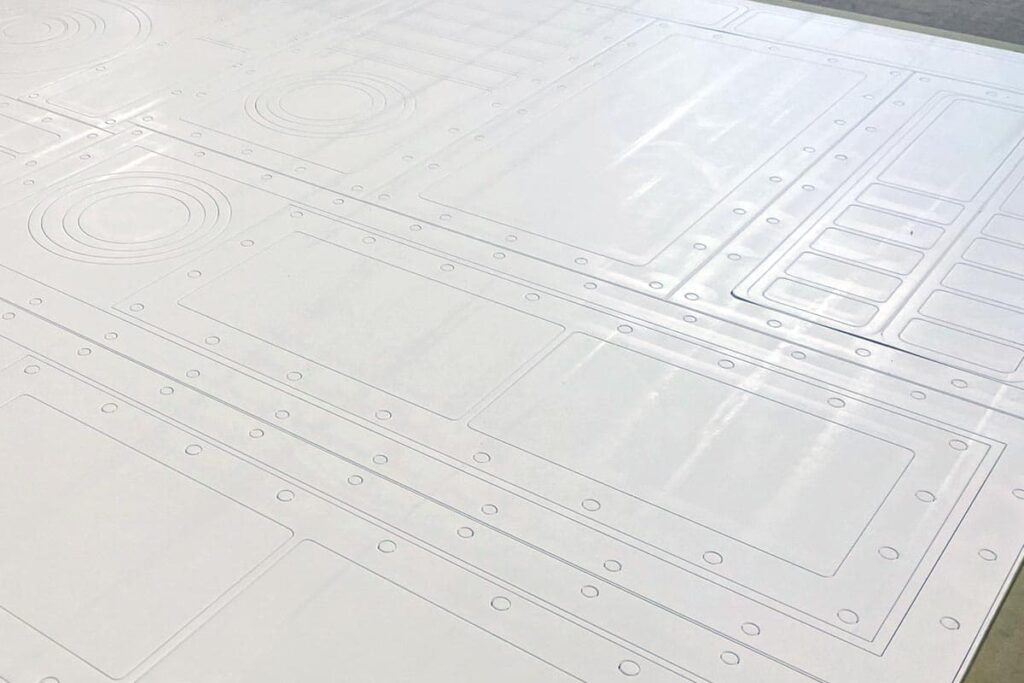
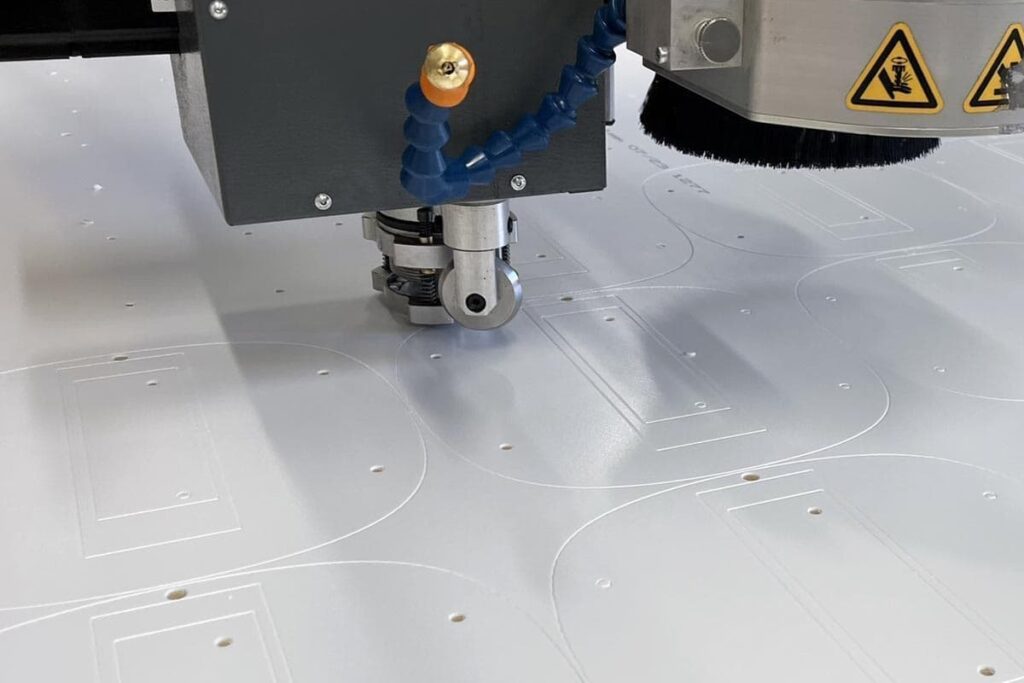
V naší CNC výrobě PTFE také frézujeme a dovedeme tak z materiálů vyrobit řadu výrobků a to jak soustružených, tak i právě frézovaných.
1. Chemical industry – seals for aggressive media
- Job:
The customer was dealing with sealing a joint where the gasket comes into contact with concentrated sulphuric acid. Standard elastomeric seals degrade and have a very short life. - Material chosen:
PTFE virgin (pure PTFE without fillers) - Result
Significant extension of seal life and elimination of chemical degradation. The material withstood continuous temperatures of +180 °C without any change in mechanical properties.
2. Food industry – conveyor slide guides
- Task:
The product conveyor was experiencing high friction and rapid wear of the guide elements. - Material chosen:
PTFE + Carbon - Result
Reduced friction, quieter operation and longer service intervals. Low adhesion also results in minimal dirt build-up.
3. Sealing of the hydraulic cylinder – piston seal
- Task:
For sealing the piston of a bidirectional hydraulic cylinder operating in a demanding environment with high frequency and displacement speed, the customer was faced with the choice of a suitable material. - Material chosen:
PTFE + Bronze - Result
We have produced a DK108 profile seal and have chosen a combination of PTFE+Bronze and an NBR rubber O-ring as the material. The use of Teflon on the outer seal housing ensures smooth operation as well as high abrasion resistance and durability. Now the cylinder has been running for several years without the need to replace the sealing elements.
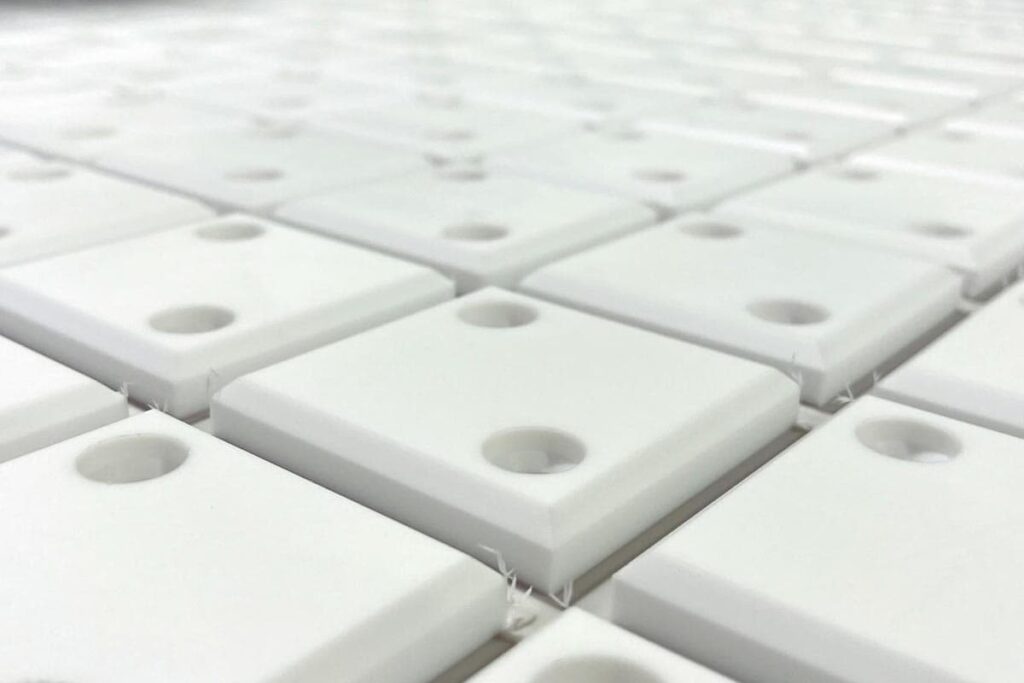
PTFE and its use in industry
Due to its excellent properties, the material is used for many demanding industrial applications that require a combination of high chemical and temperature resistance, where conventional elastomers or engineering plastics fail for these reasons. FDA approval (for the pure virgin version) also makes it a frequent choice for the food and pharmaceutical industries.
PTFE is used in the following applications:
- chemical industry
- hydraulic systems
- pharmaceutical industry
- Energy
- vacuum systems
Typical products include:
- seals and insulating elements
- sliding elements
- parts for the chemical industry
- electrical insulation components
- unloading of tanks and pipes
- sliding sleeves and valves
FAQ – Frequently Asked Questions
What temperature can PTFE withstand in the long term?
PTFE is suitable for long-term operation from -200°C to +260°C. Short term it can handle temperatures up to +300 °C.
What is the chemical resistance of PTFE?
PTFE is extremely chemically resistant. It resists most acids, alkalis, solvents and aggressive chemical media. Detailed chemical resistance is available on request.
What is the difference between pure and filled PTFE?
The disadvantage of pure material is its lower mechanical strength and durability. For this reason, fillers are used to improve these properties. The disadvantage of fillers, however, is the reduction in chemical resistance depending on the filler used.
Can PTFE be machined?
Yes, PTFE is suitable for machining. However, due to its properties and lower hardness, the machining process must be adapted. The material can be processed by turning and milling.
Is PTFE suitable for the food industry?
Yes, PTFE in its pure unfilled version (virgin) is FDA approved and can be used in the food or pharmaceutical industry.
Summary
PTFE is an extremely durable material that is used for demanding industrial applications due to its excellent chemical and temperature resistance. Its minor disadvantage is its lower hardness and mechanical resistance. For this reason, variants with fillers that improve the mechanical properties of the material are used.
Do you need to deal with PTFE production or advice on the most suitable option? Contact us and we will be happy to advise you or produce the required part directly on our CNC machines.
Související články
Polyetylen (PE) – univerzální technický plast pro průmyslové použití