

NBR (Nitrile Butadiene Rubber) is one of the most widely used synthetic rubbers in the industry. Thanks to its excellent resistance to oils, fuels, and lubricants, it has long been a proven material for the production of seals and technical rubber parts, especially in hydraulics, pneumatics, the automotive industry, and wherever there is contact with petroleum products.
What is NBR Rubber?
NBR is a copolymer of butadiene and acrylonitrile. The acrylonitrile (ACN) content has a fundamental influence on the oil resistance of the material – the higher its proportion, the better the resistance to oils and fuels. However, this property is at the expense of flexibility at low temperatures, which is one of the limitations of this material. For this reason, there are a number of NBR compounds adapted to specific applications, which differ in the proportion of ACN content.
Key Properties of NBR
The main advantages of NBR rubber include:
- High resistance to mineral oils, fats, fuels, and petroleum products in general
- Good mechanical strength and abrasion resistance
- Good dimensional stability and long service life
- Favorable ratio of price and utility properties
On the other hand, the weaker side of NBR is limited resistance to ozone, UV radiation, and weathering, and loss of flexibility at low temperatures. For outdoor applications or environments with higher temperatures, other types of rubber, such as EPDM or FKM, are more suitable.
Temperature and Chemical Resistance
Standard NBR is commonly used in the temperature range of approximately -30 °C to +100 °C. Special compounds allow use down to -40 °C or briefly up to +120 °C.
In terms of chemical resistance, NBR is an ideal choice for:
- Hydraulic and engine oils
- Lubricants
- Diesel, gasoline, fuels
Conversely, it is not suitable for:
- Strong acids and oxidizing agents
- Ozone and UV radiation
- Glycol-based brake fluids
Typical Uses of NBR in Industry
Due to its properties, NBR rubber is used in a wide range of applications, including:
- O-rings and flat seals – flanges, lid seals, and other static applications
- Sealing elements for hydraulics – piston seals, rod seals, wipers, and more
- Shaft seals
- Hoses for oils and fuels
- Membranes and technical rubber parts
NBR is often the first choice wherever contact with oils is a key factor and emphasis is placed on reliability and economic efficiency of the solution.
Summary
NBR rubber is a versatile and proven material for oil applications. It offers very good mechanical properties, high chemical resistance to oils and fuels, and a favorable price. With proper design and consideration of operating conditions, NBR is a reliable long-term solution for a wide range of industrial uses.
Looking for the Right NBR Solution?
Do you need seals, O-rings, or CNC machined parts for oil applications? We can help you choose the right NBR compound and manufacture it exactly according to your drawing or sample.
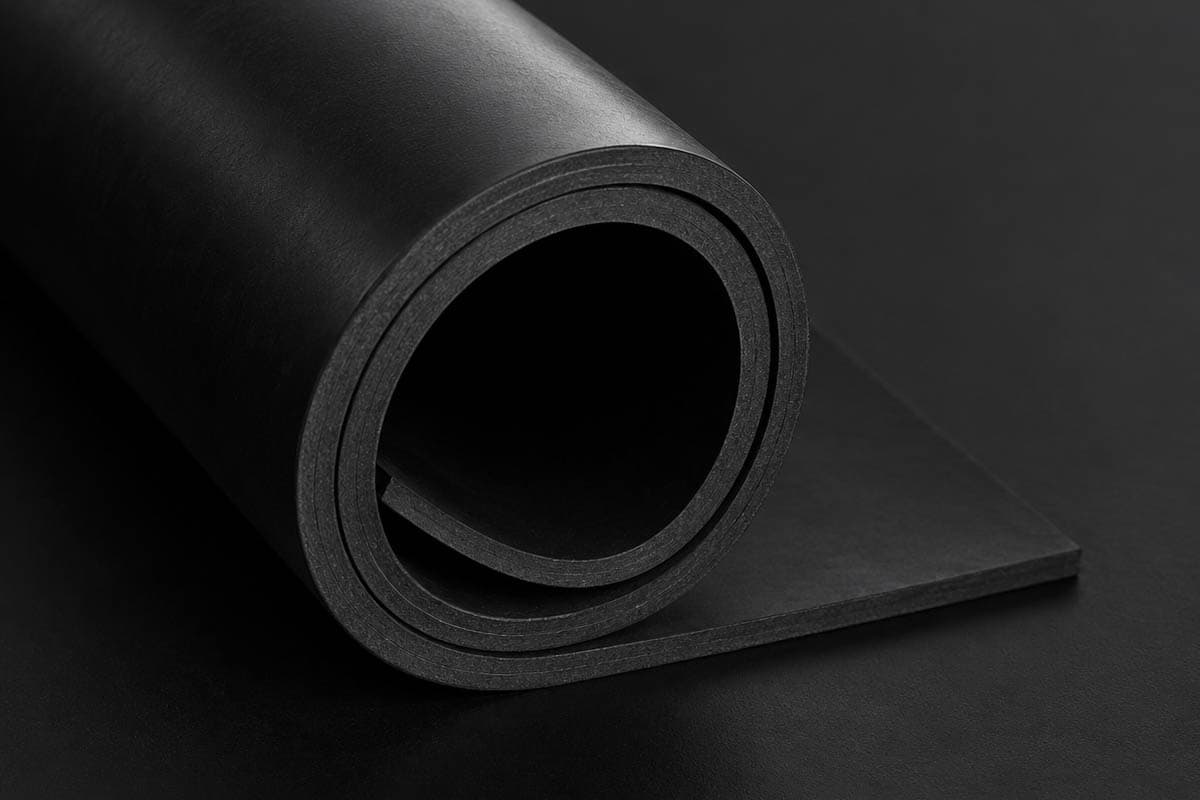
We keep the material in stock in rolls (most often 1400 mm wide). However, we can also supply piece quantities or cut-to-size of any dimension, and we also have our own flat seal production. NBR rubber is also often used for CNC production of seals for hydraulics and pneumatics. Sealing elements made of NBR can be used up to an operating pressure of 160 bar, or even more depending on the selected profile.

Material in Rolls, Cut-to-Size
We offer NBR rubber in rolls of 1400 mm width as well as precise cut-to-size pieces according to your requirements.

Flat gasket seals
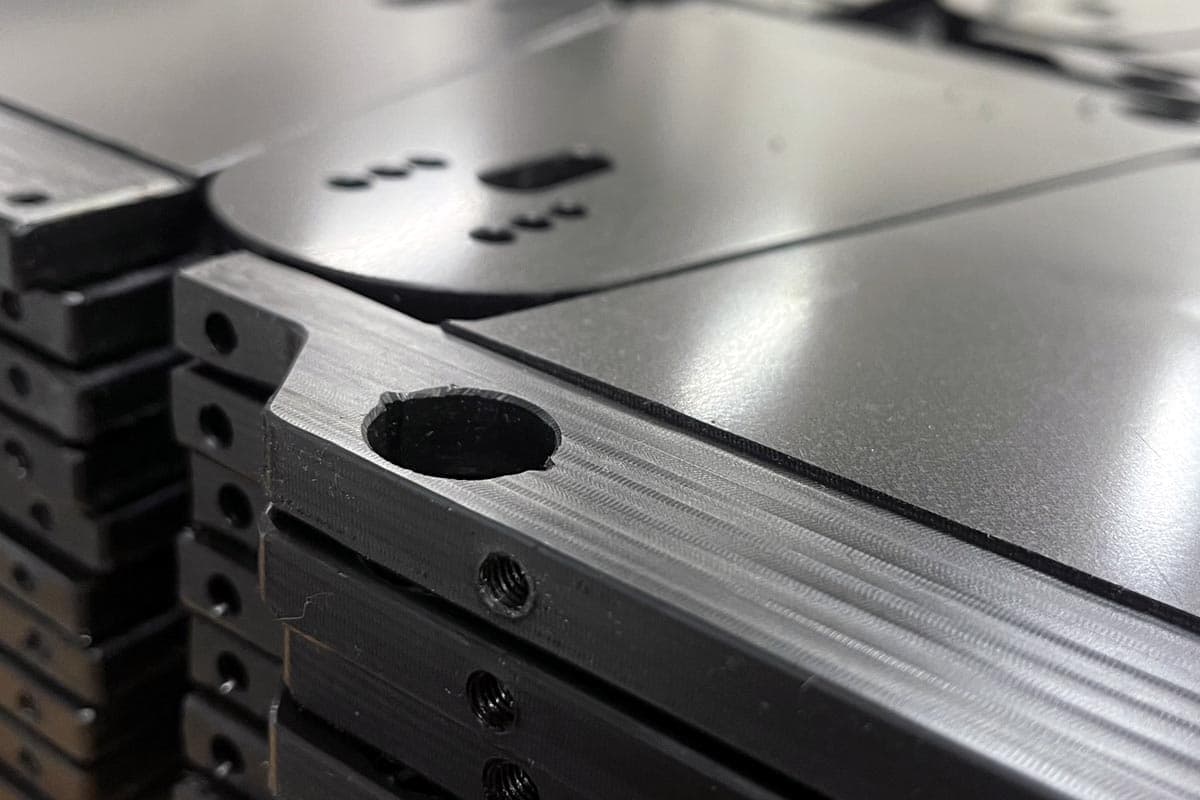
We produce flat seals and shaped cutouts from NBR rubber on CNC machines

CNC Seal Production
We manufacture sealing elements from NBR rubber not only for hydraulics and pneumatics.
👉 Contact us with your inquiry and we will design a reliable solution tailored to your application.