

SBR rubber is one of the most widely used technical rubbers. Thanks to its good mechanical properties, abrasion resistance, and affordable price, it has proven itself in the manufacture of washers, protective components, and flat gaskets. However, it is not suitable for every environment. How can you tell when to choose it, what hardness to select, and how can parts be manufactured from rubber sheets exactly according to the drawing?
We supply engineering rubber and process it using our own CNC machines. In addition to supplying the material, we also offer custom rubber cutting—from individual cutouts to repetitive mass production.
Article Contents
What is SBR rubber?
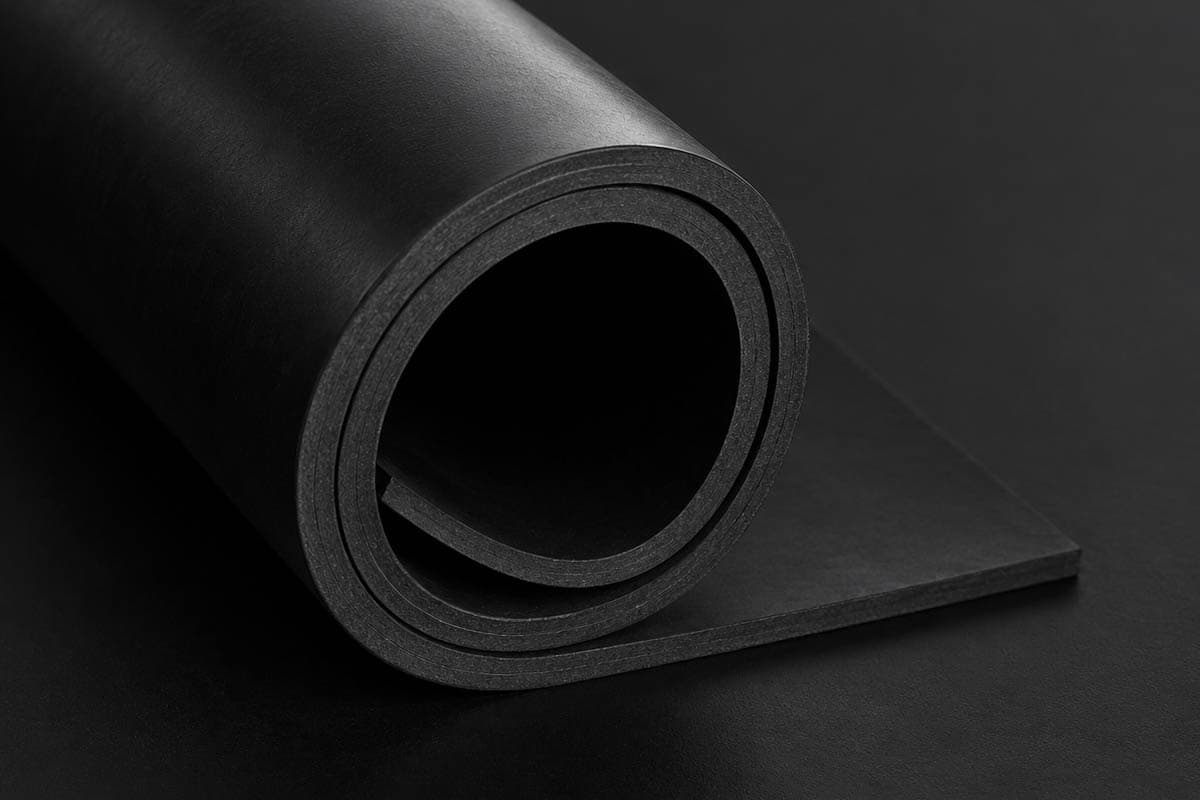
The abbreviation SBR stands for “styrene-butadiene rubber.” It is a synthetic elastomer that, after processing and vulcanization, forms a flexible rubber material. It is best known for its use in tire manufacturing, but it also plays a significant role in common industrial applications.
The main advantage of this material is its balanced combination of price and performance. In applications where the part is not exposed to oils, fuels, ozone, or high temperatures over the long term, this material may be a more economical choice than specialized types of rubber.
What are the properties of SBR, and what are its limitations?
For technical applications, it is important to consider not only elasticity but also mechanical stress and the environment in which the part will operate.
The main benefits include:
- good resistance to abrasion and general mechanical stress;
- flexibility and the ability to absorb shocks or vibrations;
- a choice of different firmness levels and versions with a fabric insert;
- an affordable price for less demanding industrial applications;
- Easy processing of sheet material into pads, strips, or shaped cutouts.
When Should You Choose a Different Type of Rubber? This elastomer is not suitable for long-term contact with mineral oils and fuels. It also has limited resistance to ozone, UV radiation, and weathering. Therefore, EPDM is often a better choice for general outdoor use; NBR is typically chosen for contact with oils.
The operating temperature range for the variants available in our product line is listed as −30 to +70 °C. Specific applicability must always be verified based on the material data sheet, the duration of temperature exposure, and the application conditions.
Where is SBR rubber used?
Typical applications include parts where flexibility, surface protection, or damping of mechanical contact are the key factors, rather than resistance to aggressive media. Rubber sheets are therefore processed, for example, into rubber pads for machines and equipment, spacer strips between structural components, protective pads, stops, cover elements, and damping inserts.
This material can also be used to manufacture flat gaskets for suitable, less demanding static joints. However, it is essential to verify the working medium, pressure, temperature, and required deformation for the gasket. The general term “sealing rubber” does not, in and of itself, guarantee suitability for a specific application.
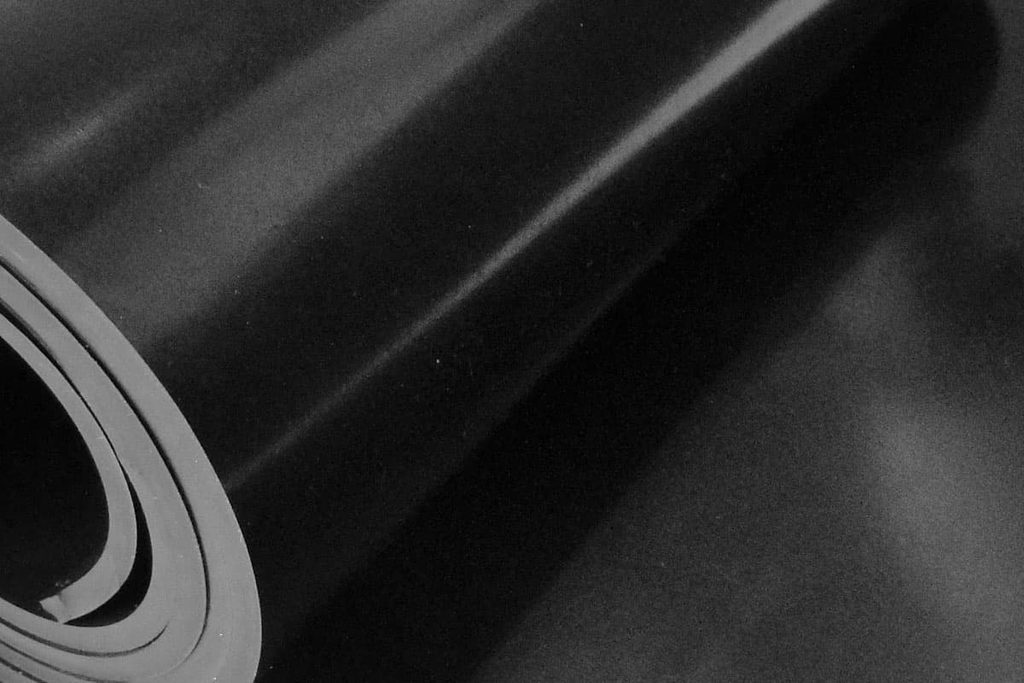
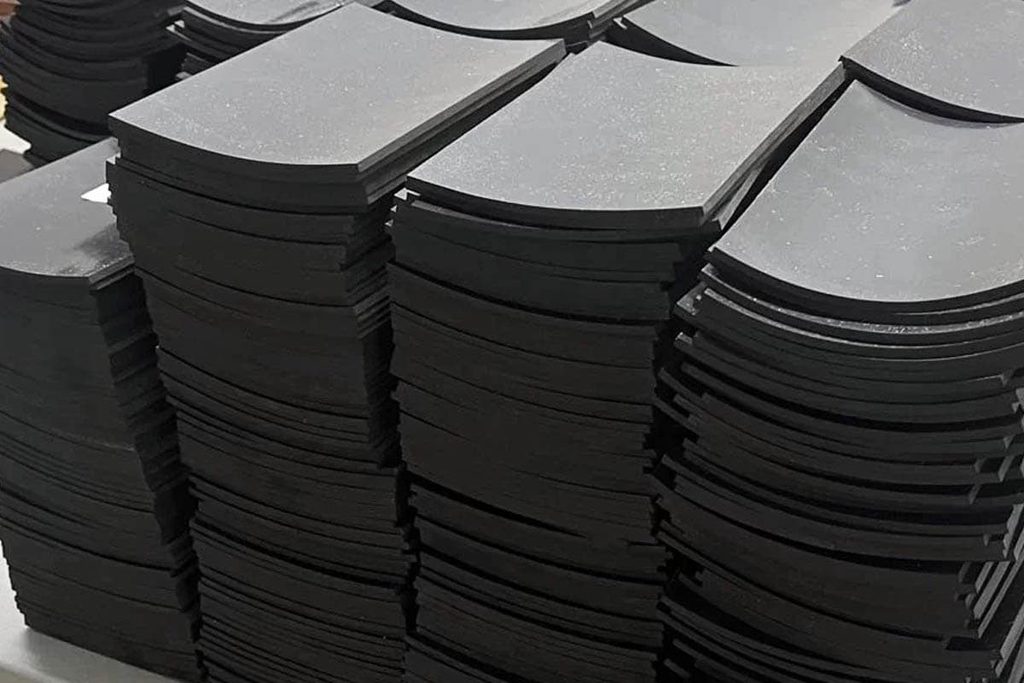
SBR Sheets: How to Choose the Right Hardness and Type?
Rubber hardness is typically specified on the Shore A (Sh.A) scale. A lower number indicates a softer material, while a higher number indicates a stiffer one. The choice depends on operating conditions and the required mechanical properties.
| Option | Characteristics and Typical Uses |
|---|---|
| SBR 50 Sh.A | A softer version, such as for pads with lower contact pressure. |
| SBR 60 Sh.A | Medium hardness for standard industrial parts. |
| SBR 70 Sh.A | A versatile material that is most commonly used for pads, protective elements, and shock-absorbing components. |
| SBR 70 Sh.A with 1 fabric insert | Improved dimensional stability and tear resistance. |
| SBR 70 Sh.A with 2 fabric inserts | Even greater tear resistance |
| SBR 70 Sh.A – flat panels | For thicker parts—available up to 50 mm thick |
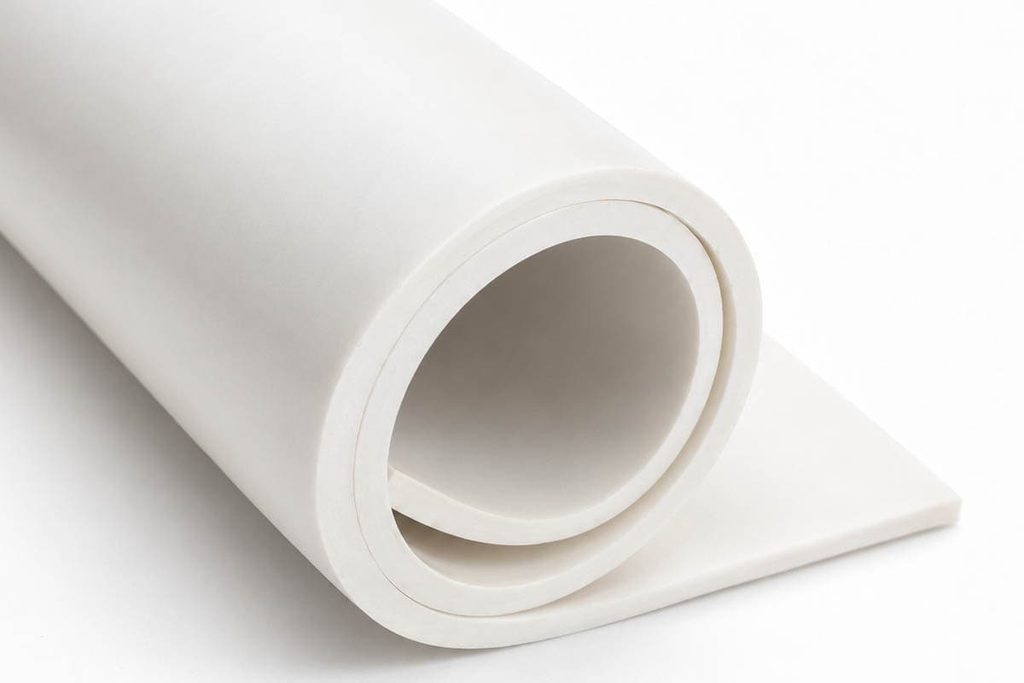
| SBR 60 Sh.A FDA | A special white variant with FDA certifications for selected food applications |
When making your selection, it is also important to consider the thickness, the sheet or roll format, and any reinforcement requirements. You can find an overview of the available options in our SBR rubber product lineup. If you are unsure which option is right for you, we will recommend one based on your specific application.
SBR, NBR, or EPDM: When Should You Choose Which Material?
These three types of technical rubber are often confused, yet they are suited for different conditions. For standard mats and protective parts used indoors without contact with oils, affordable, general-purpose rubber is often sufficient. If a part will come into contact with oils, lubricants, or fuels, NBR is generally more suitable. For outdoor use, where the part is exposed to sunlight, ozone, and the elements, EPDM is usually the better choice.
The choice should never be based solely on the price per square meter. The wrong material can cause premature hardening, swelling, loss of elasticity, or leaks in the finished part, thereby significantly reducing the service life of the rubber component.
Custom SBR Cutting: From Rubber Sheet to Finished Part
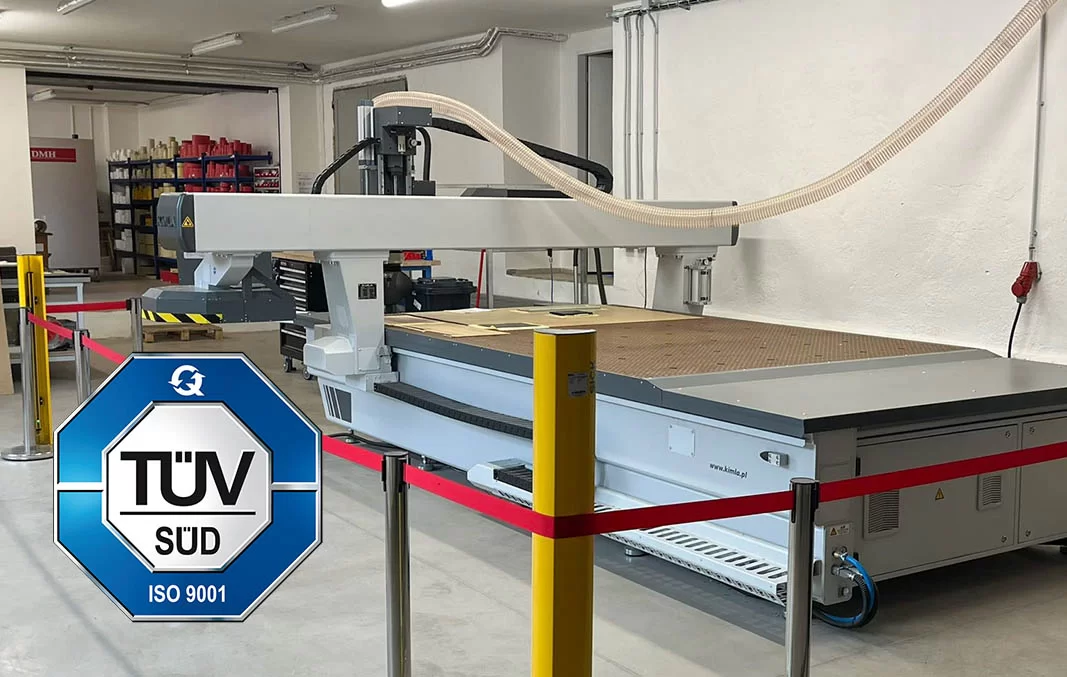
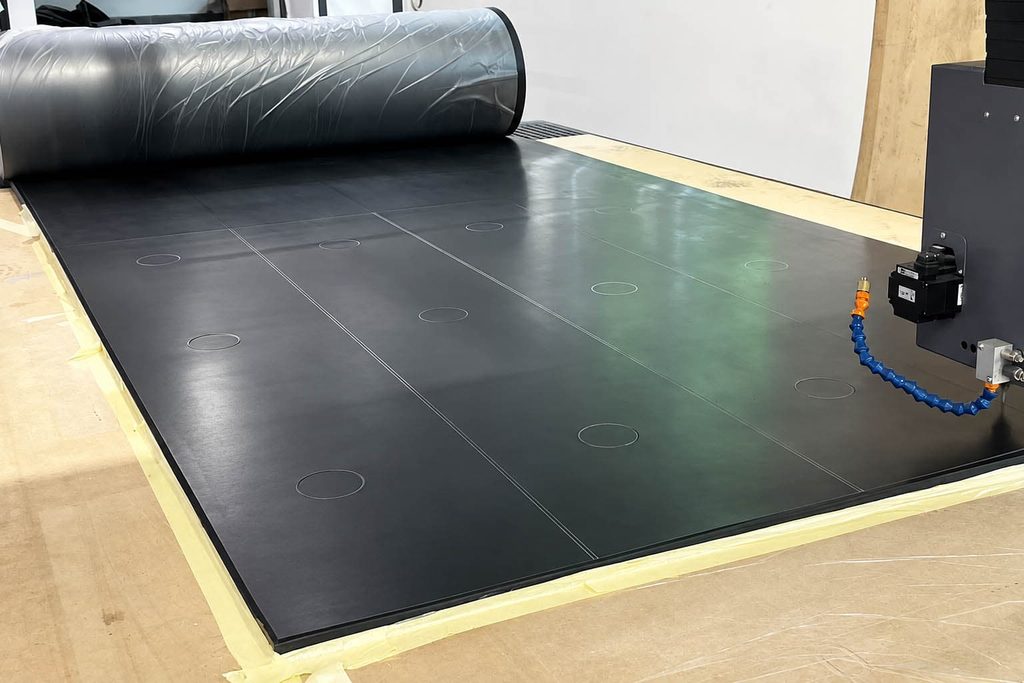
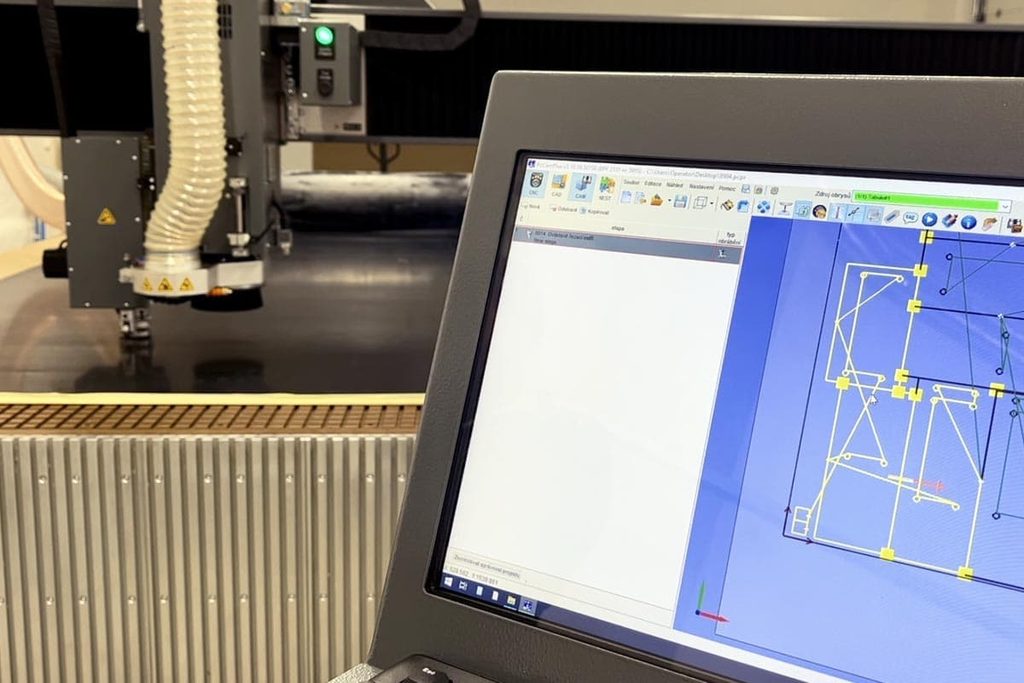
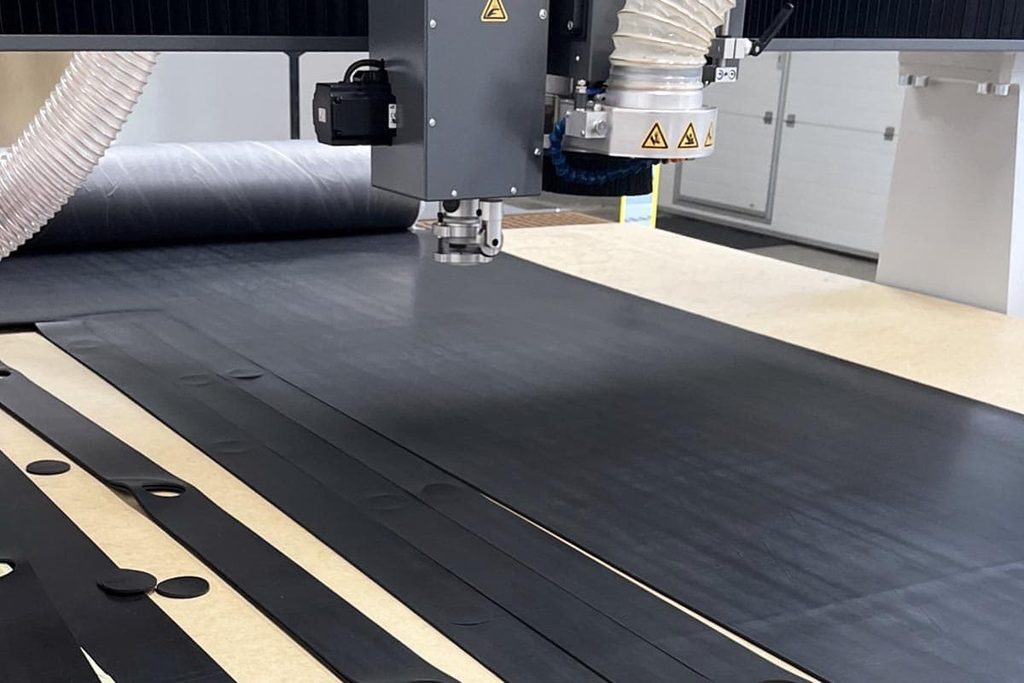
Do you need strips, circular gaskets, or custom-shaped cutouts instead of a whole roll of finished rubber? We offer custom cutting of SBRrubber using CNC plotters. This is a practical solution for prototypes, single-piece production, and larger production runs, eliminating the need to purchase a special cutting die for each new shape.
Our CNC plotters use cutting blades, including oscillating blade technology. Depending on the thickness, hardness, and any reinforcement of the material, we select the appropriate tool and process. This allows us to process not only simple strips and pads, but also cutouts with holes or more complex contours.
We have two CNC plotters with a working area of 3,100 × 2,100 mm. When preparing a cut, we optimize the layout of the parts to make the most efficient use of the material. We always assess the resulting manufacturability, maximum thickness, and achievable tolerance on a case-by-case basis—elastic rubber behaves differently during machining than a rigid sheet.
For more information about the technology and production capabilities, please visit the page on cutting materials with a CNC plotter.
How does custom manufacturing of rubber parts work?
1. Send us a drawing or a sample
The most suitable source material is a drawing in DXF, DWG, or PDF format that includes the required dimensions and thickness. If you do not have this documentation, we can base our work on a sample part and its measurements (using our optical measuring device). Information about operating conditions and the planned quantity will also be helpful.
2. We will assess the suitability of the material
We will verify whether the selected material meets the requirements or whether it would be safer to use a different elastomer. We will specify the hardness, thickness, any fabric reinforcement, and the manufacturing process, and we will prepare a non-binding price quote.
3. Cut out and check the parts
Based on the approved specifications, we will prepare the data for CNC cutting, produce the required shapes, and perform dimensional inspections. If necessary, we can also perform optical measurements and provide a measurement report. We will prepare the finished products for shipment.
In addition to the cutouts themselves, we also manufacture custom flat gaskets from engineering rubbers and other sealing materials.
Frequently Asked Questions
Is SBR rubber oil-resistant?
No. Standard rubber of this type is not suitable for long-term exposure to oils, fuels, and mineral lubricants. NBR is more commonly chosen for such environments, though the selection always depends on the specific medium and temperature.
Can SBR rubber sheets be used outdoors?
They are generally not recommended for long-term outdoor exposure due to their limited resistance to UV radiation and ozone. EPDM is usually a better choice for outdoor applications.
What temperature can SBR withstand?
SBR rubber has long-term temperature resistance ranging from −30 to +70 °C. However, the specific compound and actual operating conditions must always be taken into account.
Can you manufacture a gasket even without a technical drawing?
Yes, we can design a range of parts based on a sample you provide. We will measure the sample, evaluate its dimensions, and confirm the final production specifications with you.
Is every type of SBR rubber suitable for contact with food?
No. For such applications, a specific material with the appropriate documentation is required. For example, our product line includes a special variant, SBR 60 Sh.A FDA; suitability for specific contact and operating conditions must be verified before use.
Do you need SBR cut exactly to your specifications?
Whether you’re looking for individual rubber pads, custom-shaped cutouts, strips, or mass-produced gaskets, we’d be happy to discuss your requirements for the material and the final shape with you. Thanks to our in-house CNC manufacturing, you can handle both the selection of rubber and its processing all in one place.
SBR rubber is an affordable and versatile material that is widely used in industry, mechanical engineering, and in the manufacture of seals, gaskets, and protective components. Thanks to its good mechanical resistance, elasticity, and the availability of various hardnesses and thicknesses, it is a suitable choice for a wide range of technical applications. However, to achieve the desired service life and functionality, it is important to select the correct type of rubber based on the specific operating conditions.
Do you need custom-made SBR rubber? We’ll help you choose the right material and provide precise CNC cutting of SBR rubber based on your drawings or a sample you provide. Whether you need individual rubber parts, gaskets, washers, or custom mass production, we’ll be happy to develop a solution tailored to your requirements.
Contact us and send us a non-binding inquiry – together, we’ll find the right material and an effective way to process it.