

Milling of materials
We offer the production of custom milled parts in engineering plastics, aluminum, composites, wood and many other materials. We produce parts on two state-of-the-art CNC milling machines with a working area of 3100 x 2100 mm and can offer both piece and batch production. We use an optical measuring machine to check the parts.
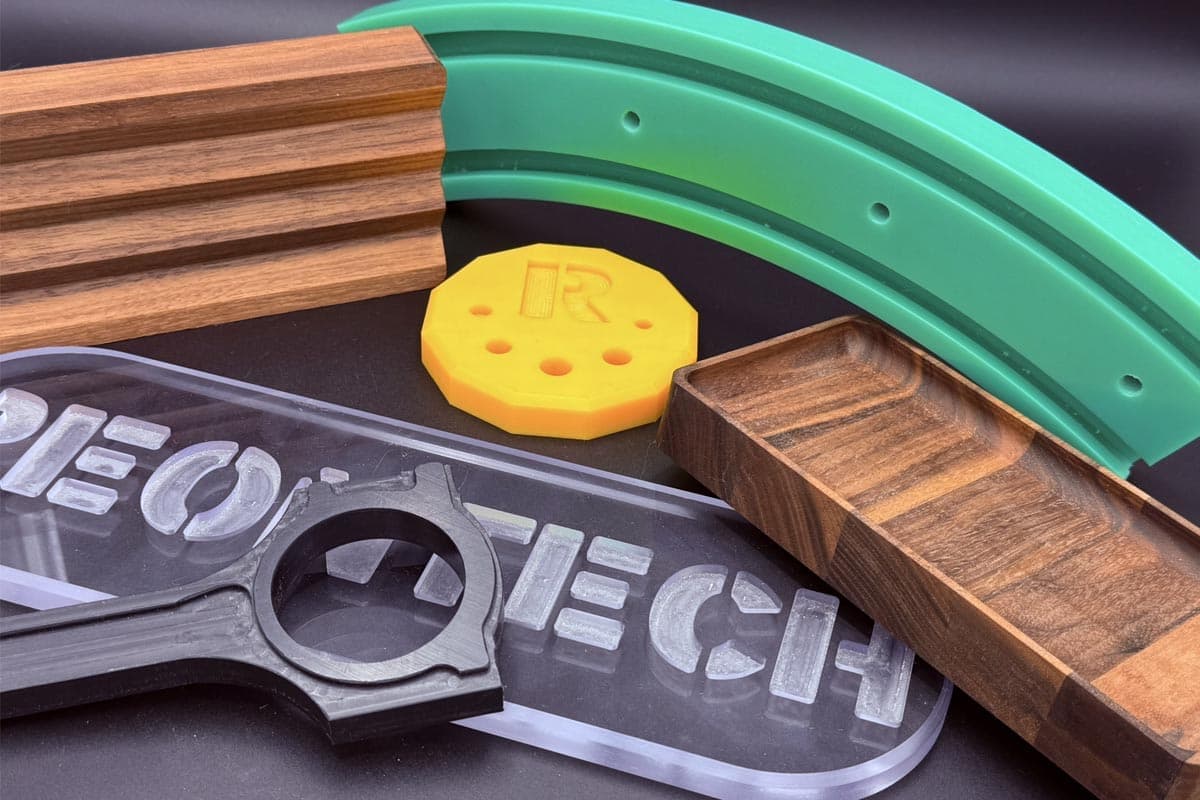



What we can solve:
We produce milled parts from a wide range of (not only) technical materials. We can mill plastics, composites, aluminium and non-ferrous metals, mica, wood and plywood, alupanels and many other materials. Thanks to our two CNC milling machines with a working area of 3100 x 2100 mm, we can also produce large parts and large series. For a truly accurate inspection of parts, we use touch probes and also our optical measuring instrument, which guarantees the dimensional accuracy of parts and compliance with the tolerances of the measuring protocol.


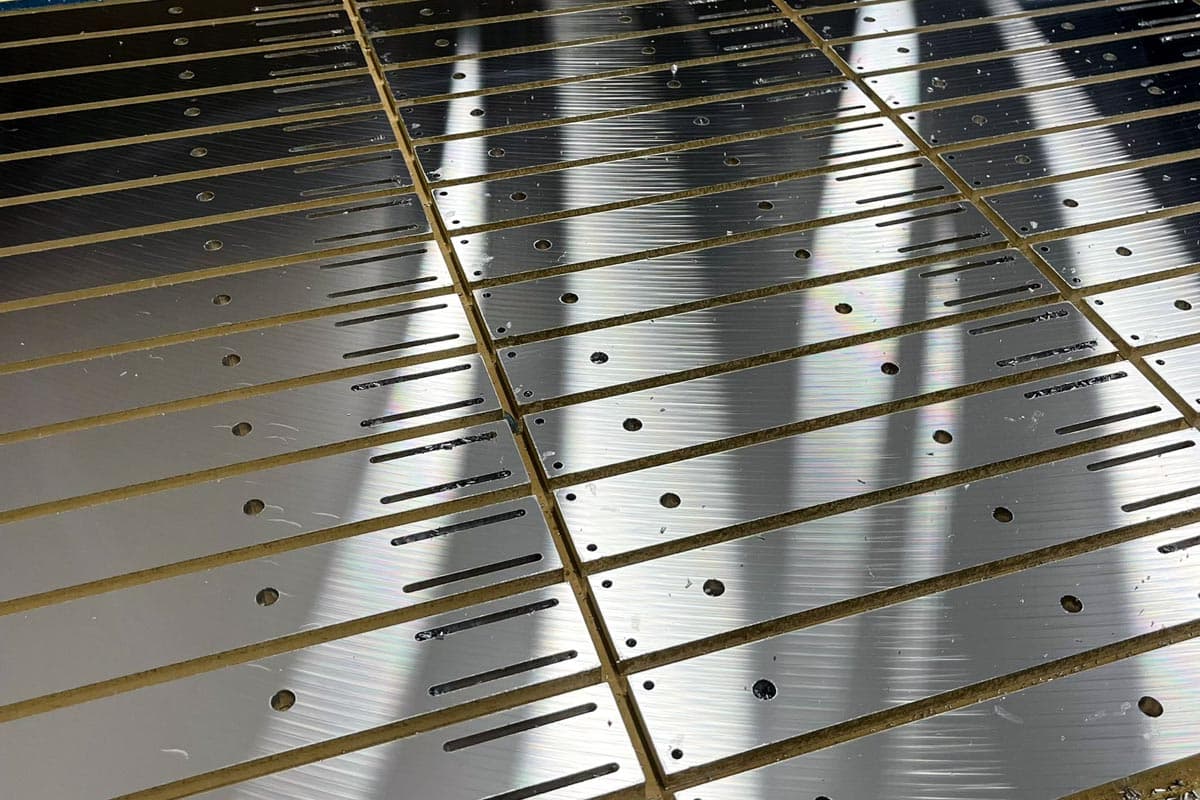

What materials do we work with?
For the production of seals we use top quality materials of proven quality. We offer more than 80 material variants, including FDA-approved materials for use in the food or pharmaceutical industry.
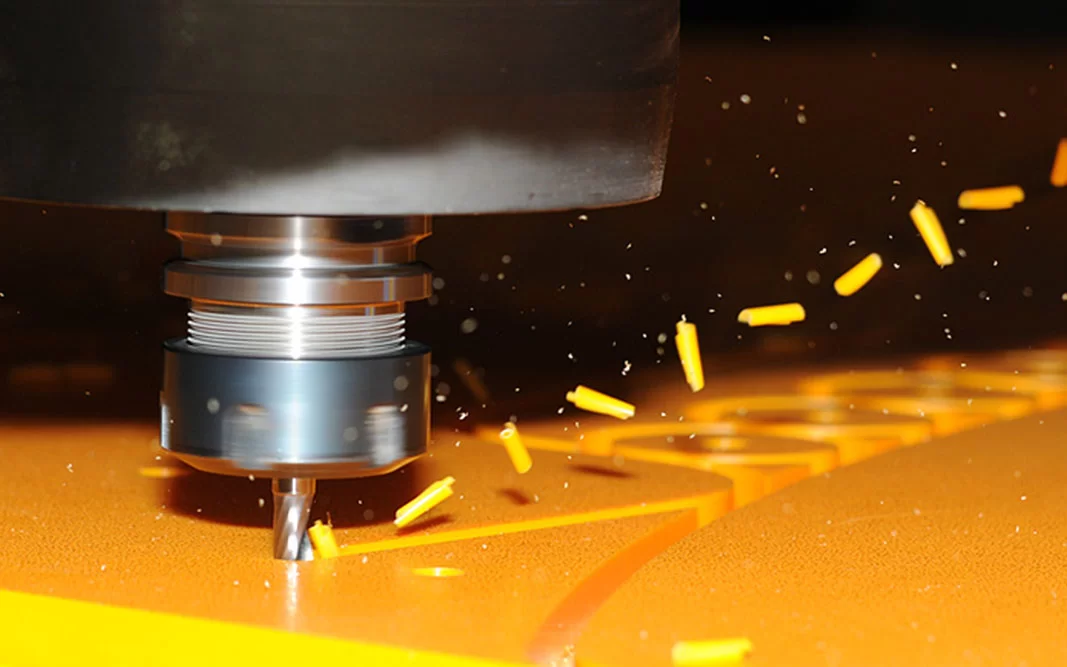
Technical plastics
Milling of all technical plastics such as PE, PP, PA, PVC and POM-C. We keep the most commonly used materials in stock. In addition to milling, we also offer the possibility of CNC turning.
Examples of use:
- demarcation pads and abrasion-resistant elements
- sliding sleeves, guide rails and labels
- roller screw guides and machine enclosures
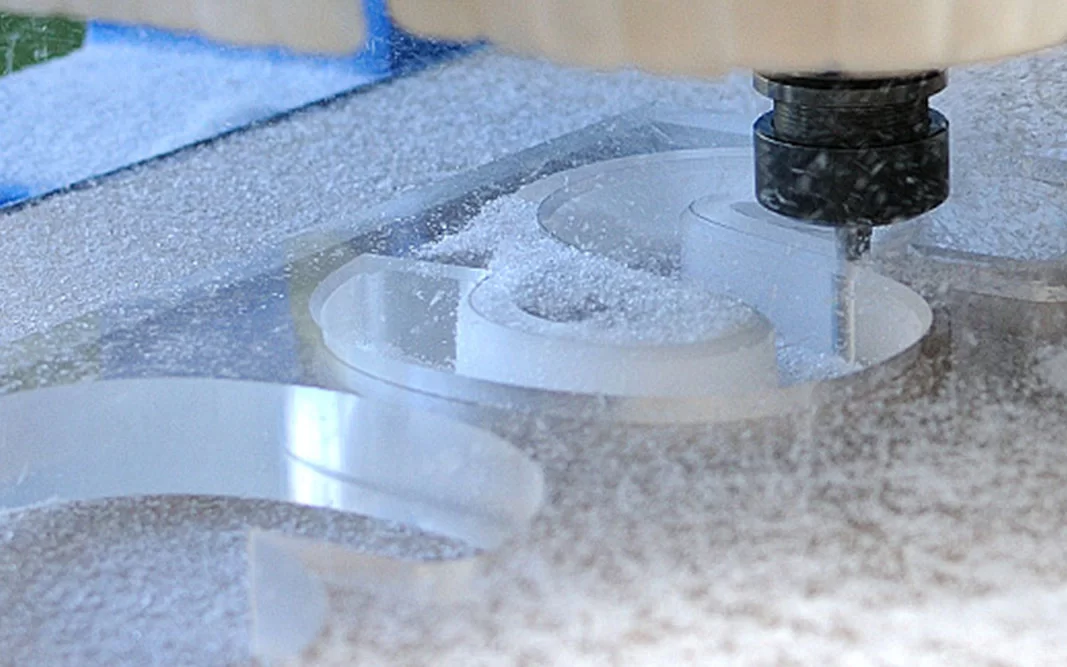
Polycarbonate
Milling of polycarbonate, plexiglass and other materials. Edge polishing, engraving and other machining operations are possible. We also offer bent and glued parts and assemblies as well as safety glass production.
Examples of use:
- hole fillers and safety fillers (hardened polycarbonate types)
- transparent covering and roofing
- advertising products, signs and banners
Aluminium and non-ferrous metals
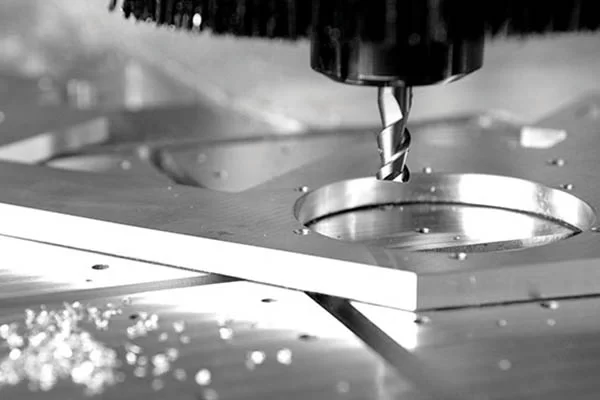
We produce shaped and milled aluminium parts. We also process copper, bronze, brass and other non-ferrous metals. We also perform turning and related machining operations on these materials.
Examples of use:
- machine components and guide profiles
- sliding bushings made of non-ferrous metals
- promotional products and engravings
Alupanels and composite materials
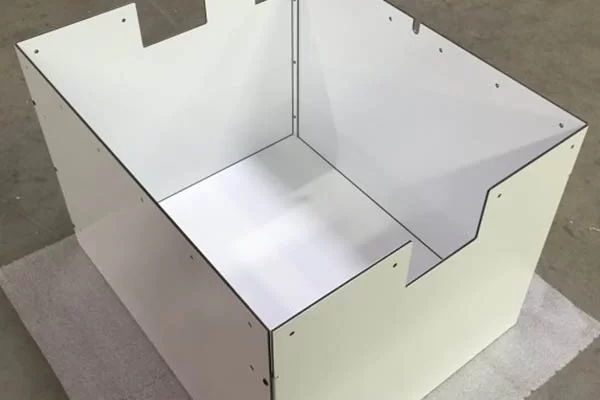
We also process dibond, alupanel and other composites. Milling grooves for bending. Bent parts.
Examples of use:
- advertising use, banners and signs
- machine components
- covering of machinery and equipment
Milling of wood and plywood
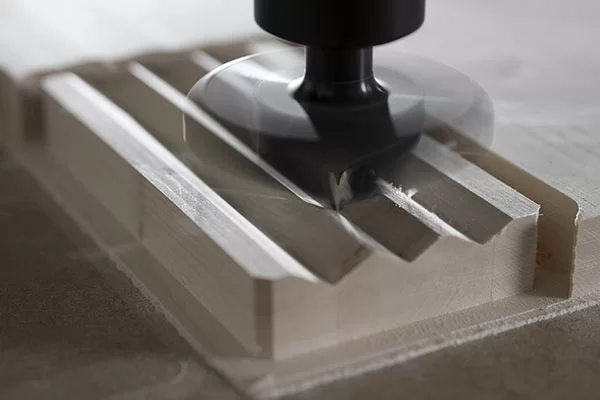
We offer milling of wood, plywood, laminate, MDF and other related materials. Other operations (grinding, gluing, etc.) are of course also possible. Surface treatments (varnishes, stains, oils, waxes, etc.).
Examples of use:
- advertising use and promotional items
- parts for furniture production
- decorative objects made of solid wood
Rubbers and rubber materials
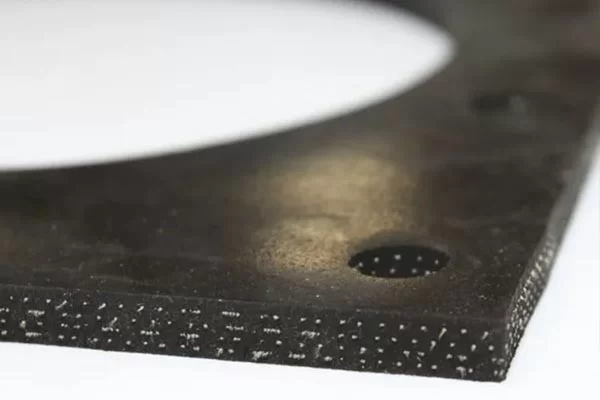
We can also mill certain types of rubber and efficiently produce complex parts without the need to invest in moulds and their development.
Examples of use:
- sealing of joints, fittings, flanges and lids
- protective and damping elements, wiper blades
- slatted screens and linings of transport boxes
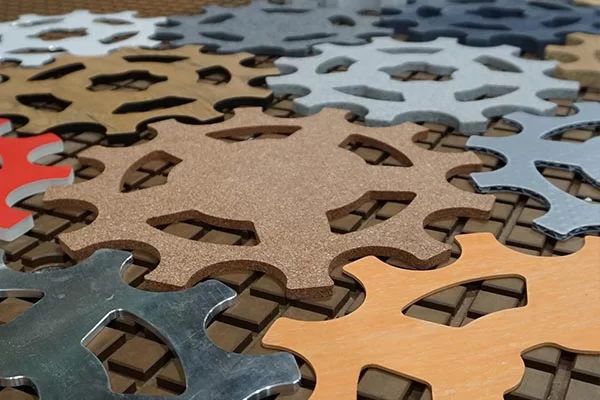
Electrical insulants and other materials
In addition to the materials described above, we also mill/cut materials such as: cardboard, insulating materials, leather, felt, industrial fabrics, textiles and laminated insulators
Examples of materials and applications:
- mica, combined mica materials and other thermal insulation parts
- textite, glass-textile, kartite and other electrical insulants
- leather products and other shaped cut-outs
- promotional and decorative items made of various materials
How is CNC milling of materials done?
Inquire CNC milling material
In all areas of our operations, we place great emphasis on maximum quality of products and services, responsible approach to the environment, and work safety. We believe that these values are the foundation for long-term development and for building stable relationships with our customers. The confirmation of the quality of our work is the fact that we hold the ČSN EN ISO 9001:2016, ISO 14001:2016, and ISO 45001:2018 certifications.
Frequently Asked Questions
What materials can be machined using CNC milling?
CNC milling is suitable for a wide range of materials – from engineering plastics (PE, POM, PA, PP, PVC and others), through aluminium and non-ferrous metals to wood, composites and other non-technical materials.
What is the accuracy of CNC milling?
Our modern CNC milling machines allow us to achieve dimensional accuracy of up to +/- 0.05 mm. However, the possibility of achieving tolerances is highly dependent on the material being processed and the specific part. For example, with some engineering plastics, such precise tolerances are not possible due to their poorer mechanical properties and thermal expansion.
What are the main advantages of CNC milling over other manufacturing methods?
The main advantages of CNC milling include high precision, repeatability of production, flexibility (production without the need to invest in a mould, etc.), versatility and speed. All this makes this technology ideal for prototyping, small series production, but it also finds its place in large-scale production.
Is CNC milling also suitable for piece production?
Yes, CNC milling is a very suitable choice for prototyping and piece production because it does not require the preparation of expensive (and time-consuming) tooling – for example, injection moulds, etc.
What affects the price of CNC milling materials?
The cost of CNC milling of materials depends on the type of material, complexity of machining, required accuracy, batch size and total production time. Additional operations, such as additional surface finishing or assembly, also have an impact.
What is the delivery time of CNC milling materials?
CNC milling does not require the preparation of moulds or other tools. As a result, production can be done really quickly and, if the material is available, the part can be produced within a few days.