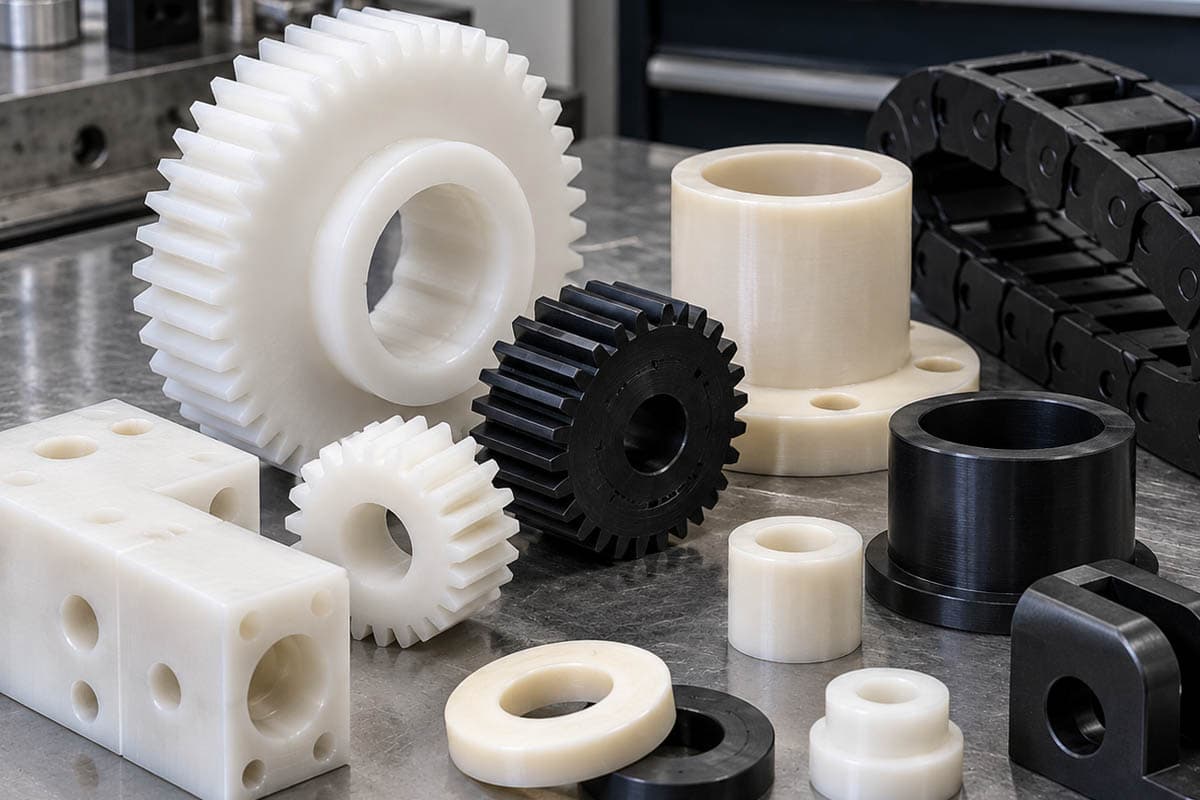


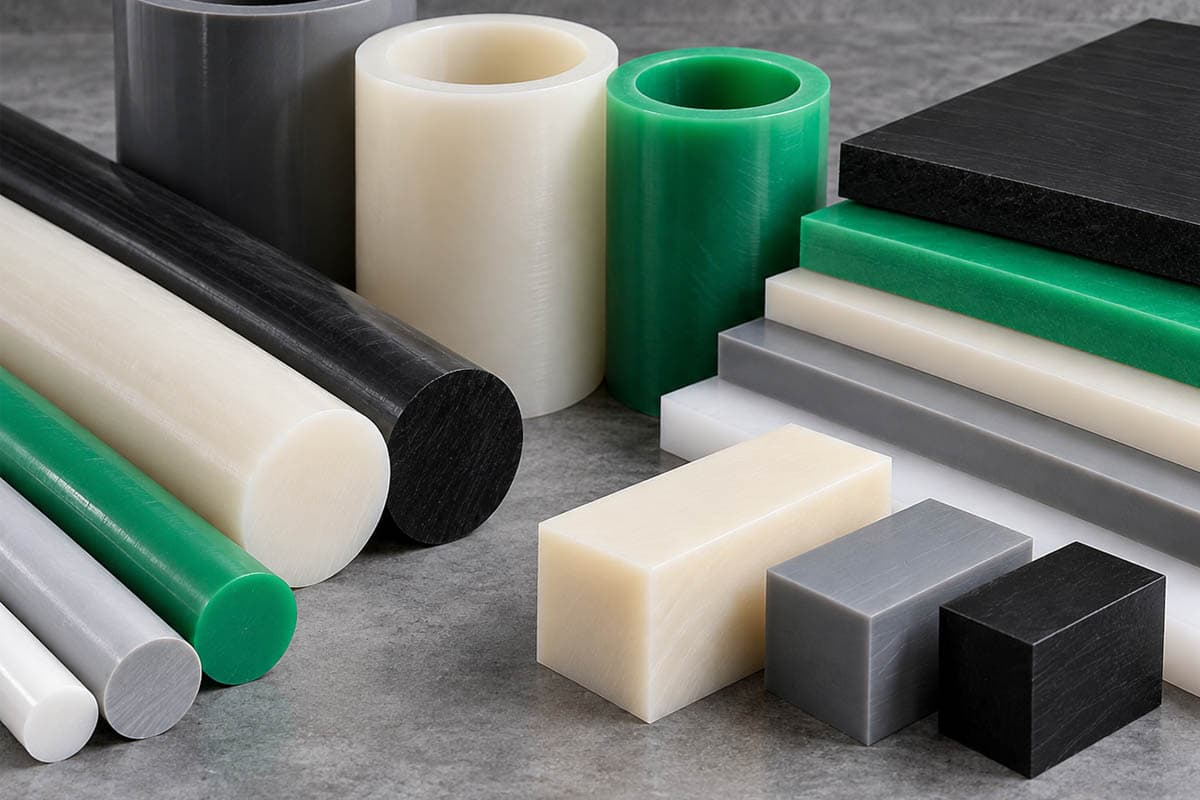
Engineering plastics are a group of polymers with defined mechanical, thermal, and chemical properties that are used in mechanical engineering as substitutes for metals—primarily in applications where it is necessary to reduce weight, eliminate the need for lubrication, prevent corrosion, or dampen noise. Unlike common packaging plastics, they are supplied in semi-finished products intended for machining: in sheets, rods, and tubes with guaranteed tolerances and a stable structure.
In practice, they are divided into three levels based on performance. Standard plastics (PE, PP, PVC) offer chemical resistance and affordability. Engineering plastics (POM, PA, PET) withstand mechanical loads and are used for moving parts—slide bearings, gears, and guide rails. High-performance plastics (PTFE, PEEK, PVDF, PPS) are used where other materials fail: at sustained temperatures above 150 °C, in aggressive chemicals, and in applications with the highest cleanliness requirements.
This article provides a practical overview: what each material is capable of, where it is commonly used, what its temperature ranges are, and how to choose between them. We carry all of the materials listed in our product range—we supply engineering plastics as semi-finished products as well as finished machined parts. We provide custom CNC milling and CNC turning of plastics based on drawings or samples.
Contents
What Are Engineering Plastics, and How Do They Differ from Ordinary Plastics?
The difference lies not in the chemistry, but in the processing and the guaranteed properties. Packaging-grade polyethylene and PE 1000 polyethylene are chemically related, but the structural grade has a different molecular weight, a different crystallinity, and a different cooling history. This affects the material’s strength, abrasion resistance, and how it behaves during machining.
Engineering plastics are supplied in the form of extruded or cast sheets, rods, or tubes with defined dimensional tolerances. Cast semi-finished products (typically PA 6 and POM C with larger diameters) have lower internal stress, so the part deforms less after machining. This is crucial for precision parts, where tolerances are measured in hundredths of a millimeter.
The second difference lies in the documentation. Engineering plastics come with a datasheet listing mechanical properties, temperature range, and any applicable certifications—such as FDA, EU 10/2011 for food contact, and UL 94 for flammability. You won’t receive such documentation for standard plastics.
Why Replace Metal with Plastic?
In mechanical engineering, metal is not replaced with plastic because of the cost of the material—which often favors metal. It is done because of properties that metal lacks.
Weight. Most engineering plastics have a density of 0.9–1.8 g/cm³, compared to 7.85 for steel. A part made of plastic is therefore six to eight times lighter. For moving parts, this means lower inertial forces, faster cycles, and lower drive power consumption.
Lubrication-free sliding properties. POM, PA, and especially PTFE have a low coefficient of friction and can be used as dry sliding pairs. This eliminates the need for lubrication, service intervals, and the risk of lubricant contamination—which is why plastics are widely used in food processing lines.
Corrosion resistance. Plastic doesn’t rust. In chemical plants, wastewater treatment plants, or outdoor environments, this is often the deciding factor.
Noise and vibration damping. A plastic gear or guide rail operates significantly more quietly than a metal one. In production lines where workplace hygiene is a concern, this is a measurable benefit.
Electrical insulation. Engineering plastics are non-conductive, making them the standard material for insulating pads, spacers, and enclosures in control panels.
There are two limitations, and it’s good to be aware of them in advance: plastic has lower strength and stiffness than steel and significantly higher thermal expansion (about ten times as much). For precision parts that operate over a wide temperature range, thermal expansion must be taken into account during the design phase.
Three Levels of Engineering Plastics
Classifying materials by performance makes the initial decision easier—it narrows the selection from dozens of materials down to just a few.
Standard engineering plastics — PE, PP, PVC. Good chemical resistance, low cost, easy to machine. Mechanically weaker, with a temperature limit of approximately 80–100 °C. They are used for tanks, linings, cladding, storage containers, and sealing gaskets.
Engineering plastics —POM, PA, PET. They can withstand loads, retain their shape, and have good sliding and fatigue properties. Their typical continuous operating temperature range is up to 100–120 °C. These materials are used for machine components.
High-performance plastics — PTFE, PEEK, PVDF, PPS, PSU. Temperature resistance from 140 °C and up (PEEK: 250 °C continuously), extreme chemical resistance, certified for medical and pharmaceutical use. The price is significantly higher, so they are used specifically in applications where no other material will suffice.
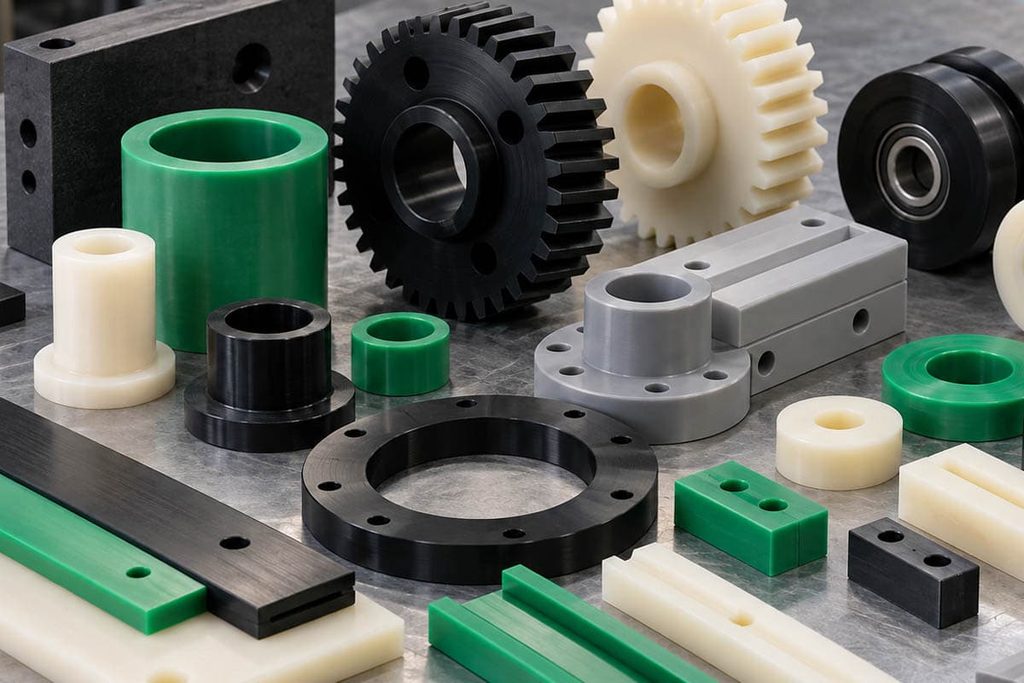
Standard plastics: PE, PP, PVC
PE — polyethylene
The most widely used engineering plastic in industry. It excels in abrasion resistance, low friction, and complete resistance to water and most chemicals. It is classified by molecular weight: PE 300 for general structural components and PE 1000 for applications where abrasion and sliding are concerns.
PE 1000 (UHMW-PE) has exceptional wear resistance—it outperforms even steel in abrasive applications. Its temperature range is −200 to +80 °C, so it can handle even cryogenic applications.
- Lining for hoppers, silos, and bucket conveyors
- Slide rails and guide profiles for conveyor belts
- Cutting boards and mats
- parts for wastewater treatment plants
- Wear Parts in the Mining and Processing Industries
For more information about this material, see the PE plastic overview.
PP — polypropylene
It has better chemical resistance than PE and a higher temperature limit (up to +100 °C continuously), but at the cost of lower impact strength at low temperatures—below 0 °C, PP becomes brittle. It is weldable, so it is used to construct tanks and tubs.
- tanks, vats, and acid-resistant containers
- parts for electroplating and surface treatments
- laboratory equipment
- food-grade components (weldable structures)
PVC — polyvinyl chloride
PVC is hard, dimensionally stable, and highly resistant to acids and alkalis. It has self-extinguishing properties. Its temperature range is limited (0 to +60 °C); above that, it softens.
- linings and acid-resistant linings
- Components for Water Treatment and Chemical Plants
- Insulation and Spacer Pads
- interior design elements
ABS
ABS is a tough, easily machinable, and easily bondable plastic with a good surface finish. It is used for prototypes, enclosures, and internal parts where chemical resistance is not a concern. It is not UV-stable—it is not suitable for outdoor use without a surface treatment.
Engineering plastics: POM, PA, PET
POM — polyoxymethylene (polyacetal)
In mechanical engineering, it is the most common choice for precision moving parts. POM has high rigidity, low water absorption (and thus dimensional stability even in humid conditions), low friction, and excellent machinability—it performs better than any other engineering plastic on CNC machines.
It comes in two variants. POM C (copolymer) is the standard for machining; it has lower internal stress and is more resistant to hot water and alkalis. POM H (homopolymer) has higher strength and hardness, but is more prone to internal stress and cracking in larger cross-sections.
- gears, sprockets, pinions
- plain bearings and bushings
- Guide rails and tracks
- screws, pulleys, rollers
- Precision Parts for Dosing and Filling Equipment
Temperature range: −50 to +100 °C continuously; up to +140 °C for short periods.
PA — polyamide (nylon, silon)
PA 6 is tougher and quieter than POM, absorbs shocks better, and has better abrasion resistance. The disadvantage is its hygroscopicity—PA 6 absorbs moisture, causing changes in both its dimensions and properties. Therefore, POM is more suitable for precision parts in wet environments.
Filled variants are used for higher loads. PA 6 GF30 contains 30% glass fibers—it has significantly higher stiffness, strength, and dimensional stability at elevated temperatures, but it is abrasive to tools and is not suitable for sliding pairs. PA 66 has higher heat resistance and hardness than PA 6.
- gears with smooth operation
- sliding bearings and bushings with larger diameters
- rollers, pulleys, bumpers
- Conveyor guide and support components
- Insulation and Spacer Components
PET — polyethylene terephthalate
PET combines the precision of POM with better abrasion resistance and higher surface hardness. It has very low water absorption and excellent dimensional stability—which is why it is the material of choice for parts that require precise tolerances over the long term.
- Precision mechanical parts and spindles
- slide plates and guide elements
- electrical insulation components
- Components in the textile and paper industries
High-Performance Plastics: PTFE, PEEK, PVDF, PPS
PTFE — polytetrafluoroethylene (Teflon)
PTFE has the lowest coefficient of friction of any solid material, is chemically nearly inert, and operates in the temperature range of −200 to +260 °C. However, it is mechanically soft and undergoes creep under sustained load, so it is not used as a load-bearing structural component.
Virgin PTFE is pure and free of fillers—it is used in the food and pharmaceutical industries and for the highest levels of chemical purity. Filled variants (PTFE with glass, graphite, or bronze) have significantly lower creep and higher abrasion resistance, but offer less chemical versatility.
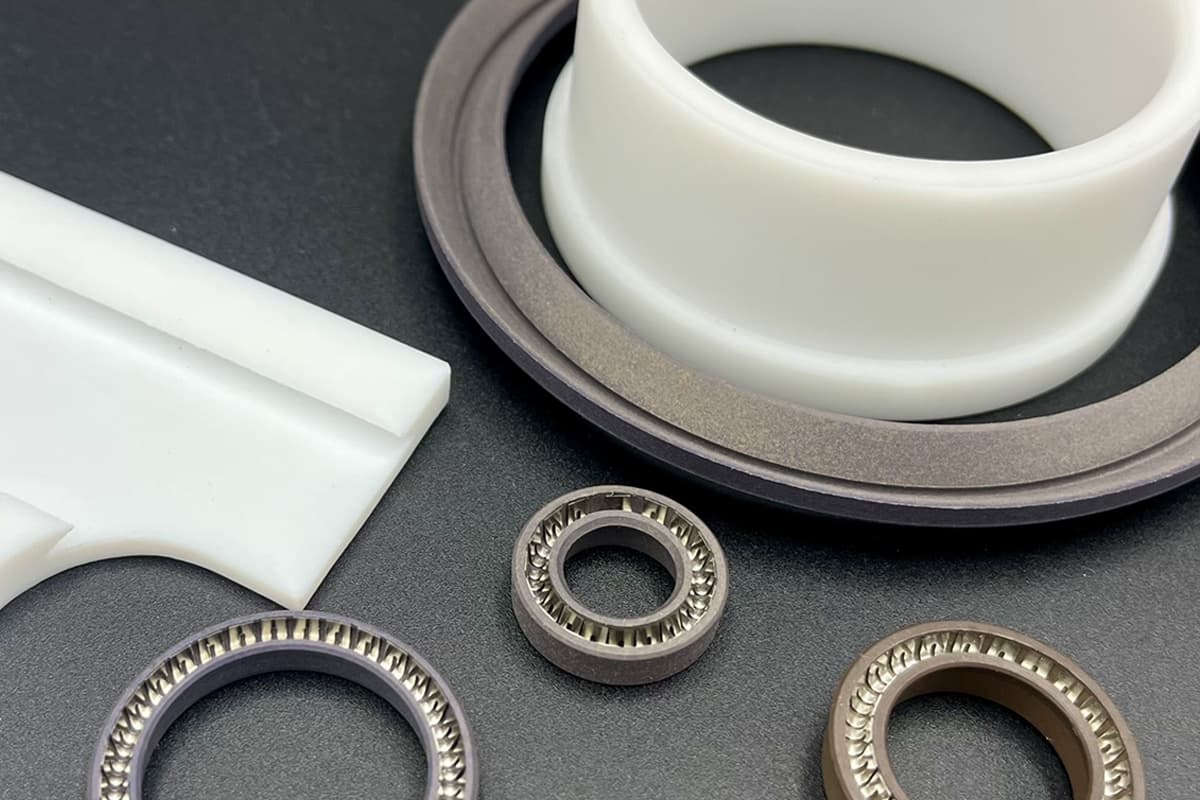
- Seals and O-rings for aggressive media
- Sliding and expansion pads
- Lining and cladding in the chemical industry
- High-temperature insulation components
- tubes and sleeves
PEEK — polyetheretherketone
The highest-performance engineering plastic commonly available. PEEK operates continuously at +250 °C, has a strength comparable to that of some metals, excellent chemical resistance, resists hydrolysis (steam sterilization), and is certifiable for medical use. The price is significantly higher than that of engineering plastics.
- Components for analytical and medical equipment
- High-Temperature Bearings and Seals
- parts that can be sterilized with steam
- Components in semiconductor manufacturing
- Replacements for metal parts where weight reduction is needed while maintaining strength
PVDF — polyvinylidene fluoride
PVDF is a compromise between PTFE and engineering plastics: it has chemical resistance close to that of fluoroplastics, but also sufficient mechanical strength and stiffness for load-bearing parts. Temperature range: −30 to +140 °C. It is UV-resistant and has a very smooth surface.
- Components for the fine chemicals and semiconductor industries
- fittings, valves, piping components
- pump parts
- Applications requiring high-purity media
PPS and PSU
PPS is extremely dimensionally stable, self-extinguishing, and resistant to temperatures up to +220 °C—it is used for precision parts in hot and chemically harsh environments. PSU and PEI are transparent or amber-colored high-temperature plastics capable of repeated sterilization, suitable for medical and laboratory equipment.
You can find a complete overview in the ” High-Performance Plastics” category.
Transparent plastics: PMMA, PC
Where transparency is required, two materials with very different properties are used.
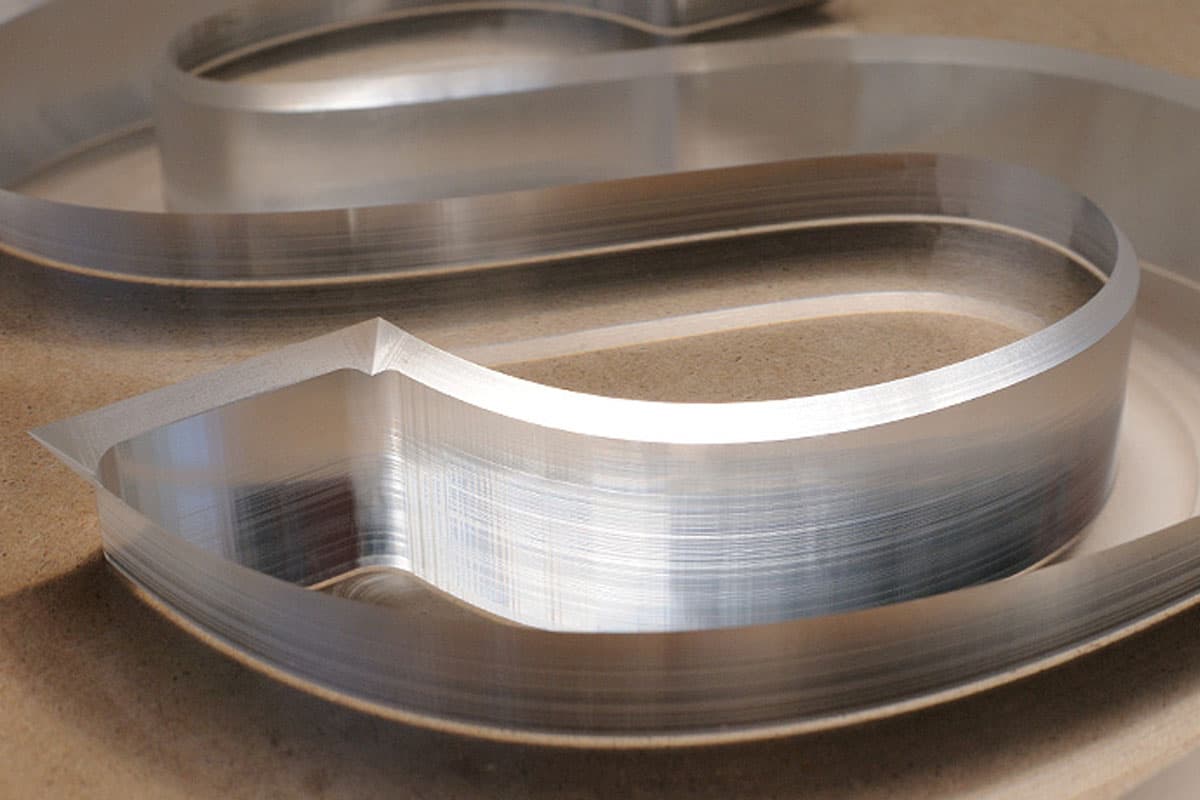
PMMA (plexiglass, acrylic) has the highest optical clarity—it transmits over 92% of light—and is highly UV-stable. However, it is brittle, does not withstand impact well, and cracks if machined improperly.
PC (polycarbonate), on the other hand, is virtually unbreakable—it has an impact strength roughly 200 times higher than that of PMMA and is used for protective covers and safety glazing. It is less scratch-resistant and, without a surface treatment, less UV-stable.
So the choice is simple: optics and outdoor use → PMMA; safety and impact resistance → PC. You can find the entire group in the ” Transparent Plastics” category.
Material Summary Table
| Material | Temperature range (continuous) | Main Advantage | Typical Applications |
|---|---|---|---|
| PE 300 | −100 to +80 °C | price, machinability | structural components, washers |
| PE 1000 | −200 to +80 °C | abrasion resistance | linings, slide rails |
| PP | 0 to +100 °C | chemical resistance, weldability | tanks, vats |
| PVC | 0 to +60 °C | acid resistance, self-extinguishing properties | tile work, water supply systems |
| ABS | −20 to +80 °C | toughness, surface | encapsulation, prototypes |
| POM C | −50 to +100 °C | precision, smoothness | gears, bearings |
| POM H | −50 to +100 °C | stiffness, strength | loaded precision parts |
| PA 6 | −40 to +100 °C | resilience, damping | wheels, rollers, bushings |
| PA 6 GF30 | −40 to +110 °C | rigidity, dimensional stability | load-bearing structural members |
| PA 66 | −40 to +110 °C | hardness, heat resistance | mechanical parts |
| PET | −20 to +100 °C | dimensional stability | Precision Parts, Sliding Plates |
| PTFE virgin | −200 to +260 °C | lowest friction, inertia | gaskets, linings |
| PTFE + glass | −200 to +260 °C | lower creep | loaded seals |
| PVDF | −30 to +140 °C | Chemistry + Strength | fittings, fine chemicals |
| PPS | −20 to +220 °C | thermal dimensional stability | Precision hot-formed parts |
| PEEK | −60 to +250 °C | maximum power | medicine, sterilization |
| PMMA | −40 to +80 °C | optical purity, UV | Glazing, Optics |
| PC | −40 to +120 °C | impact toughness | protective covers |
How to Choose the Right Material
In practice, all you need to do is go through the five questions in this order. Each one narrows down the choices.
1. What is the operating temperature? The minimum and maximum temperatures, and whether the exposure is long-term or short-term. This criteria eliminates the most materials at once. Above 140 °C, we’re looking at high-performance plastics; above 200 °C, only PPS, PTFE, and PEEK remain.
2. What medium will the part come into contact with? Water, steam, oil, acid, solvents, food. Chemical resistance in plastics is very specific—a material that can withstand concentrated acid may fail when exposed to a common solvent.
3. What is the mechanical load? Static, dynamic, or impact? Is the part load-bearing, or does it merely guide and dampen? If it is to bear a continuous load, PTFE and PE are out of the question due to creep.
4. Is accuracy monitored? If so, the absorbency and internal stress of the semi-finished product are critical. POM and PET are stable, while PA 6 undergoes dimensional changes when exposed to moisture.
5. Is a certification required? Food contact (FDA, EU 10/2011), drinking water, flammability (UL 94), medical applications. The certification specifies the exact type and production batch, not just the material group.
If you have answers to these questions, we’ll recommend the right material for you. Don’t have a blueprint, and all you have is an old, damaged piece? Just send it to us—we’ll measure the dimensions and manufacture the part based on the sample.
Request a quote with a description of the terms →
Engineering Plastics in the Food Industry
Plastics play a special role in food and pharmaceutical production lines: lubrication-free sliding pairs eliminate the risk of contamination from lubricants, and the materials are easy to clean and resistant to sanitizing agents.
For direct contact with food, certified materials are used—typically food-grade PE and PP, FDA-approved POM, PET, and virgin PTFE. For higher temperatures and steam sterilization, PEEK or PSU are used.
When making a selection, in addition to the certification itself, three factors must be evaluated: resistance to sanitizing chemicals (which tend to be more aggressive than the food itself), the temperature of the cleaning cycle (CIP is typically 80–90 °C), and the color—in detection lines, blue is chosen so that any fragments can be detected both visually and by detection systems.
CNC Machining of Engineering Plastics
Engineering plastics are not machined like metal. They have ten times the thermal expansion, lower thermal conductivity (heat is not dissipated into the chips but remains in the material), and are affected by the internal stress of the blank. Without experience with plastics, two typical problems arise: the part “warps” and changes dimensions after machining, or it heats up and stretches at the cut.
Therefore, when machining plastics, we use sharp tools with positive geometry, higher cutting speeds, and lower feed rates; we divide the machining process into multiple operations; and for precision parts, we include a stress-relief step between roughing and finishing. For materials with internal stress (POM H, thicker PMMA), we choose a cast blank or incorporate tempering.
CNC Milling
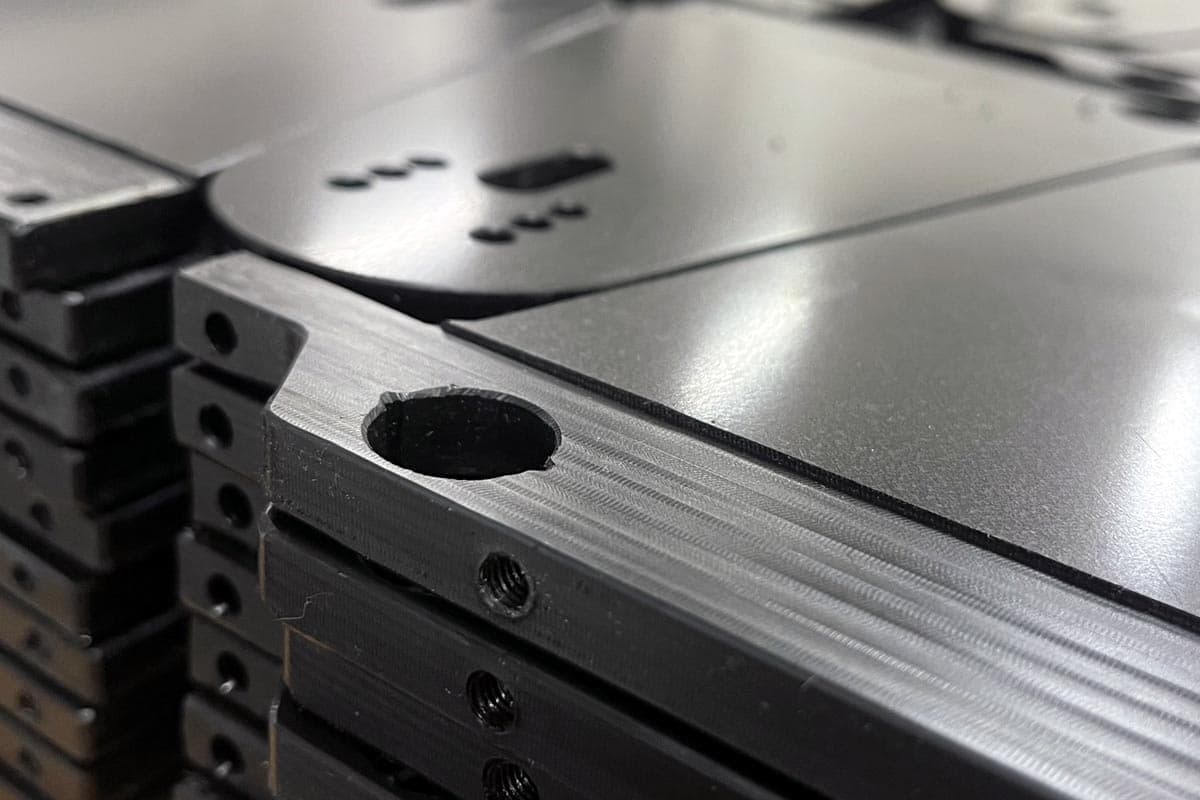
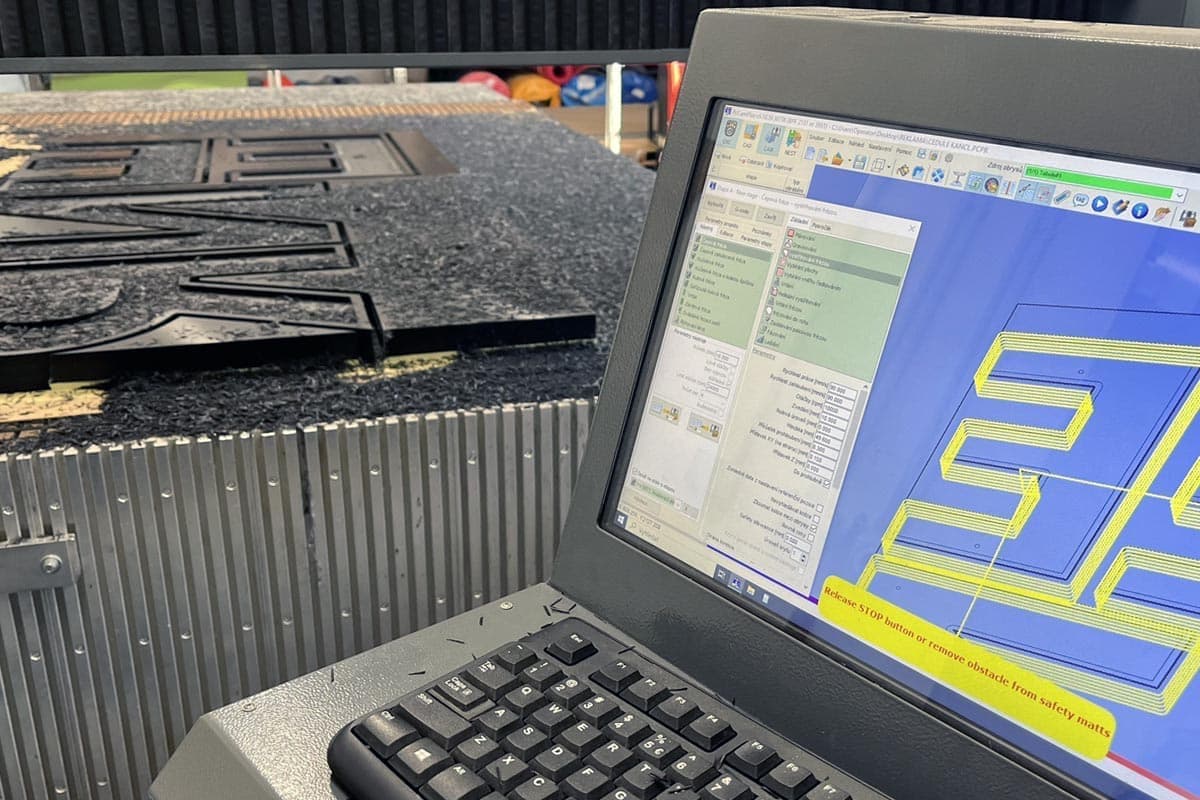
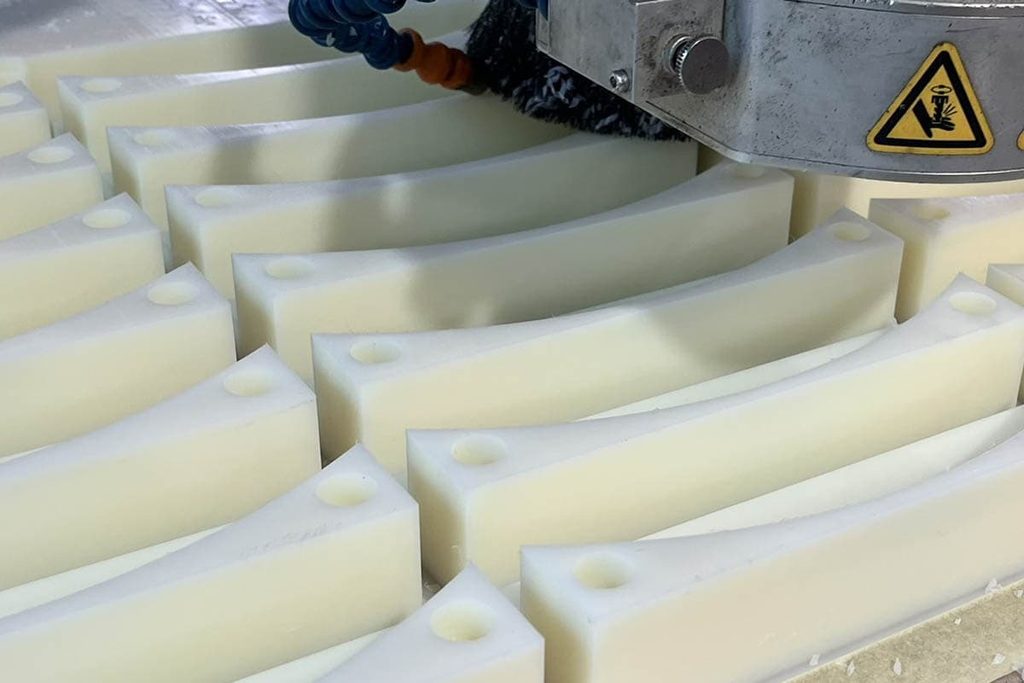
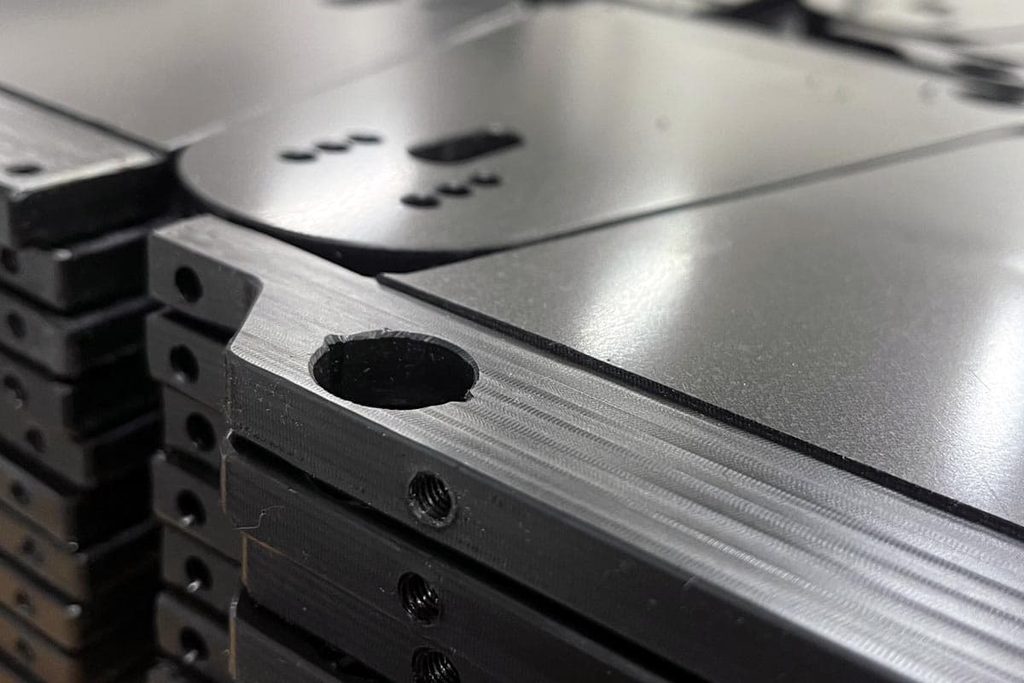
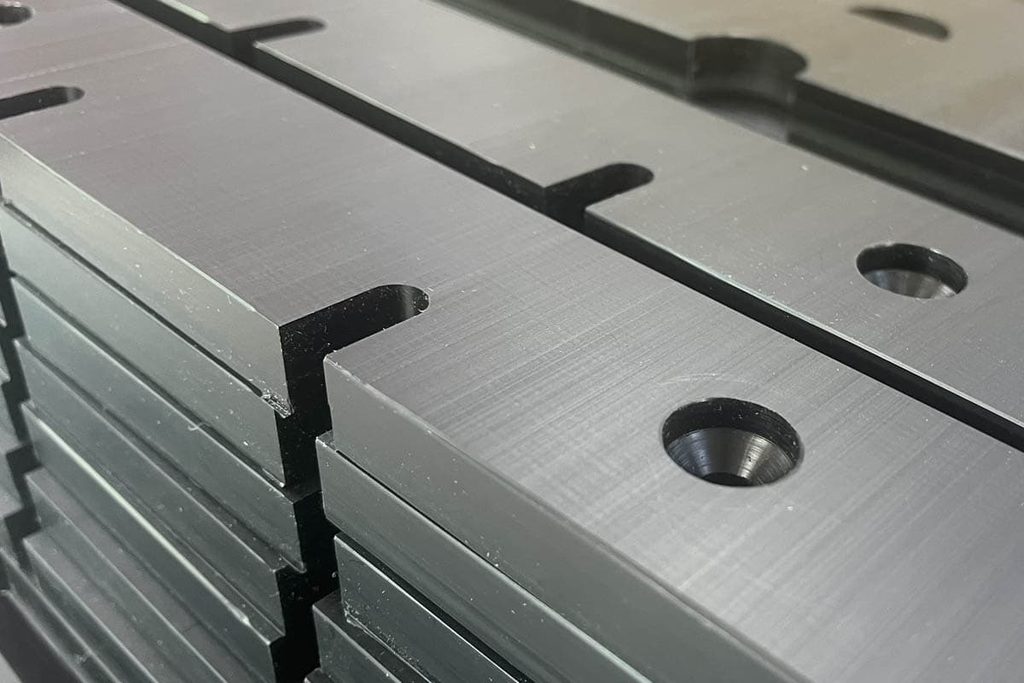
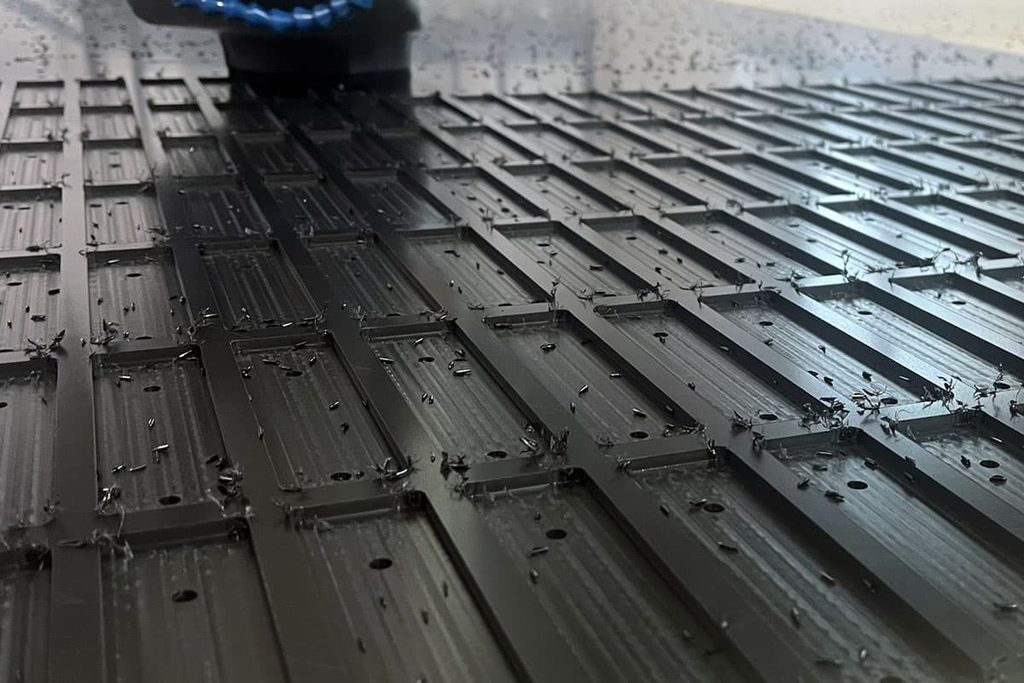
We use milling to manufacture plates, flanges, frames, guide rails, sealing surfaces, pockets, and complex-shaped parts. We work on a surface area of 3100 × 2100 mm, so we can handle even large-format plates without cutting them.
We manufacture based on drawings (3D models, DXF, PDF) as well as samples. For simple parts, a photo with dimensions is sufficient.
CNC Milling of Engineering Plastics →
CNC Turning
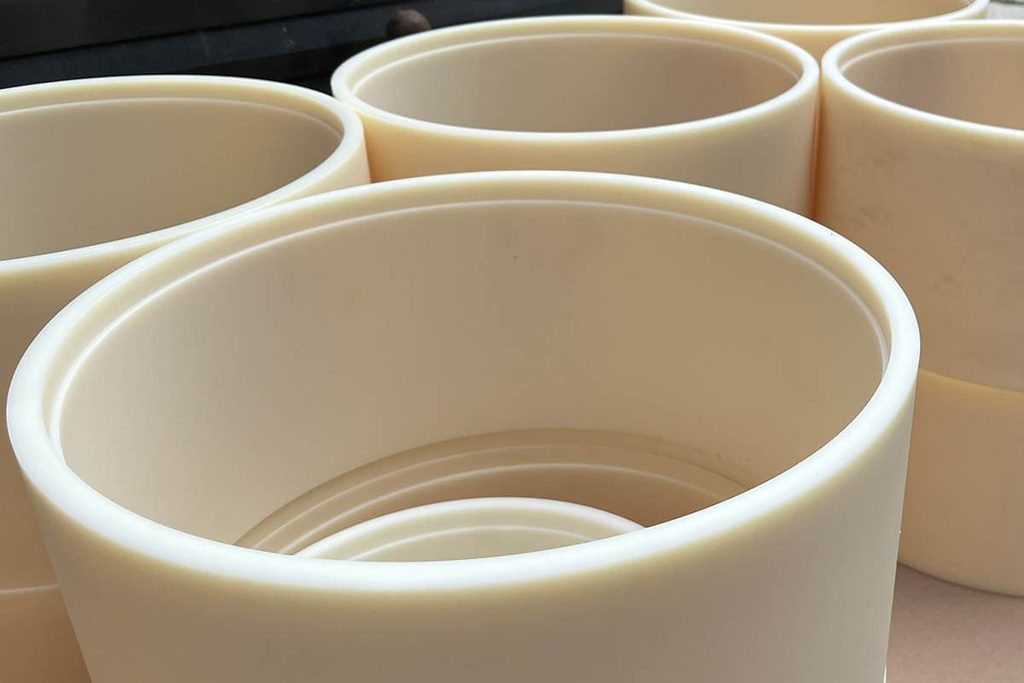
We use turning to manufacture rotary parts—sleeves, plain bearings, spacer rings, guide pins, hubs, sealing rings, and tubular components. We can turn parts up to a diameter of ⌀500 mm.
From Inquiry to Project
We need to know the material (or the operating conditions based on which we will select it), the dimensions or drawing, the number of pieces, and the required tolerance. Based on this information, we will prepare a non-binding quote with a delivery date. We manufacture as few as one piece—single-piece and small-batch production are standard for us, not the exception.
Frequently Asked Questions
Which engineering plastic is the best substitute for metal?
It depends on the part’s function. For precision moving parts (gears, bearings, guide elements), POM C is the most common choice—it offers rigidity, low friction, and dimensional stability. If a part needs to absorb shocks and operate quietly, PA 6 is a better choice. For heavily loaded structural parts requiring maximum stiffness, PA 6 GF30 is used. For temperatures above 150 °C and applications where metal is being replaced to reduce weight while maintaining strength, PEEK is the material of choice.
What is the difference between POM and PA?
POM has higher stiffness, lower water absorption, and better dimensional stability—which is why it is the material of choice for precision parts and applications in humid environments. PA 6 is more impact-resistant, provides better shock absorption, and has better abrasion resistance, but it absorbs moisture and changes dimensions as a result. Simply put: precision → POM, impact resistance and shock absorption → PA.
Which plastic can withstand the highest temperature?
Among commonly available engineering plastics, PEEK has the highest long-term temperature resistance (+250 °C). PTFE can withstand +260 °C, but it is mechanically soft and flows under load. PPS operates continuously up to +220 °C and is very dimensionally stable. For engineering plastics, the typical temperature limits are 100–120 °C.
What type of plastic is suitable for contact with food?
Most commonly, food-grade PE and PP, FDA-certified POM C, PET, and virgin PTFE. When making a selection, however, it is also necessary to assess resistance to sanitizing chemicals and the temperature of the cleaning cycle—which is usually higher than the operating temperature itself. PEEK or PSU is used for steam sterilization.
Which plastic is the most resistant to chemicals?
PTFE is chemically nearly inert—it resists virtually everything except molten alkali metals and fluorine. However, if you need mechanical strength in addition to chemical resistance, PVDF is the better choice. Among affordable materials, PP has the best chemical resistance.
Which plastic is the easiest to machine?
POM C. It produces clean chips, does not stick to the tool, maintains its dimensions, and allows for a very good surface finish. PET and PVC also machine well. On the other hand, PTFE (soft, “slippery”), PMMA (risk of cracking), and glass-fiber-reinforced materials are challenging to machine and cause rapid tool wear.
Can you manufacture a part based on a sample if I don’t have a drawing?
Yes. Just send us the old or damaged part—we’ll measure its dimensions and manufacture a new one. If you don’t know the original material, we’ll identify a suitable replacement based on its appearance, weight, and operating conditions. For simple parts, a photo with dimensions is sufficient.
Do you also make individual pieces?
Yes. Single-unit and small-batch production is our standard business. We manufacture items starting from a single unit, with no minimum order quantity.
Do you need to manufacture a part made of engineering plastic?
We supply engineering plastics in the form of semi-finished products as well as finished machined parts. Send us a drawing, a sample, or simply a description of the operating conditions—we’ll select the material and prepare a non-binding quote.